
Artist
Chuck Berry
St. Louis, United States · 1926 – 2017
Chuck Berry is a musician from St. Louis, United States, active 1926–2017. Their discography on Gatefold includes 24 records. They also recorded with Chuck Berry and His Combo.

61
Albums tracked
205
In collections
1926
Since
Biography
Leonard Chess didn't want a blues singer. In May 1955, he told a hair-straightener salesman from St. Louis to go write some lyrics for a traditional country fiddle tune called "Ida Red." That salesman was Chuck Berry. He went back to St. Louis, rewrote the tune as "Maybellene," and tracked it at Chess Studios with Willie Dixon slapping the double bass and Johnnie Johnson swinging on the piano keys. The guitar was loud, the lyrics were about cars and class, and the beat was too fast for traditional R&B. Chess knew exactly what he had: a black artist playing hillbilly music with a heavy beat for white teenagers. He didn't just write the riffs. He wrote the entire teenage lexicon before teenagers even knew they had one. While the other architects of the genre relied on gospel shouting or wild-man piano antics, Berry built his empire on the written word and a Gibson ES-350T run through a small, overdriven Gibson amplifier. The music was lean, cynical, and incredibly smart. His career eventually devolved into decades of playing with unrehearsed local backing bands to save on tour costs, but those early Chess sessions remain the undisputed blueprints for every guitar band that ever picked up a pick.
Bio from The Clerk
The Arc of Chuck Berry
The pivots — what forced Chuck Berry to reinvent.
The Chess Blueprints
Between 1955 and 1959, Berry worked out of 2120 South Michigan Avenue in Chicago, turning out a staggering run of singles that established the vocabulary of rock guitar. Backed by the steady hand of Willie Dixon and the swinging, jazz-influenced piano chords of Johnnie Johnson, Berry laid down "Johnny B. Goode," "Roll Over Beethoven," and "Sweet Little Sixteen." You can hear the exact moment jump blues turned into rock 'n' roll right in Johnson's boogie-woogie left hand and Berry's double-stop guitar intros. This was the era of the Gibson ES-350T plugged straight into a small, cranked tube amp, creating a sharp, cutting tone that cut through AM radio static.
The Post-Prison British Invasion Echo
After his release from federal prison in 1963, Berry walked into a music landscape completely dominated by British bands who had spent his incarceration copying his riffs. He quickly booked time at Chess and cut "No Particular Place to Go" and "You Never Can Tell," matching the energy of his disciples with a more polished, cynical studio sound. The templates were identical, but the delivery was colder, showing the wear of his time away. You hear this shift in the prominent use of backing vocalists and a cleaner, louder guitar mix designed to compete with the Merseybeat bands.
The Mercury Defection
In 1966, Mercury Records offered Berry a massive financial deal to leave Chess, resulting in a creative dry spell that almost ruined his studio reputation. Working with different session players who lacked the natural swing of Johnnie Johnson, albums like From St. Louie to Frisco felt stiff and disconnected. He tried to adapt to the late-60s psychedelic scene, even recording a live jam album with the Miller Band, but the grit of his classic sound was lost in the slick corporate production. The records from this era sound like an artist trying to find his footing in a counterculture that had already outpaced him.
The Novelty Comeback
Returning to Chess in 1970, Berry stumbled into his biggest commercial success with a crude novelty song recorded live at the Lanchester Arts Festival in England. "My Ding-a-Ling" became his only number-one single on the Billboard Hot 100, a bizarre irony for one of the greatest lyricists in American history. Backed by members of Average White Band, the performance captured a cheap, sing-along crowd energy that alienated his purist fans but filled his pockets. It defined the rest of his career as a highly profitable nostalgia act who no longer needed to write new music.
Influences
- Louis Jordan — Berry openly admitted to copying Jordan's fast-talking vocal delivery and narrative songwriting style. You can hear this in the rapid-fire lyrical delivery of "Maybellene," which directly mirrors the jump-blues cadence of Jordan's "Ain't Nobody Here But Us Chickens." It was the bridge between big band swing and rock 'n' roll lyricism.
- T-Bone Walker — Walker's fluid, single-string guitar solos and showmanship on the electric guitar were the direct foundation for Berry's lead style. The opening bent-note double-stops in "Johnny B. Goode" are a direct lift from Walker's phrasing on "Strollin' with Nene." Walker showed Berry how to make the electric guitar talk.
- Muddy Waters — When Berry first arrived in Chicago in 1955, he sought out Waters, who personally directed him to audition for Leonard Chess. The raw, distorted slide guitar tone of Waters' early Chess singles like "I Can't Be Satisfied" directly influenced the gritty, overdriven edge Berry demanded from his own amplifiers. Without Waters' stamp of approval, Berry never gets in the door.
- Bob Wills — The Western swing of Bob Wills and His Texas Playboys provided the rhythmic structure for Berry's first hit. "Maybellene" was a direct adaptation of Wills' version of the traditional country song "Ida Red." Berry took the hillbilly two-step, swapped the fiddle for a Gibson, and drove it straight into the R&B charts.
- Sister Rosetta Tharpe — Tharpe was playing distorted, driving guitar runs on her Gibson SG back when Berry was still in high school. Her performance on "Strange Things Happening Every Day" features the exact rhythmic guitar pushing and double-string runs that Berry later made famous. She invented the physical rock guitar posture that Berry refined into the duckwalk.
Chuck Berry — solo
Their records — most-collected first.
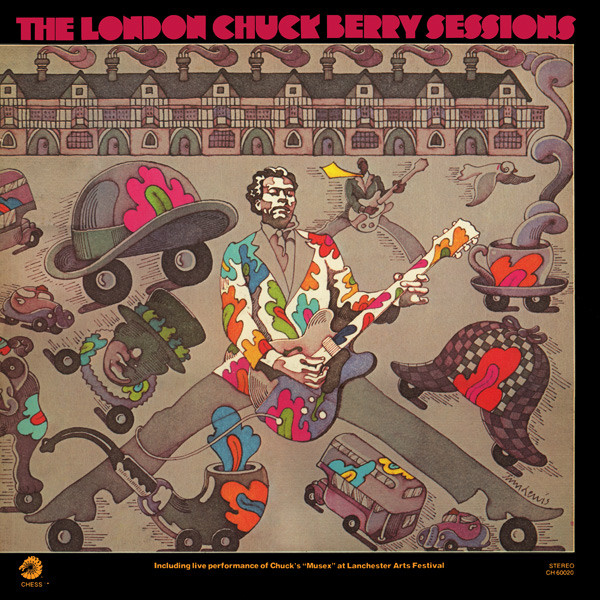
The London Chuck Berry Sessions
1972
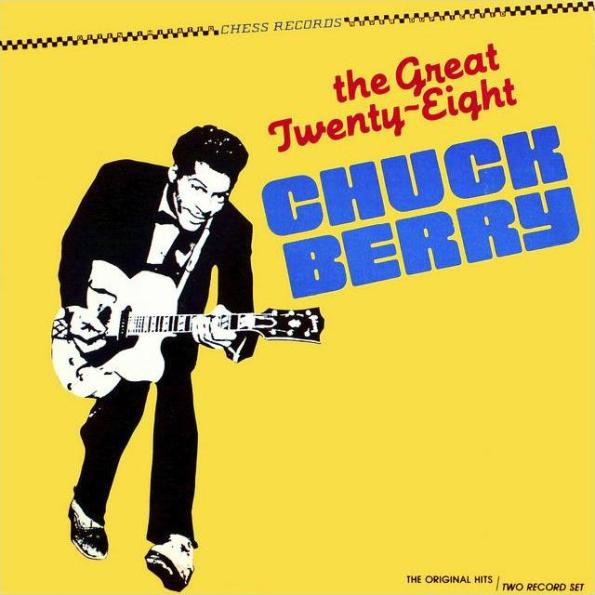
The Great Twenty-Eight
1982
Chuck Berry's Greatest Hits
1964
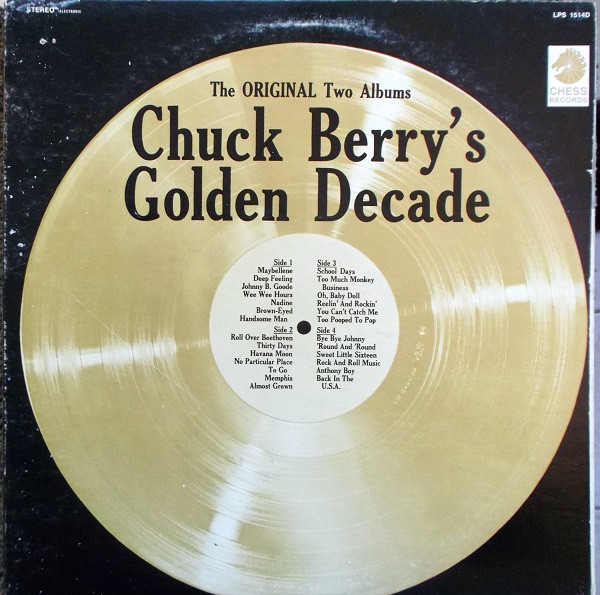
Chuck Berry's Golden Decade (The Original Two Albums)
1967

Berry Is On Top
1959

Chuck Berry's Golden Hits
1967

St. Louis To Liverpool
1964
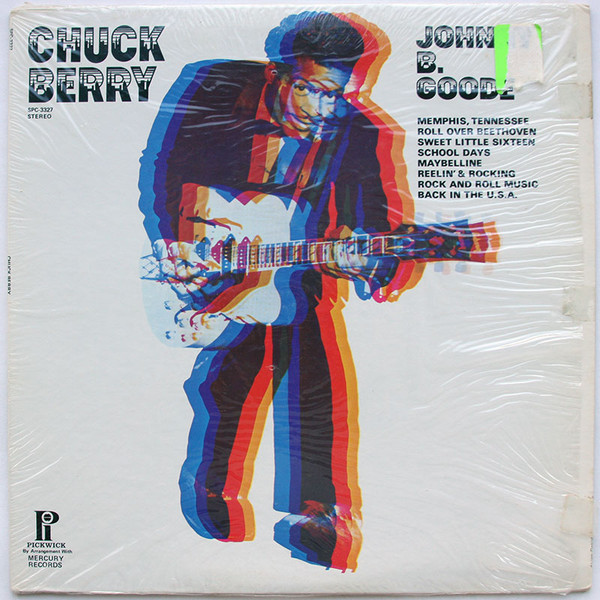
Johnny B. Goode
1972
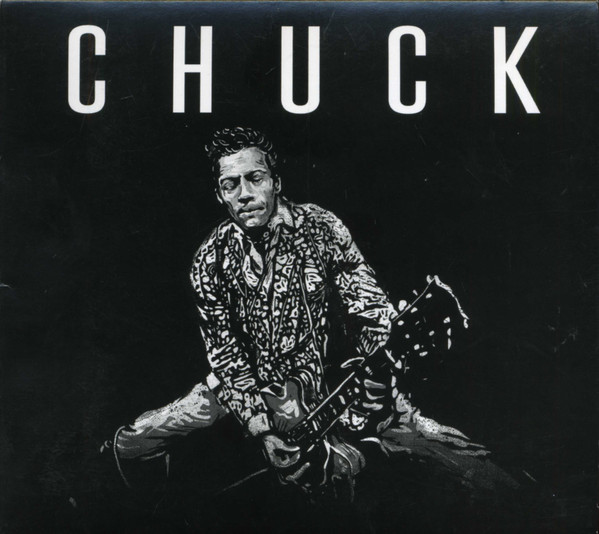
Chuck
2017

After School Session
1957

Hail! Hail! Rock 'N' Roll (Original Motion Picture Soundtrack)
1987

The Best Of The Best Of Chuck Berry
1978

My Ding-A-Ling / Johnny B. Goode
1972
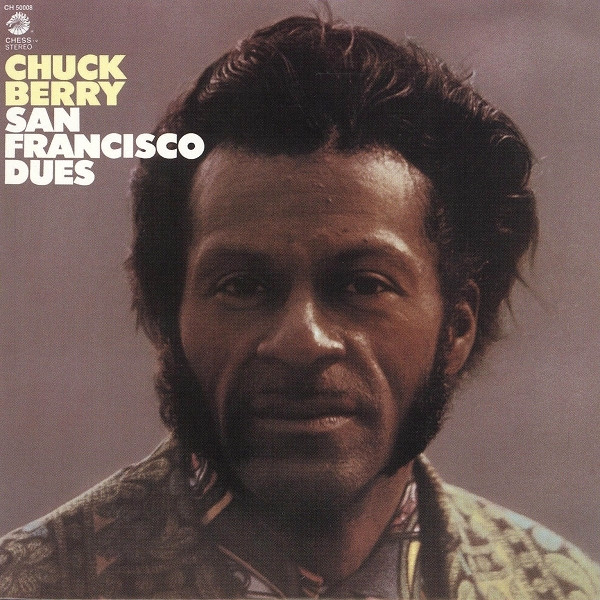
San Francisco Dues
1971

Rockin' At The Hops
1960

Live From Blueberry Hill
2021

The Anthology
2000

Back Home
1970
Sweet Little Sixteen / Reelin And Rocking
1958

20 Greatest Hits

Rock 'N Roll Rarities
1986

Toronto Rock 'N' Roll Revival 1969, Volume III
1982

Chuck Berry
1981

20 Super Hits
1980
Chuck Berry and His Combo
A project Chuck Berry was part of.

Related artists
Around the web
Follow every record they touch.
Start your shelf and Gatefold tracks Chuck Berry's new pressings, tour dates, and the whole discography — automatically.
Start your shelf →Free forever. Works with 10 records or 10,000.