
Artist
Simon & Garfunkel
United States · 1963 – 1970
Simon & Garfunkel is a music group from United States, active 1963–1970. Their discography on Gatefold includes 24 records.

55
Albums tracked
981
In collections
1963
Since
Biography
Columbia producer Tom Wilson took a failed acoustic track from an album that sold barely three thousand copies and decided to mess with it. He brought session musicians into Columbia's Studio A—the same guys backing Dylan on 'Like a Rolling Stone'—and overdubbed electric guitar, bass, and drums right onto 'The Sound of Silence' without telling Paul Simon or Art Garfunkel. That unauthorized session saved them from obscurity. It dragged two harmony-obsessed kids from Queens out of the coffeehouse circuit and dropped them straight into the folk-rock gold rush. The dynamic was toxic from the jump. You had Paul Simon, a brilliant but deeply insecure songwriter who hated being shorter than his partner, and Art Garfunkel, a guy with a golden throat who didn't write a single lyric but knew exactly how to make Simon's neuroses sound celestial. They spent their entire career fighting over credits and vocal takes. By the time they hit the studio for their final record, they couldn't even stand to be in the room together. They tracked their vocals separately because the tension was too suffocating.
Bio from The Clerk
The Arc of Simon & Garfunkel
The pivots — what forced Simon & Garfunkel to reinvent.
The Folk-Rock Overdub
After their acoustic debut flopped hard, Simon fled to England to play tiny folk clubs while Garfunkel went back to college. Tom Wilson's rogue electric overdub on 'The Sound of Silence' forced them back together in late 1965 to rush-record an entire album to capitalize on the accidental hit. They used members of the Hawks and local session players to build a jangly, urgent electric folk sound overnight. You hear the transition in the loose, hurried arrangements of the 'Sounds of Silence' LP, which laid the template for their entire mid-60s run.
The Studio Explorations
By 1966, Simon was done with basic folk-rock arrangements and demanded more control, leading to the self-produced sessions for 'Parsley, Sage, Rosemary and Thyme'. Working with engineer Roy Halee, they began using the studio as an instrument, pioneering eight-track recording techniques, tape loops, and intricate vocal layering. This culminated in 'Bookends', where they incorporated field recordings of old age homes and Moog synthesizers. The music shifted from simple acoustic poetry to dense, cinematic audio collages that captured a fractured America.
The Gospel and Grandeur Split
The tracking of 'Bridge Over Troubled Water' in 1969 was a slow-motion car crash fueled by creative exhaustion and Garfunkel's acting gig in Mexico. Simon wanted to explore gospel, reggae, and international rhythms, while Garfunkel pushed for massive, soaring vocal showcases. Roy Halee used the echo chambers of an empty Columbia studio and a heavy, multi-tracked piano to create the title track's cathedral-like scale. The resulting record was a massive commercial success, but the sessions were so bitter and physically draining that the duo split immediately after its release.
Influences
- The Everly Brothers — Before they were Simon & Garfunkel, they performed as Tom & Jerry, a teenage act explicitly modeled on Don and Phil. You hear the close, parallel harmony style on early tracks like 'Hey, Schoolgirl' and their later cover of 'Bye Bye Love' on their final album. They practically lifted the vocal phrasing template wholesale.
- Martin Carthy — Simon met Carthy in the London folk scene in 1965 and learned the traditional arrangement of 'Scarborough Fair' directly from him. Simon adapted Carthy's guitar tuning and arrangement for the 'Parsley, Sage, Rosemary and Thyme' album without initially giving him credit. That theft caused a decades-long rift between the two musicians.
- The Carter Family — The duo's early acoustic flatpicking style and traditional vocal arrangements were heavily shaped by the foundational country group. Simon & Garfunkel covered 'Can the Circle Be Unbroken' in their early live sets, adopting Maybelle Carter's 'thumb-brush' guitar technique. You can hear that steady, rolling acoustic drive all over 'Wednesday Morning, 3 A.M.'
- The Golden Gate Quartet — Simon's obsession with gospel vocal arrangements goes back to this pioneering jubilee group, whose records he studied for vocal blending. You hear this influence directly in the handclaps and call-and-response vocal arrangements of 'Bridge Over Troubled Water' and 'Keep the Customer Satisfied'. It was their blueprint for secularizing gospel energy.
- Bob Dylan — Simon watched Dylan's rise at Columbia Records and openly admitted that 'The Sound of Silence' was an attempt to write a song with the same poetic weight as 'Blowin' in the Wind'. The fingerpicked acoustic protest vibe of 'He Was My Brother' is a direct copy of Dylan's early Greenwich Village style. Simon spent his entire early career trying to match Dylan's lyrical prestige.
Discography
Their records — most-collected first.
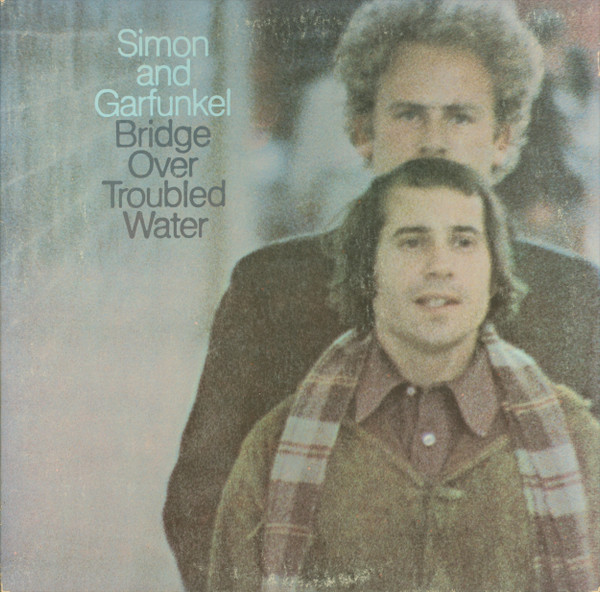
Bridge Over Troubled Water
1970
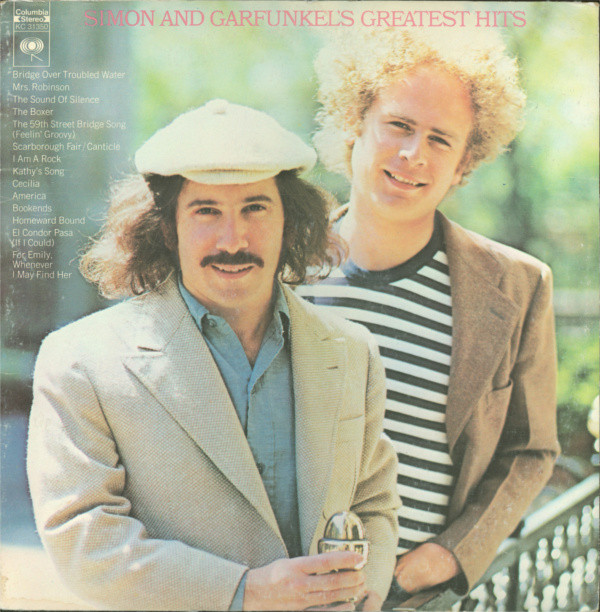
Simon And Garfunkel's Greatest Hits
1972
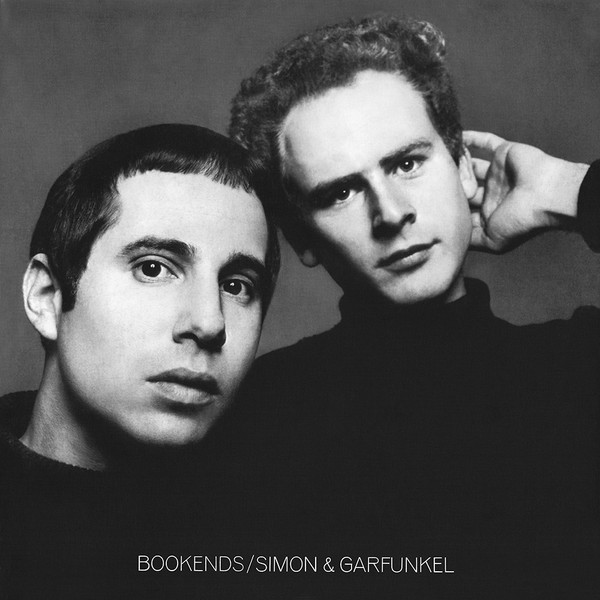
Bookends
1968
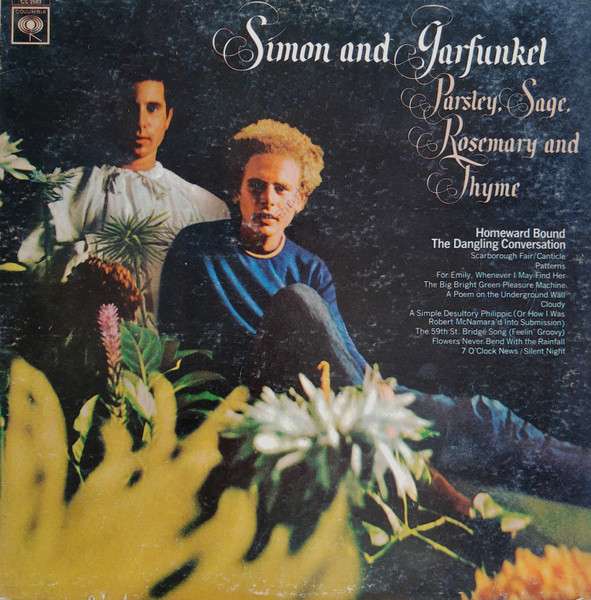
Parsley, Sage, Rosemary And Thyme
1966
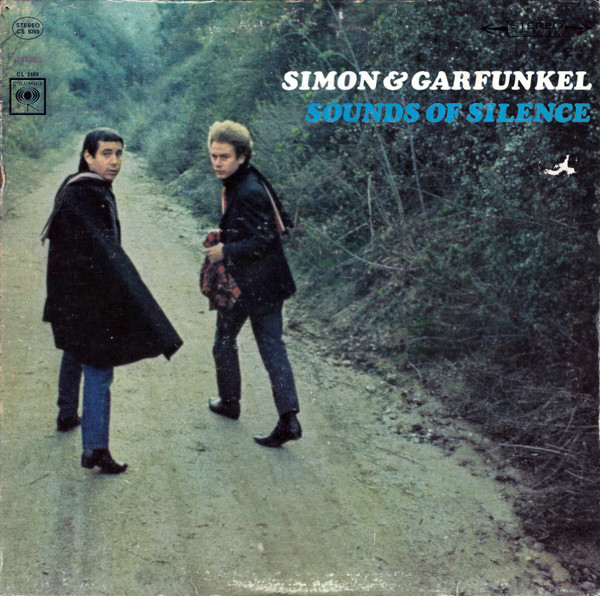
Sounds Of Silence
1966
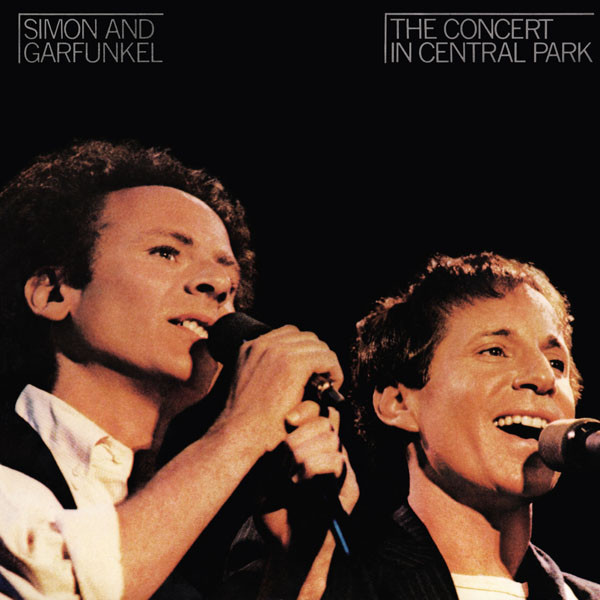
The Concert In Central Park
1982
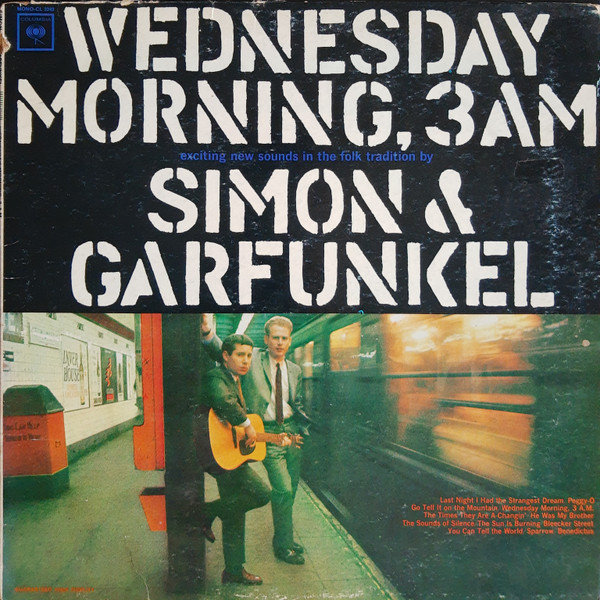
Wednesday Morning, 3 A.M.
1964
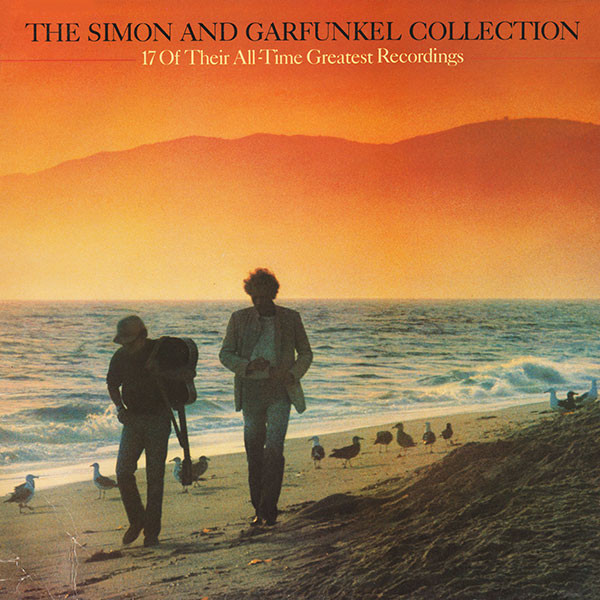
The Simon And Garfunkel Collection
1981

The Essential Simon & Garfunkel
2003
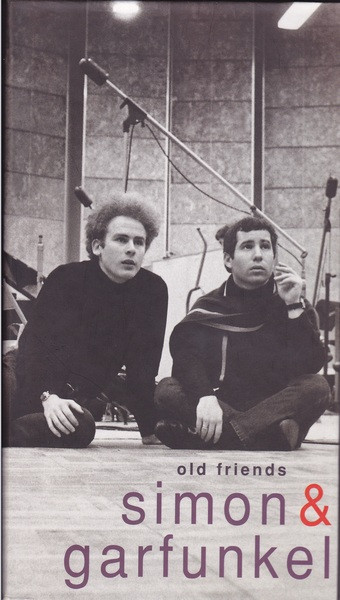
Old Friends
1997

The Definitive Simon & Garfunkel
1991
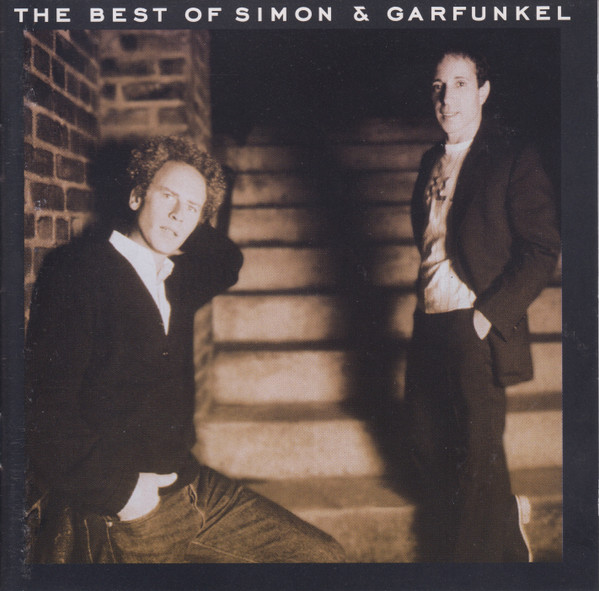
The Best Of Simon & Garfunkel
1999
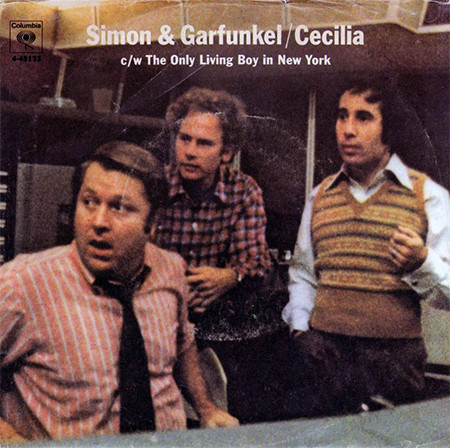
Cecilia / The Only Living Boy In New York
1970

Simon & Garfunkel
1970
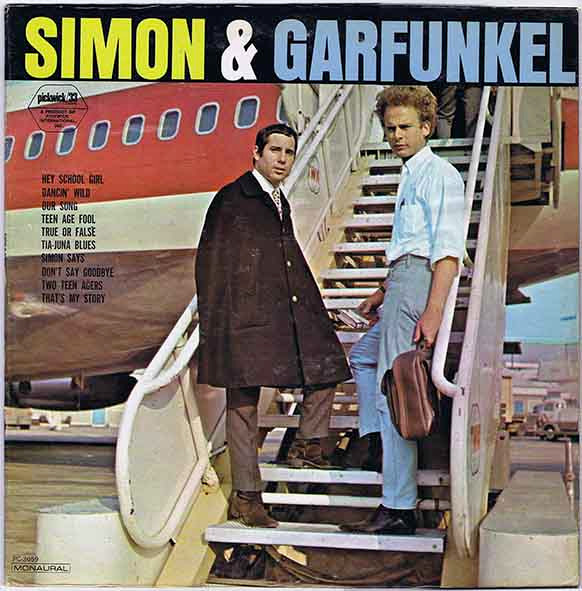
Simon & Garfunkel
1967
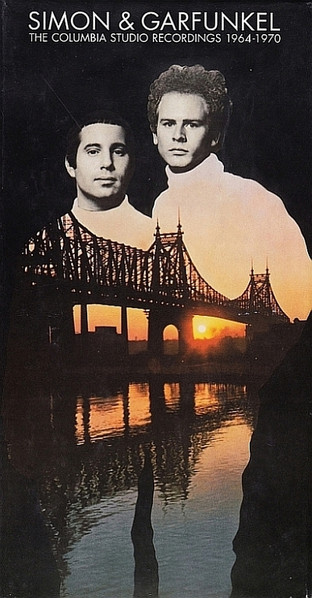
The Columbia Studio Recordings 1964-1970
2001
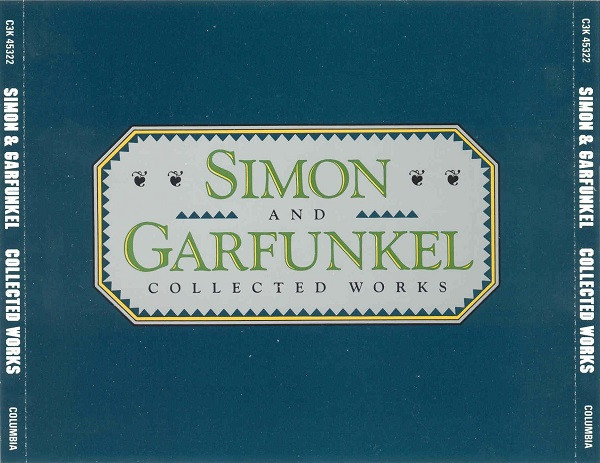
Complete
1979

Bridge Over Troubled Water / Keep The Customer Satisfied
1970

Mrs. Robinson
1968
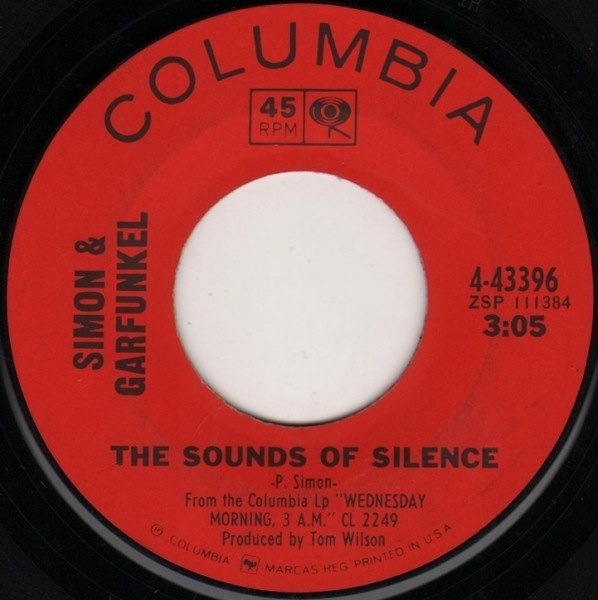
The Sounds Of Silence / We've Got A Groovey Thing Goin'
1965

Old Friends Live On Stage
2004

Greatest Hits
1998

The Sounds Of Silence / Homeward Bound

I Am A Rock
1966
Related artists
Members
Around the web
Follow every record they touch.
Start your shelf and Gatefold tracks Simon & Garfunkel's new pressings, tour dates, and the whole discography — automatically.
Start your shelf →Free forever. Works with 10 records or 10,000.