Artist
Phil Spector
New York City, United States · 1939 – 2021
Phil Spector is a musician from New York City, United States, active 1939–2021. Their discography on Gatefold includes 3 records.

3
Albums tracked
15
In collections
1939
Since
Biography
Spector spent the better part of the 1960s trying to drown a three-minute pop song in a sea of gold-plated echo and Wagnerian sludge. He turned Gold Star Studios in L.A. into a sweatshop where he’d lock three drummers, two bassists, and a dozen guitarists in a room for six hours just to get a single mono track that sounded like the end of the world. He didn't care about the singers. He cared about the roar of the room. The 'Wall of Sound' wasn't some marketing catchphrase; it was a physical pile of noise built by dragging a three-track recorder to its absolute breaking point. By the time he got to the Beatles and Ramones, the guy was a walking nightmare with a briefcase full of handguns and a God complex that ruined as many sessions as it saved. He sucked the air out of the room. He took 'Let It Be' and smothered it in strings because he couldn't stand the sound of a band just being a band. It's brilliant, claustrophobic, and fundamentally broken music made by a man who treated every session like a hostage negotiation. You hear that tension in the grooves—the sound of session players terrified to miss a beat while Spector screamed from the control booth.
Bio from The Clerk
The Arc of Phil Spector
The pivots — what forced Phil Spector to reinvent.
The Gold Star Monopoly
Between 1962 and 1965, Spector took over Gold Star Studios and essentially invented the modern producer-as-auteur role by treating the Philles label like his personal toy box. He utilized the studio's custom-built echo chambers to create a dense, mono-heavy atmosphere that made teenage longing sound like a cathedral collapsing. This era peaked with 'You've Lost That Lovin' Feelin',' where he fought the engineers to keep the vocals low in the mix so the orchestration could do the heavy lifting. It was the birth of the 'Little Symphonies' approach that made everything else on the radio sound thin and cheap.
The River Deep Disaster
After 'River Deep – Mountain High' flopped in the States in '66, Spector’s ego took a hit that effectively ended his run as the undisputed king of the charts. He spent a fortune on the session—reportedly $22,000, which was insane for the time—and pushed Tina Turner until she was drenched in sweat and singing past the point of exhaustion. When the public didn't buy the maximalist soul-pop hybrid, he went into a paranoid seclusion that lasted years. This pivot turned him from a hit-maker into a high-priced, unpredictable fixer for hire who only came out of the shadows for massive paychecks.
The Wrecking Crew Aftermath
In the early 70s, Spector pivoted to working with the remains of the Beatles, bringing his heavy-handed production style to 'All Things Must Pass' and 'John Lennon/Plastic Ono Band.' He swapped the girl-group innocence for a muddy, spiritual grandiosity that defined the post-breakup Beatles sound. The sessions were chaotic, fueled by brandy and firearms, resulting in records that sounded like they were recorded in a basement during an earthquake. You can hear the struggle on 'Instant Karma!,' where the drums hit like wet concrete and the whole track feels like it's about to spin off the turntable.
Influences
- Leiber and Stoller — Spector apprenticed under them in New York and played the guitar solo on 'On Broadway.' You hear their narrative songwriting structure in his early Philles hits. They taught him that the producer, not the artist, was the one who actually owned the record.
- Richard Wagner — Spector frequently cited Wagner’s 'Gesamtkunstwerk' concept as the blueprint for his own 'Wall of Sound.' He wanted pop singles to have the same crushing weight and total artistic control as a four-day opera cycle. The sheer scale of his arrangements is just 19th-century German maximalism disguised as a three-minute radio hit.
- Stan Ross — Ross was the engineer at Gold Star who built the echo chambers that gave Spector his signature sound. Without Ross’s technical knowledge of acoustics and tape saturation, Spector’s vision would have just been a messy room full of too many musicians. He provided the physical hardware that allowed the Wall of Sound to exist.
- The Drifters — He produced 'Spanish Harlem' for them in 1960 while working for Leiber and Stoller. It was his first real experiment with using orchestral percussion and strings to elevate a R&B track. That specific blend of urban soul and high-brow arrangement became his entire career roadmap.
- Les Paul — Spector was obsessed with Paul’s early multi-tracking experiments and the way he manipulated tape to create sounds that didn't exist in nature. You hear that influence in how Spector layered multiple pianos and guitars to create a singular, unrecognizable texture. He took Paul's technical innovation and weaponized it for the teen-pop market.
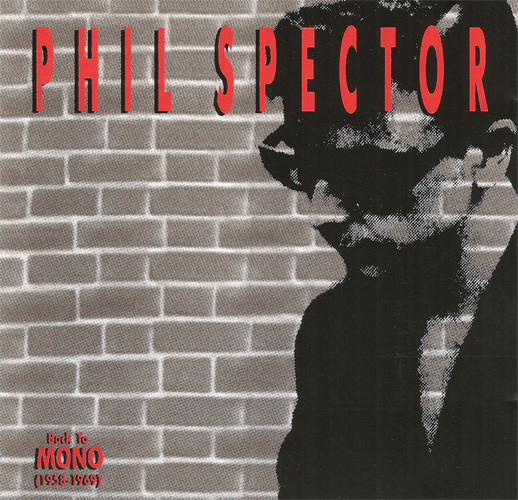
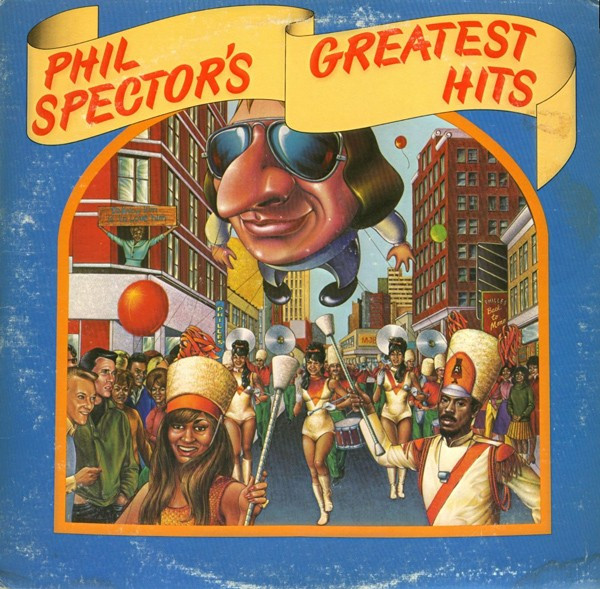
Discography
Their records — most-collected first.

Related artists
Around the web
Follow every record they touch.
Start your shelf and Gatefold tracks Phil Spector's new pressings, tour dates, and the whole discography — automatically.
Start your shelf →Free forever. Works with 10 records or 10,000.