
Artist
Ike & Tina Turner
US rock & soul duo
St. Louis, United States · 1960 – 1976
Ike & Tina Turner is a music group from St. Louis, United States, active 1960–1976. Their discography on Gatefold includes 24 records.

51
Albums tracked
111
In collections
1960
Since
Biography
Ike Turner was running the Kings of Rhythm out of East St. Louis with a cheap, modified Fender Stratocaster and a dictatorial grip on the local R&B scene before anyone even knew who Anna Mae Bullock was. When she grabbed the microphone at Club Manhattan in 1957 to sing B.B. King's 'You Know I Love You,' she didn't just join the band. She hijacked it. The duo's early Sue Records singles were cut on a shoestring budget, relying on raw room bleed, Ike's distorted guitar stabs, and Tina's absolute wrecking-ball vocals to cut through the static of AM radio. They toured the chitlin' circuit with the ferocity of a punk band, playing three hundred dates a year and driving their backing band like a rented mule. By the mid-sixties, the industry wanted their sound but couldn't handle the baggage. Phil Spector spent twenty thousand dollars of his own money to keep Ike out of Gold Star Studios just so he could isolate Tina's voice against his Wall of Sound. That session ruined Spector's confidence when it bombed in America, but it proved Tina could stand alone over a mountain of brass and echo. The seventies stuff is a completely different beast. They started covering rock bands because they were opening for the Rolling Stones and saw where the money was. But the internal violence and Ike's cocaine-fueled paranoia eventually turned their studio, Bolic Sound, into a fortress of dread. By the time they tracked 'Nutbush City Limits' with a greasy ARP synthesizer, the partnership was running on fumes and police reports. It was a hell of a run, but it cost too much to get made.
Bio from The Clerk
The Arc of Ike & Tina Turner
The pivots — what forced Ike & Tina Turner to reinvent.
The Sue Records R&B Grind
From 1960 to 1965, the duo operated as a high-octane soul revue anchored by Ike's tight, blues-based arrangements and Tina's desperate vocal delivery. Recording in places like Technisonic Studios in St. Louis, they captured a raw, unvarnished rhythm and blues that relied on natural room acoustics and minimal overdubs. You hear this on 'A Fool in Love,' where Tina's voice fights against the backing vocals of the Artettes with zero studio polish. This era was about survival on the road, translating that relentless live energy directly to tape before the industry tried to clean them up.
The Gold Star Wall of Sound
In 1966, Phil Spector stepped in with a contract that explicitly paid Ike to stay away from the sessions for 'River Deep – Mountain High.' At Gold Star Studios, Spector piled on dozens of session players including members of the Wrecking Crew to build a massive, echoing backdrop for Tina. The resulting album was a commercial failure in the US but a massive hit in the UK, permanently shifting their profile from regional R&B to international rock royalty. You can hear Tina straining against the sheer weight of horns, strings, and percussion, proving she could overpower the most expensive production money could buy.
The Rock Cover Crossover
After opening for the Rolling Stones on their 1969 tour, the duo pivotally shifted their repertoire to target white rock audiences. They signed with Liberty/UA and began cutting aggressive, funk-injected versions of tracks by Creedence Clearwater Revival, the Beatles, and Sly Stone. Recorded at Sunset Sound, their 1971 take on 'Proud Mary' became their signature hit, replacing the swampy ease of the original with a horn-heavy, double-time funk workout. This move successfully transitioned them from the R&B charts to FM rock radio and massive arena gigs.
The Bolic Sound Twilight
By 1972, Ike had built his own state-of-the-art facility, Bolic Sound, in Inglewood, which allowed him to record constantly under the influence of heavy drug use and paranoia. The music turned dark, dense, and deeply funk-oriented, utilizing modern synthesizers like the ARP 2600 to compete with the emerging funk-soul market. 'Nutbush City Limits' in 1973 was the peak of this era, featuring a filthy, distorted clavinet and a synth solo that sounded more like a spaceship than a soul record. The studio became a prison of their own making, capturing some of their most progressive grooves right before the final blowout.
Influences
- B.B. King — Tina famously got her start by singing B.B. King's 'You Know I Love You' live, and Ike played piano on King's early RPM Records sessions. You hear King's stinging, single-note guitar phrasing directly in Ike's early guitar work on 'I'm Blue (The Gong-Gong Song).' This blues foundation kept their wildest pop experiments anchored in the Mississippi Delta.
- Ray Charles — Ike modeled the structure of the Kings of Rhythm and the Ikettes directly on Ray Charles' setup with the Raelettes. The call-and-response dynamic on 'It's Gonna Work Out Fine' is a straight lift from Charles' gospel-soul blueprint. Charles proved that you could take church music, dirty it up, and sell it to the pop charts.
- Howlin' Wolf — Ike Turner was a talent scout who helped discover Chester Burnett and recorded his early Memphis sessions. You can hear Wolf's guttural, throat-shredding vocal delivery in Tina's performance on 'The Hunter.' It is a raw, non-commercial vocal style that most female soul singers of the era were told to avoid.
- Guitar Slim — Ike was heavily influenced by Guitar Slim's distorted tone and wild, over-the-top stage antics. Slim's use of a 150-foot guitar cord to run into the audience inspired Ike's aggressive performance style and his search for a biting, overdriven guitar sound. You hear that fuzzy, aggressive drive on the 1961 instrumental track 'Prancing.'
- Little Richard — Tina frequently cited Little Richard as her primary vocal inspiration, mimicking his high-pitched 'woo' and frantic, breathless delivery. On up-tempo tracks like 'Baby Get It On,' she utilizes that same wild, uncontrolled rock and roll energy that Richard used to tear down regional barriers. His style gave her permission to abandon polite singing altogether.
Discography
Their records — most-collected first.

Workin' Together
1970

River Deep-Mountain High
1966
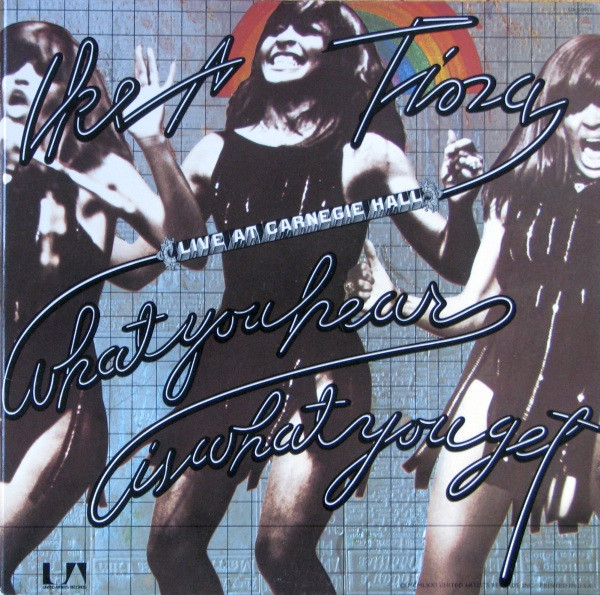
What You Hear Is What You Get - Live At Carnegie Hall
1971
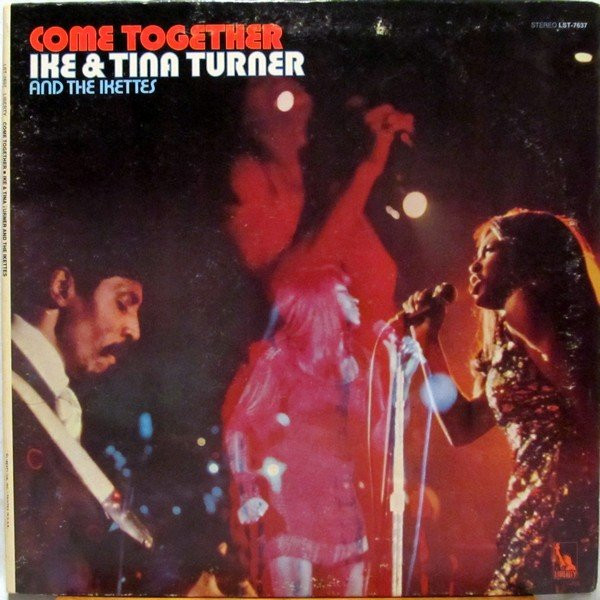
Come Together
1970
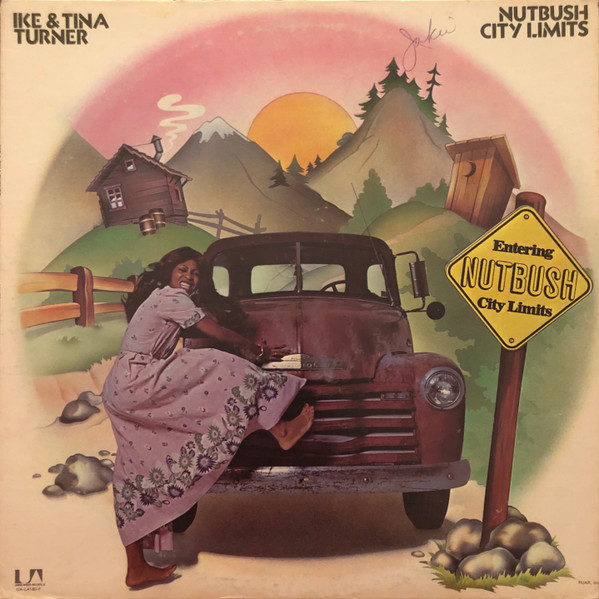
Nutbush City Limits
1973
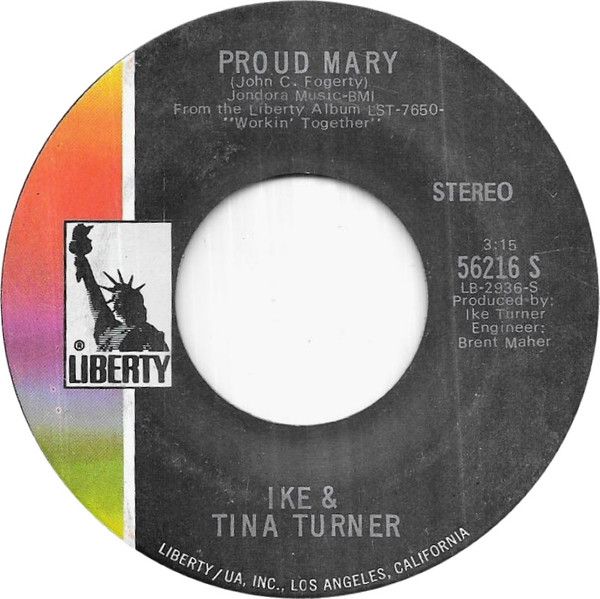
Proud Mary
1970

Greatest Hits
1976

I Want To Take You Higher
1970

Cussin', Cryin' & Carryin' On
1969

The Greatest Hits Of Ike & Tina Turner
1965

Living For The City
1985

The World Of Ike & Tina
1973

Nutbush City Limits / Help Him
1973

The Best Of
1973
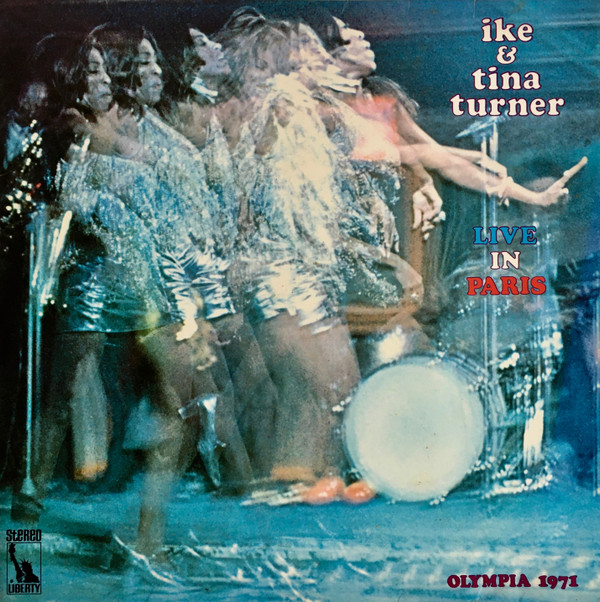
Live In Paris
1971
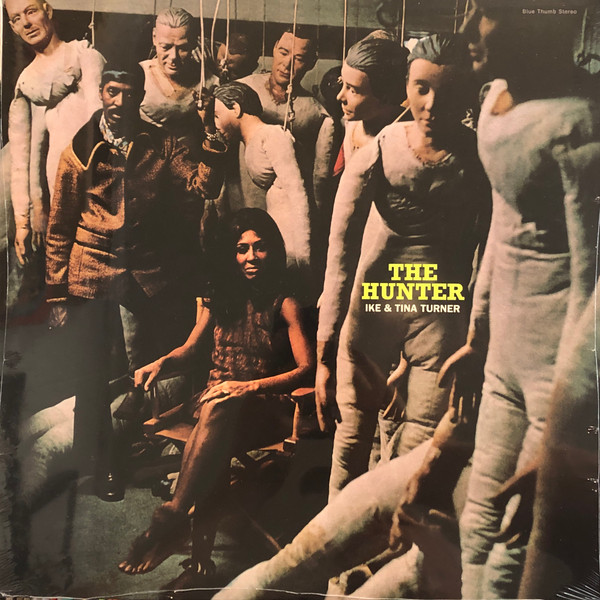
The Hunter
1969

Outta Season
1969

I Know / Bold Soul Sister
1969
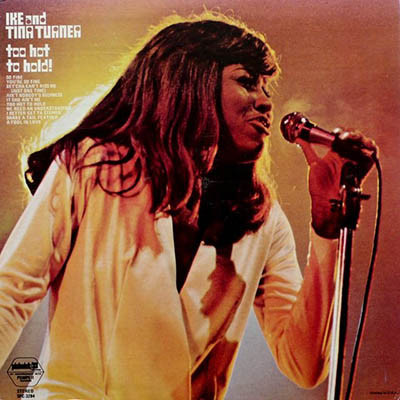
So Fine
1968

Get It - Get It
1966

The Soul Of Ike & Tina Turner
1961
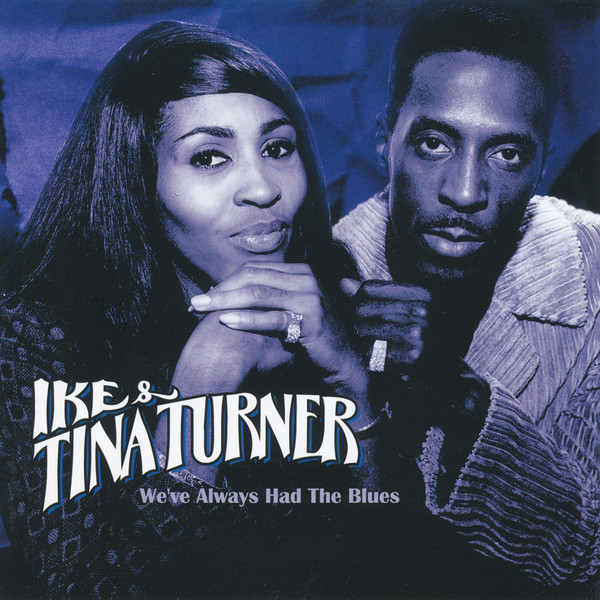
We've Always Had The Blues
2008

The Kent Years
2000

Collection
1999
Related artists
Members
Frequent collaborators
Around the web
Follow every record they touch.
Start your shelf and Gatefold tracks Ike & Tina Turner's new pressings, tour dates, and the whole discography — automatically.
Start your shelf →Free forever. Works with 10 records or 10,000.