
Artist
Leonard Cohen
Canadian singer‐songwriter and poet
Montreal, Canada · 1934 – 2016
Leonard Cohen is a musician from Montreal, Canada, active 1934–2016. Their discography on Gatefold includes 24 records.

43
Albums tracked
628
In collections
1934
Since
Biography
John Hammond signed him to Columbia in 1967 thinking he had another acoustic savior on his hands, then producer John Simon showed up to the studio and drowned the debut in strings and horns that the singer absolutely despised. He spent the entire late sixties fighting producers just to keep his nylon-string guitar audible over their orchestrations. He was thirty-three years old when that first record dropped, already a published poet living off cheap wine and amphetamines on the Greek island of Hydra. Most artists blow their creative wad in their twenties and spend forty years chasing the fumes. This guy did the exact opposite by treating songwriting like grueling manual labor where squeezing out three verses took six fucking months. He survived Phil Spector pulling a loaded .45 on him during the chaotic, whiskey-soaked 1977 sessions for Death of a Ladies' Man, then watched Columbia head Walter Yetnikoff refuse to even release Various Positions in the United States seven years later. That was the record with "Hallelujah" on it. Instead of packing it in, he bought a cheap Casio keyboard with auto-accompaniment presets and accidentally reinvented his entire sound for the late eighties. The voice dropped three octaves into the floorboards, backed by sterile drum machines and female gospel harmonies that somehow made the doom feel luxurious. When his manager wiped out his entire life savings in the mid-2000s while he was living as an ordained Zen monk on Mount Baldy, he didn't whine to the press. He booked five straight years of world tours in his seventies, played three-hour sets in sharp suits, and delivered the definitive live run of his career.
Bio from The Clerk
The Arc of Leonard Cohen
The pivots — what forced Leonard Cohen to reinvent.
The Classical Nylon Years
Bob Johnston took over the board for Songs from a Room and stripped Simon's lush orchestral arrangements down to the bare wood. Armed with a nylon-string classical guitar, a cheap acoustic setup, and backing vocals from Charlie Daniels and Ron Cornelius in Nashville, he built a stark, claustrophobic folk sound. Songs of Love and Hate pushed that minimalism to its breaking point with raw, harrowing vocal takes cut straight through the teeth. It established him as the patron saint of late-night despair before he ever touched a synthesizer.
The Spector Ambush
Warner Bros. paired him with Phil Spector in 1977 for Death of a Ladies' Man, resulting in one of the most unhinged studio meltdowns in seventies pop. Spector locked the vocal tracks in a vault, held court with loaded firearms, and smothered the dry lyrics in an avalanche of studio musicians, reverb, and horns. The record alienated folk purists and horrified the songwriter himself, but it permanently broke his acoustic mold. He regrouped on Recent Songs by hiring Henry Lewy and bringing in jazz players and traditional Oud instrumentation to clean up the wreckage.
The Casio Revival
Columbia outright rejected Various Positions in 1984, telling him his music belonged in a museum rather than modern radio. He responded in 1988 with I'm Your Man, ditching the acoustic folk pretensions entirely for cheap synth presets, a Casio keyboard, and Euro-disco basslines. Partnering with backing vocalists like Jennifer Warnes and Sharon Robinson, he paired synth-pop cheese with a nicotine-ravaged baritone and blistering political satire. It was a massive European smash that dragged him right out of folk obscurity and into modern rotation.
The Final Masterclass
Waking up completely broke after his manager stole his retirement fund forced him off Mount Baldy and back into the studio for Old Ideas and You Want It Darker. Working alongside his son Adam Cohen and Sharon Robinson, he turned failing health and extreme age into pure studio gold. The arrangements stripped back the dated nineties sheen in favor of dry, up-close vocal mics, sparse organ pads, and devastating lyrical economy. He cut his final vocal tracks sitting in a medical chair at home, delivering an absolute clinic on how to exit on your own terms.
Influences
- Federico García Lorca — He discovered the Spanish poet's work at age fifteen in a Montreal bookstore and later named his own daughter Lorca in tribute. You hear that exact surrealist Mediterranean imagery and obsession with holy violence all over songs like 'Take This Waltz,' which is an explicit adaptation of Lorca's poem 'Little Viennese Waltz.' It gave him his entire lyrical baseline before he ever picked up a guitar.
- Hank Williams — Before he touched folk, he formed a teenage country square-dance outfit called the Buckskin Boys and worshipped the Grand Ole Opry radio broadcasts. The dead-simple three-chord progressions and unvarnished misery of Williams form the hidden skeleton underneath his most intricate lyric writing. He even gave Williams a direct nod on 'Tower of Song,' shouting out the country pioneer as his upstairs neighbor in songwriting purgatory.
- Ray Charles — He frequently cited Charles in interviews as the gold standard for how to blend sacred gospel fervor with raw, secular carnality. That dynamic directly shaped his use of call-and-response backing vocalists, particularly on tracks like 'Closing Time' and 'First We Take Manhattan.' The female choir wasn't background decoration; it was the church choir lifting up the gravel.
- Lead Belly — The raw acoustic blues of Huddie Ledbetter was part of the early folk repertoire he studied during his teenage years in Montreal. You can hear Lead Belly's blunt, rhythmic thumb-picking style holding down the tempo on tracks across his self-titled 1967 debut. It taught him that a single acoustic guitar could drive an entire narrative without a rhythm section.
- Édith Piaf — Growing up bilingual in Montreal immersed him in French chanson, and he openly praised Piaf's dramatic phrasing and theatrical tragic delivery. Her influence surfaces in his heavy waltz tempos and the dark European cabaret pulse of songs like 'Dance Me to the End of Love.' He took the French torch song tradition and translated it into cynical North American verse.
Discography
Their records — most-collected first.
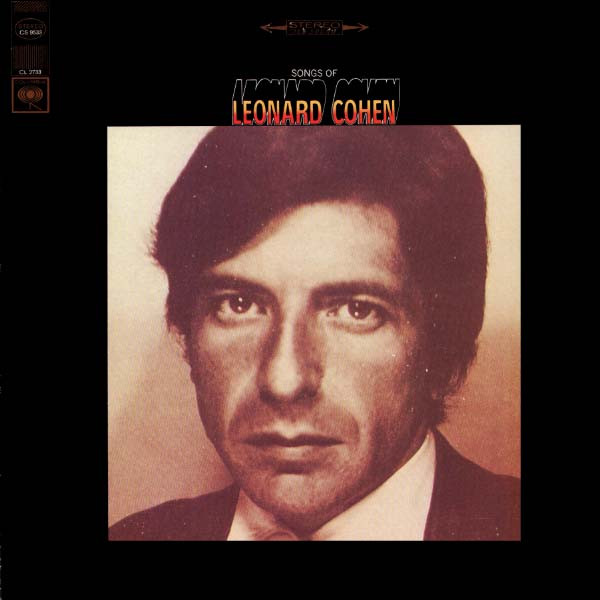
Songs Of Leonard Cohen
1968
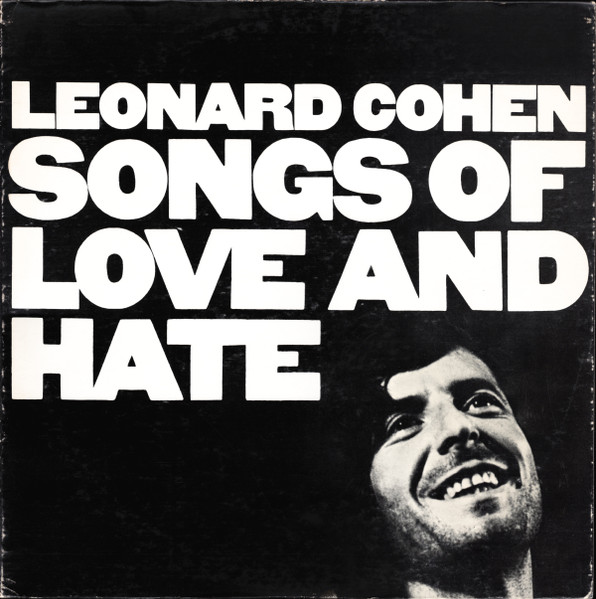
Songs Of Love And Hate
1971

Songs From A Room
1969

The Best Of
1975
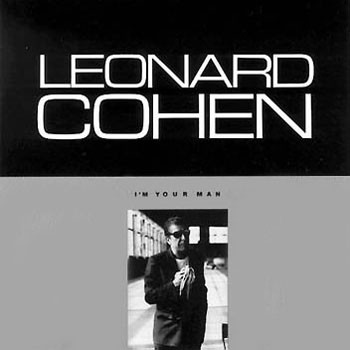
I'm Your Man
1988

New Skin For The Old Ceremony
1974
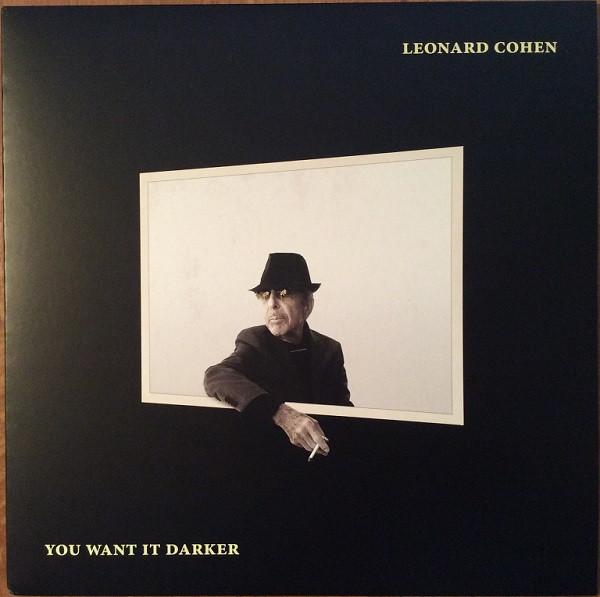
You Want It Darker
2016
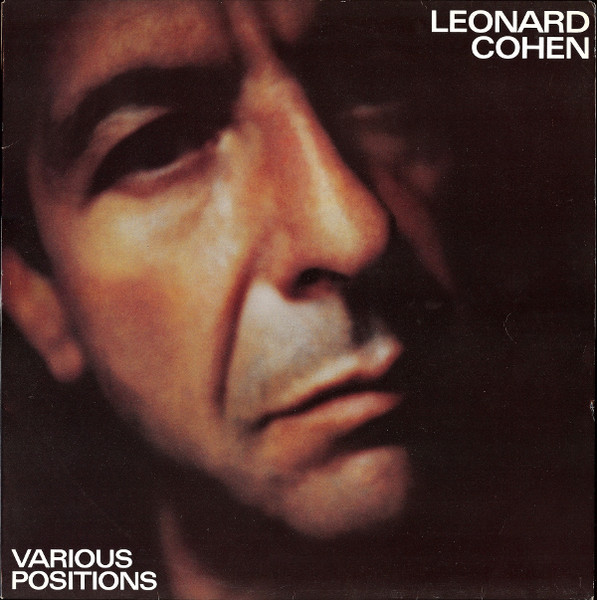
Various Positions
1984
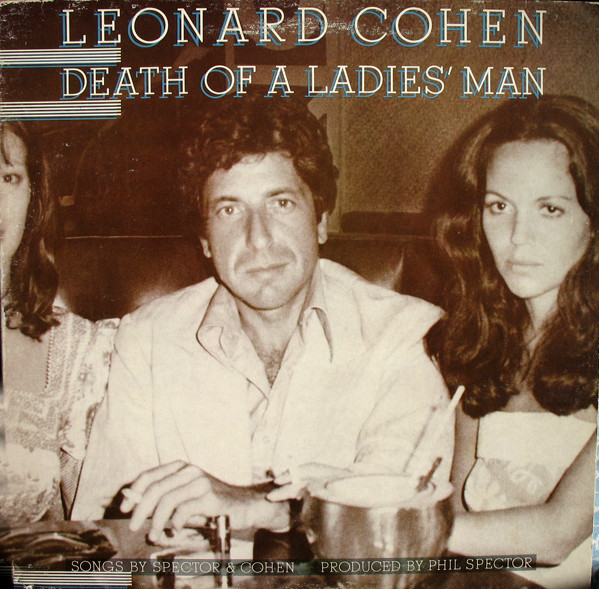
Death Of A Ladies' Man
1977

Recent Songs
1979
The Future
1992
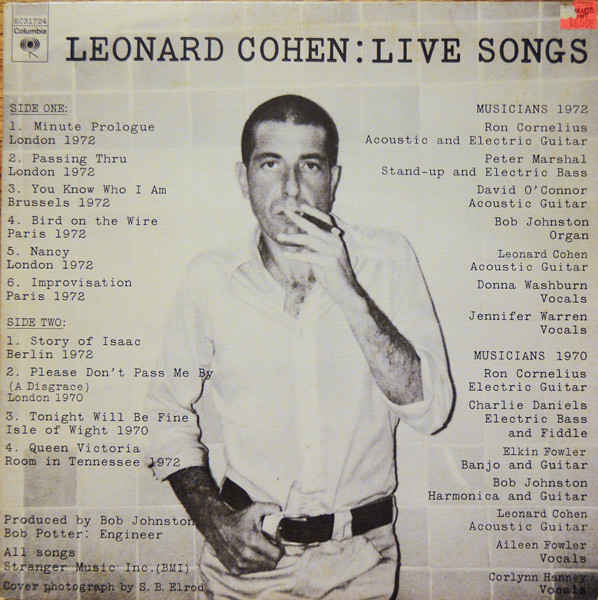
Live Songs
1973

Live In London
2009
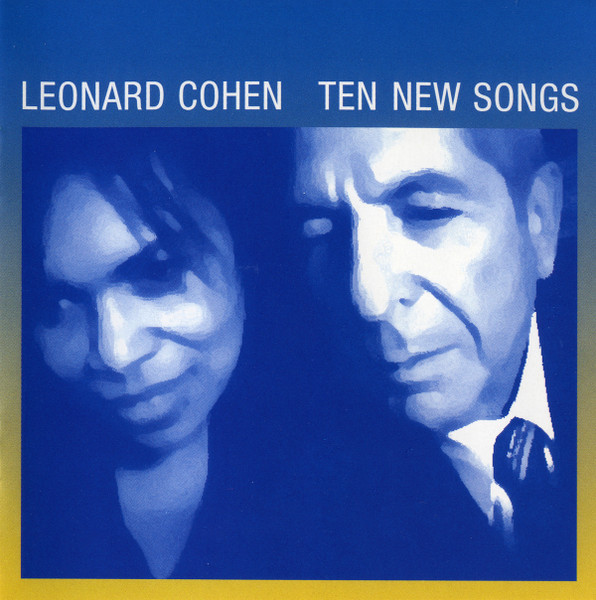
Ten New Songs
2001
Thanks For The Dance
2019
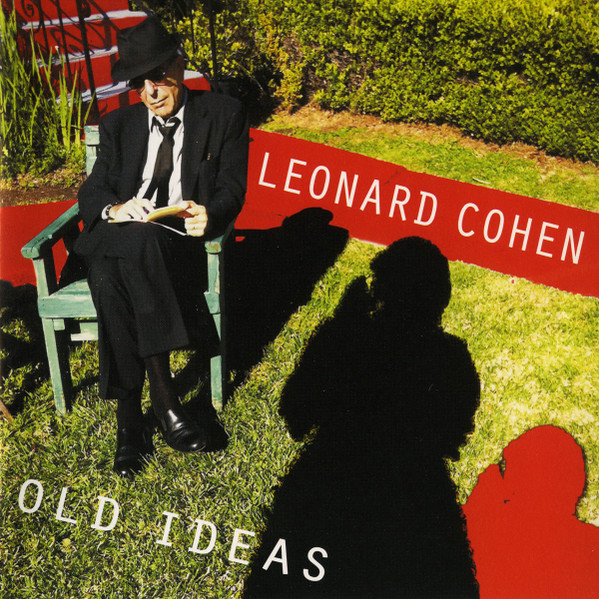
Old Ideas
2012
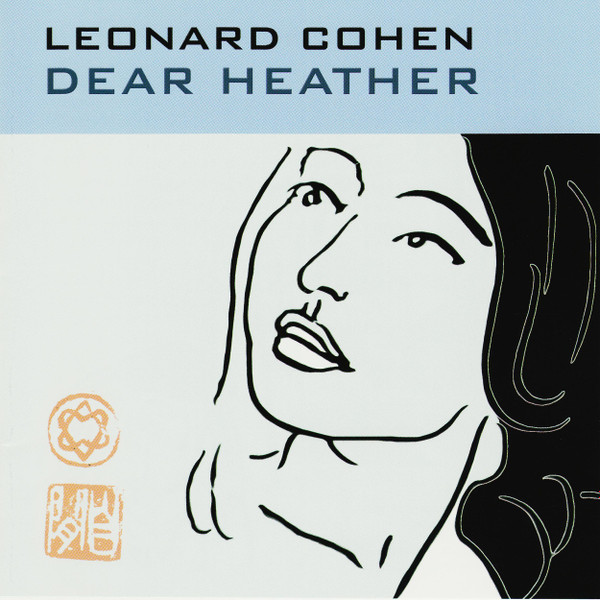
Dear Heather
2004
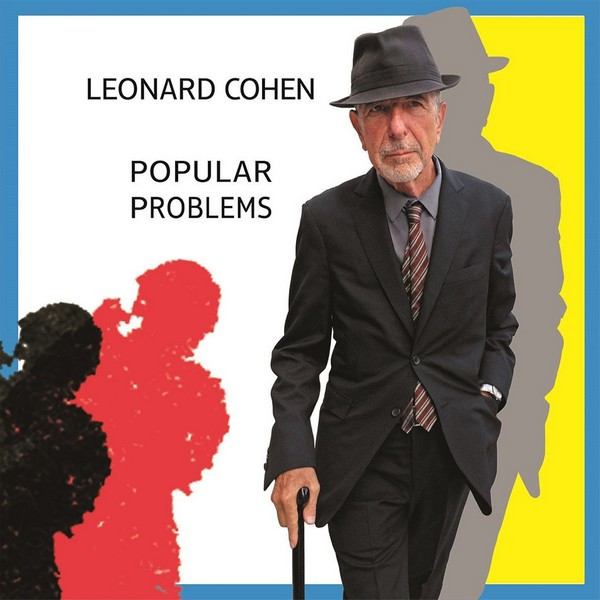
Popular Problems
2014

Live At The Isle Of Wight 1970
2009

More Best Of
1997

The Essential Leonard Cohen
2002

Field Commander Cohen: Tour Of 1979
2000

Hallelujah & Songs From His Albums
2022

Songs From The Road
2010
Related artists
Around the web
Follow every record they touch.
Start your shelf and Gatefold tracks Leonard Cohen's new pressings, tour dates, and the whole discography — automatically.
Start your shelf →Free forever. Works with 10 records or 10,000.