
Artist
Nina Simone
Tryon, United States · 1933 – 2003
Nina Simone is a musician from Tryon, United States, active 1933–2003. Their discography on Gatefold includes 24 records.

80
Albums tracked
351
In collections
1933
Since
Biography
Bethlehem Records paid her three thousand dollars in late 1957 for the sessions that became Little Girl Blue, and she signed away her publishing rights because nobody in that room told her any better. That mistake cost her millions. But you listen to that upright piano on 'Love Me or Leave Me' and you hear a Juilliard-trained classical prodigy running counterpoint Bach fugues under a torch song. She never wanted to be a jazz singer. She wanted to play Carnegie Hall as the first major Black classical concert pianist, got rejected by the Curtis Institute of Music because of her skin, and ended up in Atlantic City dive bars playing cocktail sets just to pay for piano lessons. She didn't write delicate music; she weaponized it. When she signed to Philips in 1964, she stopped playing nice for white supper clubs and dropped 'Mississippi Goddam' right after the 16th Street Baptist Church bombing and Medgar Evers' murder. Boxed records got cracked in half by radio programmers. Distributors sent crates back. She didn't give a damn. By the time RCA got their hands on her in the late sixties, the arrangements got bloated with strings and pop covers she clearly hated, but when it was just her, a tambourine, and Rudy Stevenson's guitar, she was untouchable. Holy shit, the sheer fury in those tape reels.
Bio from The Clerk
The Arc of Nina Simone
The pivots — what forced Nina Simone to reinvent.
The Classical Nightclub Hustle
She hid her real name, Eunice Waymon, so her preacher mother wouldn't know she was playing secular music in Atlantic City bars. Bethlehem Records rushed her into a single marathon session in late 1957 with bassist Jimmy Bond and drummer Albert Tootie Heath. The result was Little Girl Blue, an album where her left hand played rigid European counterpoint while her right hand swung hard. It blew up, the label took all the royalties, and she bolted to Colpix where she demanded total creative control over her repertoire.
The Philips Firestorm
In 1964 she signed to Philips and completely blew up the polite jazz-vocalist format. Tracking live at Carnegie Hall, she debuted 'Mississippi Goddam' and permanently torched her mainstream commercial prospects for the civil rights movement. Records like Pastel Blues and Wild Is the Wind stripped away the varnish, leaving raw modal blues, handclaps, and unvarnished rage. It made her an essential political voice, but it destroyed her relationship with the white-dominated music business.
The RCA Soul and Pop Compromise
Signing to RCA Victor in 1967 meant bigger budgets, slicker production, and aggressive pressure to record radio hits. She cut raw essentials like Nina Simone Sings the Blues, but the label kept burying her beneath glossy horn charts and rushed covers of the Bee Gees and Bob Dylan. You can hear her fighting the studio arrangements in real time, pushing her voice to raw extremes just to cut through the wall of studio strings. It was inconsistent and chaotic, but tracks like 'To Be Young, Gifted and Black' proved she could still turn label demands into anthems.
The Exiled Nomad
Disgusted by the American government, racism, and unpaid royalties, she abandoned the country in the early seventies and drifted through Barbados, Liberia, Switzerland, and France. Producer Creed Taylor dragged her into a studio in Brussels in 1978 to cut Baltimore for CTI Records, an album she openly hated despite its brilliant reggae-funk arrangements. By 1982 she recorded Fodder on My Wings in Paris, playing whatever she wanted with African percussion and deeply personal French lyrics. She was broke, angry, and erratic, but completely free from the American machine.
Influences
- Johann Sebastian Bach — Simone trained from childhood under Muriel Mazzanovich with the sole ambition of becoming a classical concert pianist. You hear Bach's rigid two-part inventions and fugal counterpoint running directly under her left hand on tracks like 'Love Me or Leave Me' and 'Central Park Blues'. She never played jazz piano; she played European baroque counterpoint wrapped in blues time.
- Billie Holiday — Simone frequently cited Holiday as a foundational influence and recorded definitive versions of 'Strange Fruit' and 'Don't Explain'. She took Holiday's behind-the-beat phrasing and tragic vocal weight, but hardened it with an aggressive, confrontational delivery. Holiday broke your heart; Simone dared you to look away.
- Duke Ellington — She dedicated an entire 1962 album, Nina Simone Sings Ellington, to his catalog and routinely pulled his compositions into her live sets. His mastery of modal composition and orchestral jazz directly informed how she arranged minimal trios to sound massive. She treated Ellington's sheet music like classical sacred texts.
- Ma Rainey — Simone grew up steeped in deep Southern barrelhouse blues and openly credited classic blues women for her grounded stage authority. Rainey's heavy, unapologetic moan is the direct ancestor to Simone's low register on 'Backlash Blues' and 'Gin House Blues'. It gave her an earthy grit that her classical training tried to polish out.
- Marian Anderson — Anderson was Simone's primary childhood idol, representing the peak of what a Black classical vocalist could achieve in the face of structural racism. You hear Anderson's booming contralto authority and formal, dramatic diction in Simone's vocal control on tracks like 'Black Is the Color of My True Love's Hair'. Anderson proved a Black woman could command the classical stage, and Simone spent her life fighting to claim that same space.
Discography
Their records — most-collected first.
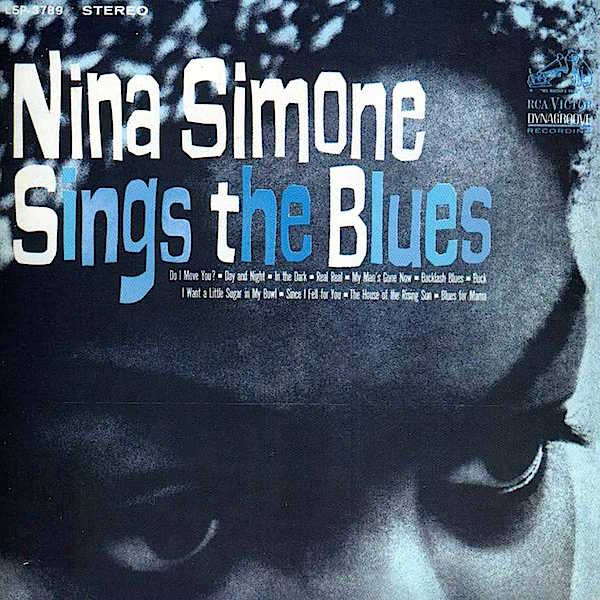
Nina Simone Sings The Blues
1967
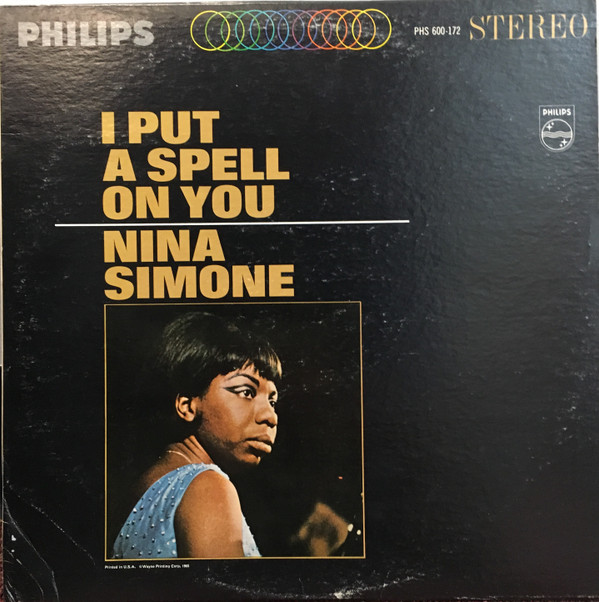
I Put A Spell On You
1965

Pastel Blues
1965
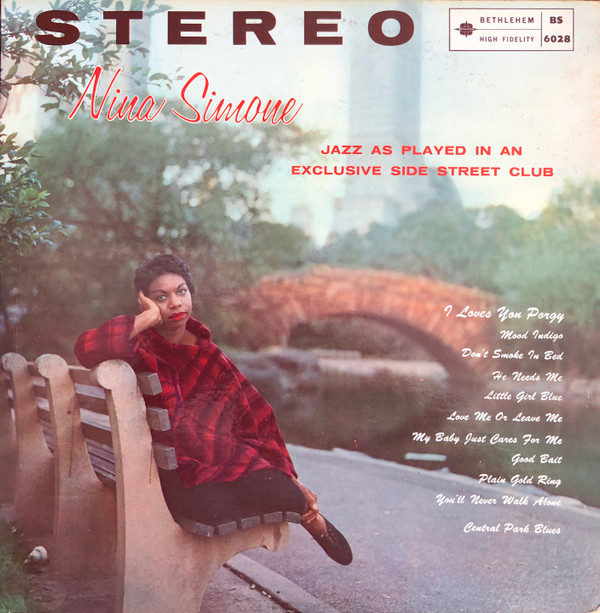
Little Girl Blue
1959
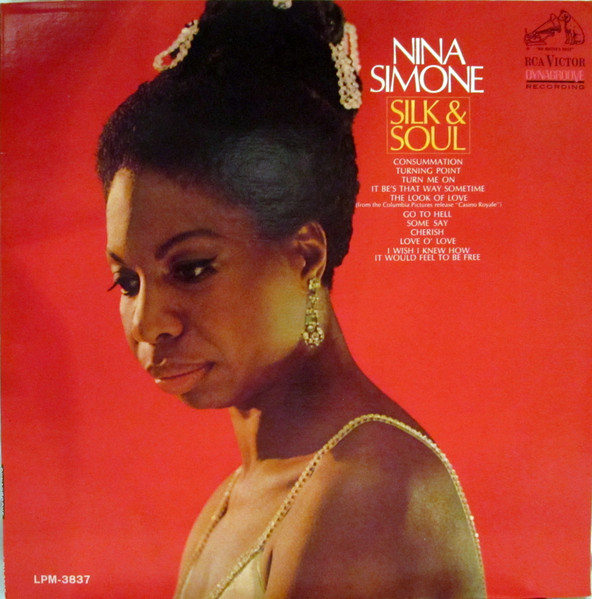
Silk & Soul
1967
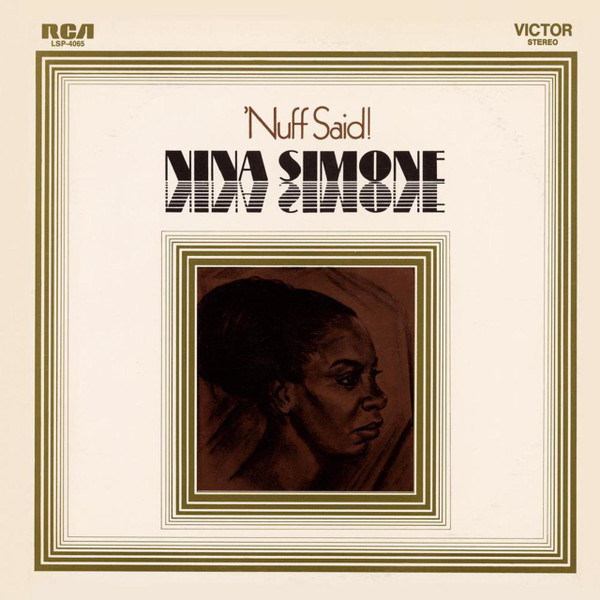
'Nuff Said!
1968
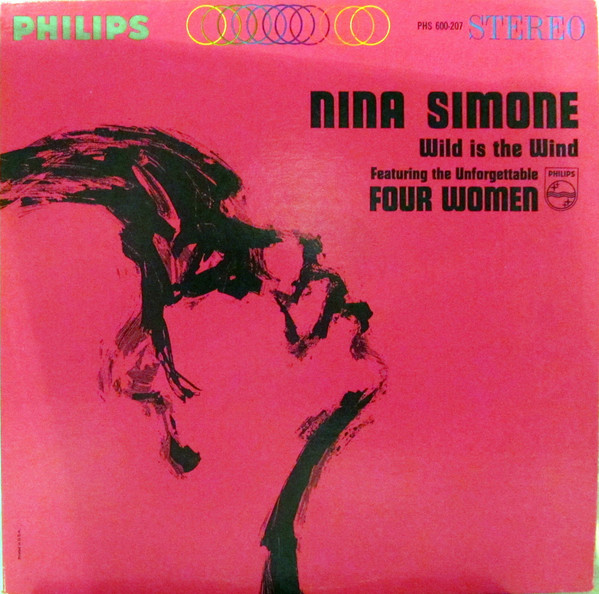
Wild Is The Wind
1966
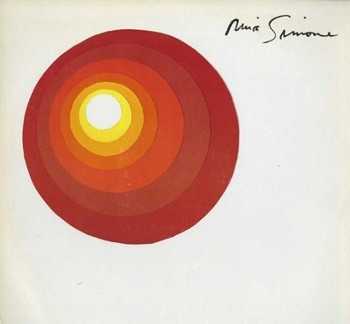
Here Comes The Sun
1971
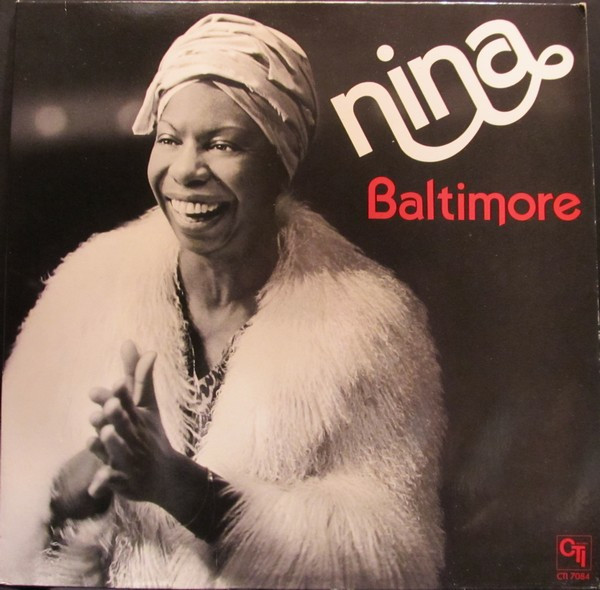
Baltimore
1978

In Concert
1964

At The Village Gate
1962

The Amazing Nina Simone
1959
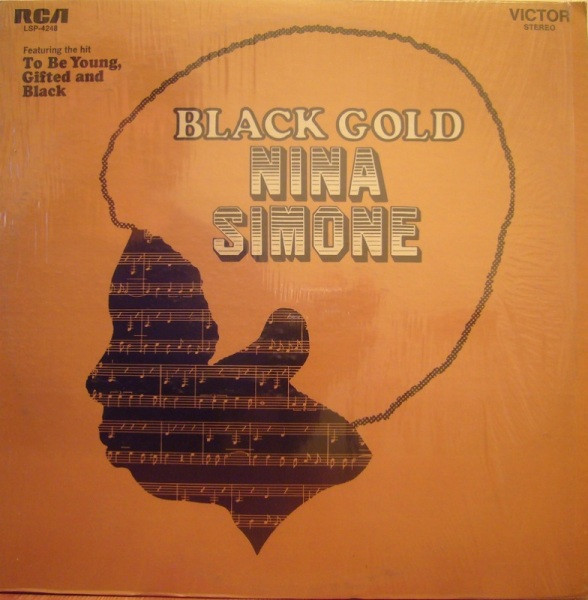
Black Gold
1970

Nina Simone At Town Hall
1959

My Baby Just Cares For Me
1982

Broadway - Blues - Ballads
1964
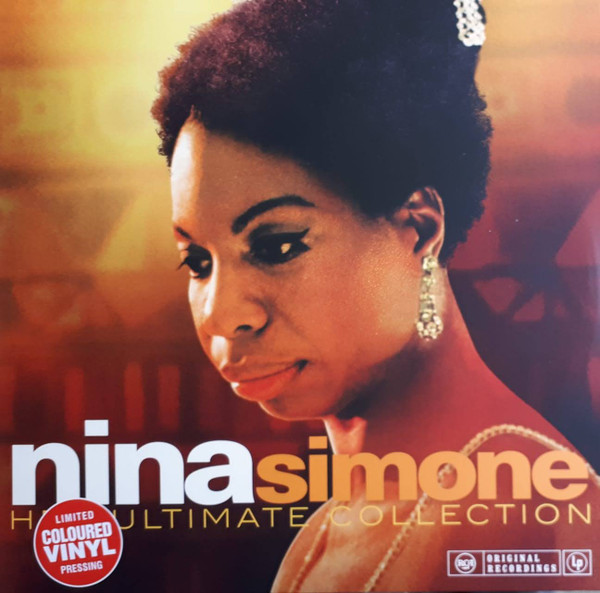
Top 40 Nina Simone - Her Ultimate Top 40 Collection
2019
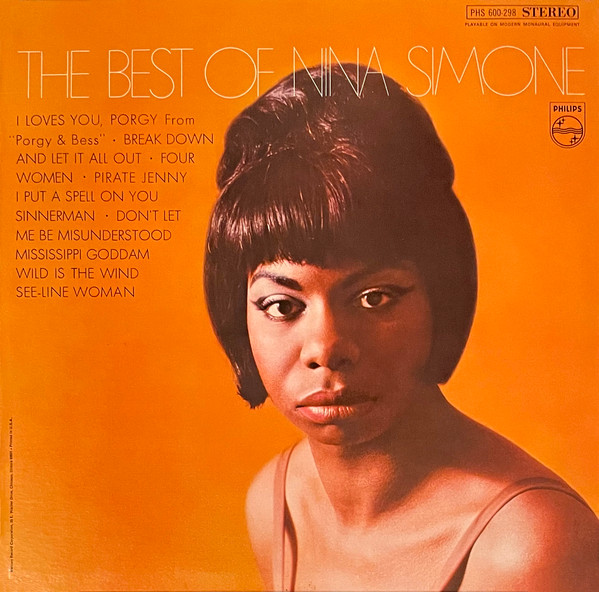
The Best Of Nina Simone
1969
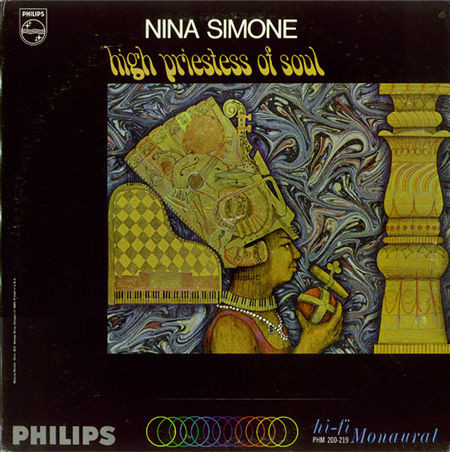
High Priestess Of Soul
1967
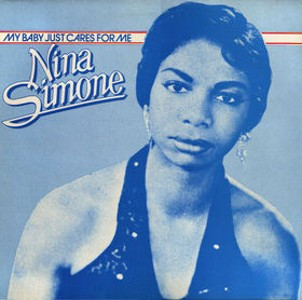
My Baby Just Cares For Me
1982
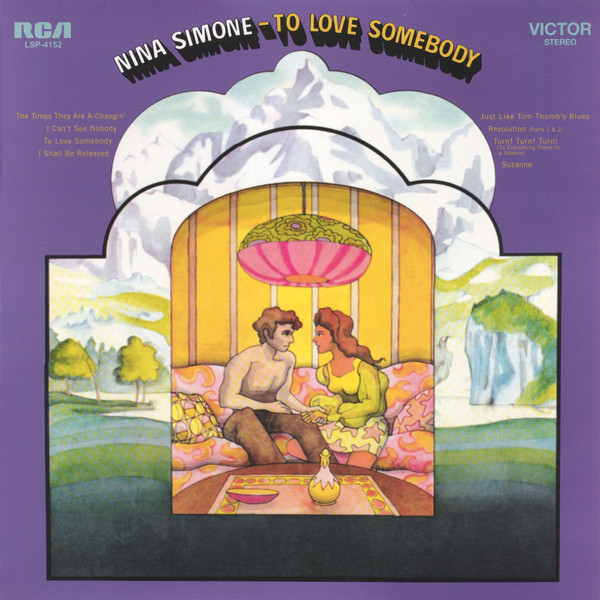
To Love Somebody
1969

You've Got To Learn
2023

Best Of Nina Simone
2023

Strange Fruit (Rare Studio & Live Recordings)
2017
Related artists
Around the web
Follow every record they touch.
Start your shelf and Gatefold tracks Nina Simone's new pressings, tour dates, and the whole discography — automatically.
Start your shelf →Free forever. Works with 10 records or 10,000.