
Artist
Death Grips
Sacramento, United States · Formed 2010
Death Grips is a music group from Sacramento, United States, active since 2010. Their discography on Gatefold includes 10 records.

10
Albums tracked
212
In collections
2010
Since
Biography
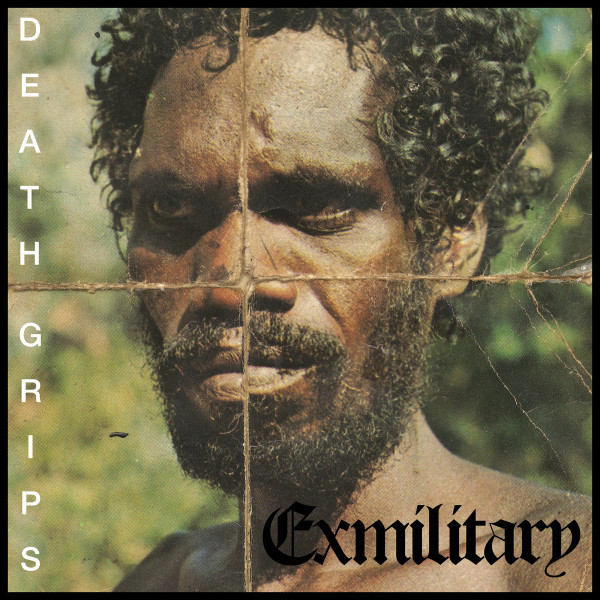
Zach Hill didn't start this thing with a plan; he started it by destroying his hands. The first tracks were recorded in a basement in Sacramento with a Roland V-Drum kit because they couldn't afford a real studio and the neighbors would have called the cops on Hill's acoustic drumming anyway. Stefan Burnett wasn't some polished rapper; he was a guy Hill knew from around town who painted and kept his mouth shut until the mic was on. Andy Morin hooked up a MacBook and a bunch of shitty MIDI controllers to harness that chaos. The result was Exmilitary, a mixtape built on a Black Flag sample that they didn't clear and never intended to. They tried to go corporate with Epic Records and it was a total fucking disaster. They leaked their own album, No Love Deep Web, because the label wanted to delay it, and they put a picture of a dick on the cover just to make sure no store would ever stock it without a fight. It wasn't a PR stunt; it was a suicide mission. They spent the next decade breaking up, reforming, canceling tours, and releasing some of the most punishing electronic music ever pressed to wax. When it works, like on The Money Store, it’s the future. When it doesn’t, like the second half of Jenny Death, it’s just three guys trying to out-noise their own shadow.
Bio from The Clerk
The Arc of Death Grips
The pivots — what forced Death Grips to reinvent.
The Sacramento Basement
The group started as a purely insular reaction to the boring Sacramento art-punk scene using nothing but a laptop and Hill’s hyperactive drumming. Exmilitary relied on heavy, uncleared samples from the Beastie Boys and Link Wray to create a wall of sound that they literally gave away for free because no lawyer would touch it. You hear the desperation in Burnett’s voice, which sounds like it was recorded through a blown-out megaphone in a concrete room. It was the last time they sounded like a recognizable hip-hop act before they started dismantling the genre entirely.
The Epic Records Sabotage
Signing to a major label was a death wish that they fulfilled in record time. After the label pushed back their release date, the band leaked No Love Deep Web from a hotel room at the Chateau Marmont and used the label's own money to fund the defiance. The production shifted away from gritty samples toward cold, digital synthesis and minimalist electronic percussion that sounded like a hardware malfunction. It ended with them getting dropped via a public letter, which they naturally posted to their Facebook page immediately.
The V-Drum Deconstruction
The band moved into a phase of total abstraction where the human element was processed until it was unrecognizable. On Niggas on the Moon, every single sound—including the percussion—was a triggered sample of Björk’s voice played through Zach Hill’s V-Drums. This wasn't about songwriting anymore; it was about how much data they could cram into a three-minute window before the listener's brain quit. It forced the fans to stop looking for hooks and start treating the records like jagged, digital sculptures.
Influences
- Bad Brains — Zach Hill explicitly cited them as the blueprint for his 'all-at-once' energy. You hear it in the frantic, shifting tempos of 'Takyon' that mirror the precision of DC hardcore. They took the PMA philosophy and inverted it into something much darker.
- Black Flag — They sampled 'Rise Above' on their very first mixtape as a statement of intent. The influence isn't just the sample; it’s the stubborn, DIY touring ethic and Greg Ginn’s dissonant guitar style translated into electronic synth leads. It’s the sound of being backed into a corner and swinging.
- Public Enemy — The Bomb Squad’s 'wall of noise' production style is the DNA for everything Andy Morin does. Songs like 'The Fever (Aye Aye)' use the same dense, layering-on-top-of-layering technique that made It Takes a Nation of Millions to Hold Us Back sound like a riot. It’s about frequency-masking and sheer volume as a weapon.
- David Bowie — Before he passed, Bowie’s producer Tony Visconti confirmed that Death Grips was a primary inspiration for the sound of Blackstar. The band shares Bowie’s obsession with constant persona shifts and the refusal to ever explain the art. You see that same 'Berlin era' detachment in how they treat their own stardom.
- Link Wray — They sampled the 1958 track 'Rumble' on 'Spread Eagle Cross the Block' to ground their noise in raw, American primal energy. Wray invented the power chord by poking holes in his speakers with a pencil, and that same 'break the gear to find the sound' mentality defines the group's entire production ethos. It’s the link between 50s delinquency and digital anarchy.
Discography
Their records — most-collected first.





Related artists
Frequent collaborators
Around the web
Follow every record they touch.
Start your shelf and Gatefold tracks Death Grips's new pressings, tour dates, and the whole discography — automatically.
Start your shelf →Free forever. Works with 10 records or 10,000.