
Album
Low
1977 · Electronic, Rock
130 collectors on Gatefold own this
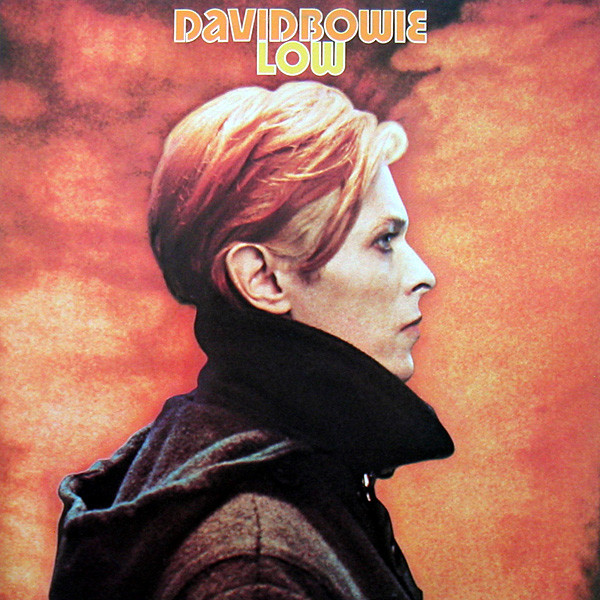
Low is an Electronic album by David Bowie, originally released in 1977. On Gatefold: 206 pressings tracked, owned by 130 collectors.
About
The first installment of David Bowie’s famed Berlin Trilogy actually wasn’t birthed in Berlin. After barely surviving the druggy LA hedonism that birthed 1976’s <i>Station to Station</i>, Bowie vowed to get clean and stowed himself away in a chateau studio in northern France, with fellow addict Iggy Pop in tow. The detoxing duo recorded Pop’s 1977 solo debut, <i>The Idiot</i>, which featured a collision of seedy, urbane rock, and cold, mechanistic rhythms—a reflection of Bowie’s growing obsession with the electronic-oriented sounds coming out of Germany at the time. And with his own next record, Bowie immersed himself so deeply in that realm, he practically disappeared into it. Released in 1977, and recorded with producer Tony Visconti and fellow glam survivor Brian Eno, <i>Low</i> closely mirrors the former Roxy Music figurehead’s own transition from eccentric art-rock artist to ambient-music icon. An exemplar of how the vinyl format could influence aesthetic choices, <i>Low</i> is divided into two distinct, oppositional sides: The first is made of up of compact, synth-shocked pop songs; the second is a suite of abstract ambient pieces that merge the worlds of electronic experimentation, opera, and neoclassical composition. It’s easy to see <i>Low</i>’s first half as a logical extension of <i>Station to Station</i>’s icy avant-funk. But the buzzing keyboards, chromatic leads, and industrial-strength beats of songs like “Breaking Glass” and “What in the World” push Bowie far away from the American soul music that initially inspired him to trade in his glitter for grooves. And for all its radical sound design and cryptic lyrical fragments, <i>Low</i>’s Side A offers some of Bowie’s purest expressions of emotion, be it the irrepressible “Sound and Vision” or the sorrowful “Always Crashing in the Same Car,” both of which spin traditional mid-century radio into otherworldly transmissions. If <i>Low</i>’s first act offers a glimpse of a totally wired future, its meditative second half is firmly grounded in the moment of its creation. Inspired by Bowie’s walks through the battle-scarred post-war cityscapes of Warsaw and West Berlin (where the album was eventually completed and mixed), <i>Low</i>’s Side B is a haunted aftershock of the 20th century’s darkest hour: In the isolated moments when Bowie’s vocals do appear—via the indecipherable incantations that complement the foggy drones of “Warszawa,” the Steve Reich-like percolations of “Weeping Wall,” or the closing sax-speckled synthphony “Subterraneans”—he isn’t so much singing to his audience as praying for humanity. <i>Low</i>’s unconventional nature initially prompted RCA Records to delay its release by several months, as the label feared the record would flop commercially. But its influence immediately filtered down to the post-punky synth-pop acts that would dominate the British weeklies into the 1980s, and<i>Low</i>’s legacy would continue to proliferate decades later, when alt-rock auteurs like Trent Reznor, James Murphy, and St. Vincent embraced its forward-thinking fusion of ruptured rhythms, idiosyncratic melody, and dissonant texture. After spending the better part of the 1970s using his body as a blank canvas to develop new personae, <i>Low</i> halted that ceaseless cycle of visual reinvention with an act of self-negation, as Bowie completely surrendered to the impressionistic power of sound. And as he dug his heels deeper into his new Berlin base, the line between vanguard pop star and avant-garde explorer would continue to blur in fascinating and unpredictable ways.
via Apple Music
The Clerk says
The Clerk knows this whole record — the pressing quirks, the credits, the take.
Tracklist
Side A
- A1Speed Of Life
- A2Breaking Glass
- A3What In The World
- A4Sound And Vision
- A5Always Crashing In The Same Car
- A6Be My Wife
- A7A New Career In A New Town
Side B
- B1Warszawa
- B2Art Decade
- B3Weeping Wall
- B4Subterraneans
Sound DNA
- Electronic
- Ambient & Downtempo
- sparse
- melancholic
- nocturnal
11th studio album released January 1977.
The sound and production of this album were significantly influenced by Krautrock, the group Kraftwerk and especially Brian Eno, with whom Bowie also recorded the two follow-up albums "Heroes" and Lodger, which form his so-called "Berlin Trilogy" with Low from 1977 to 1979.
The UK first edition (Low (UK 1977) (opens in a new tab)) has a cover that uses a modified version of the US cover - the catalogue present in the top RH front corner of the US cover has been masked over (artifacts are visible); the fan club insert of the UK edition uses a different font where catalogue numbers differ from the US numbers. The UK spine copies the US spine and adds additional information. The rear sticker (attached to the UK cover) has the titles Left Margined, whereas the remainder of the album artwork uses a Centred style (as seen on the front cover, insert and US sticker).
Credits
The people behind it.
Performers
- Brian EnoFEATURING PIANO SYNTHESIZER
- Carlos AlomarRHYTHM GUITAR GUITAR
- David BowieBASS GUITAR HARMONICA
- Dennis DavisPERCUSSION
- Eduard MeyerCELLO
- George MurrayBASS
- Iggy PopBACKING VOCALS VOCALS
- Mary ViscontiBACKING VOCALS VOCALS
- Paul BuckmasterPIANO PIANO , SYNTHESIZER PIANO, SYNTHESIZER
- Peter RobinsonPIANO PIANO , SYNTHESIZER PIANO, SYNTHESIZER
- Ricky GardinerGUITAR BASS RHYTHM GUITAR
- Roy YoungELECTRIC ORGAN ORGAN PIANO
- Roy YoungPIANO, ELECTRIC ORGAN PIANO, ORGAN
- David Bowie & FriendsSYNTHESIZER
- Geroge MurrayBASS
130 collectors on Gatefold own this · 206 pressings tracked on Gatefold
Start your shelf.
Track your pressings of Low, get the Clerk's take, and see what the record is worth — free.
Start your shelf →Free forever. Works with 10 records or 10,000.