
Performance · Other credits
E. Power Biggs
real name Edward George Power Biggs
English organist/harpsichordist
United States · 1906-03-29 – 1977-03-10
E. Power Biggs is credited on 865 releases across 161 albums tracked on Gatefold, active 1950–2024 — the collector-built map of who actually made the music.
865
Credits
161
Albums
8
Decades active
12
In collections
Biography
Showing the Discogs bio
English-born American organist, harpsichordist, and recording artist.
Born March 29, 1906 in Westcliff-on-Sea, England, UK
Died March 10, 1977 in Cambridge, Massachusetts, USA (aged 70)
Biggs was born in Westcliff-on-Sea, Essex, England; a year later, the family moved to the Isle of Wight. Biggs was trained in London at the Royal Academy of Music, where he studied with G.D. Cunningham. Biggs emigrated to the United States in 1930. In 1932, he took up a post at Christ Church in Cambridge, Massachusetts, where he lived for the rest of his life.
Biggs did much to bring the classical pipe organ back to prominence, and was in the forefront of the mid-20th-century resurgence of interest in the organ music of pre-Romantic composers. On his first concert tour of Europe, in 1954, Biggs performed and recorded works of Johann Sebastian Bach, Sweelinck, Dieterich Buxtehude, and Pachelbel on historic organs associated with those composers. Thereafter, he believed that such music should ideally be performed on instruments representative of that period and that organ music of that epoch should be played by using (as closely as possible) the styles and registrations of that era. Thus, he sparked the American revival of organ building in the style of European Baroque instruments, seen especially in the increasing popularity of tracker organs — analogous to Europe's Orgelbewegung.
Among other instruments, Biggs championed G. Donald Harrison's Baroque-style unenclosed, unencased instrument with 24 stops and electric action (produced by Aeolian-Skinner in 1937 and installed in Harvard's Busch-Reisinger Museum, Cambridge, Massachusetts) and the three-manual Flentrop tracker organ subsequently installed there in 1958. Many of his CBS radio broadcasts and Columbia recordings were made in the museum. Another remarkable instrument used by Biggs was the Challis pedal harpsichord; Biggs made recordings of the music of J.S. Bach and Scott Joplin on this instrument.
His critics of the time included rival concert organist Virgil Fox, who was known for a more flamboyant, colorful style of performance. Fox decried Biggs' insistence on historical accuracy, claiming it was "relegating the organ to a museum piece." However, most observers agree that Biggs "should be given great credit for his innovative ideas as far as the musical material he recorded, and for making the organs he recorded even more famous."[2] Despite different approaches, both artists enjoyed hugely successful careers and Biggs rose to the top of his profession.
In addition to concertizing and recording, Biggs taught at the Longy School of Music in Cambridge, Massachusetts, at various times in his career and edited a large body of organ music.
For his contribution to the recording industry, E. Power Biggs has a star on California's Hollywood Walk of Fame, at 6522 Hollywood Blvd.
Bio from Discogs
Credited work
865 releases · 161 albums · active 1950–2024
- Performance · 1,012
- Other credits · 257
Studios: Busch-Reisinger Museum · Thomaskirche Leipzig · Symphony Hall, Boston · Academy Of Music, Philadelphia
Discography
Records they worked on — most-collected first.

The Cuckoo And The Nightingale (Four Favorite Handel Organ Concertos)
1963

Bach Organ Favorites
1961
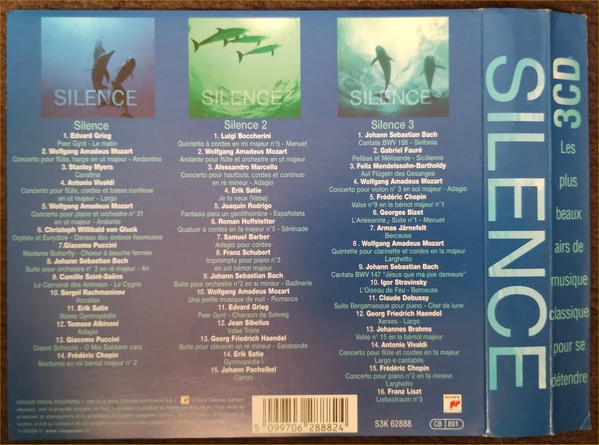
Silence
1997

Silence³
1996

Best Of Bach
1973
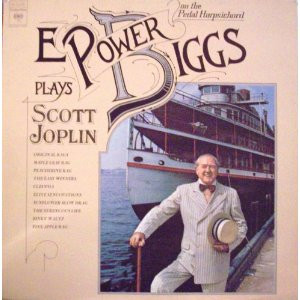
E. Power Biggs Plays Scott Joplin On The Pedal Harpsichord
1973

The Magnificent Mr. Handel (Concertos, Curtain Tunes, Marches, Ayres And Divers Pieces)
1970

The Antiphonal Music Of Gabrieli
1968

Canzonas For Brass, Winds, Strings And Organ
1968
Frequent collaborators
- Various
- Bach
- Handel
- Saint-Saëns
- Gabrieli
- Johann Sebastian Bach
- Copland
- Hindemith
Around the web
See who really made the music.
Gatefold maps every producer, engineer, and player across your shelf — the credits no one else surfaces.
Start your shelf →Free forever. Works with 10 records or 10,000.