
Performance · Other credits
Braille
Braille is credited on 93 releases across 50 albums tracked on Gatefold, active 1999–2024 — the collector-built map of who actually made the music.

93
Pressings credited
50
Albums
4
Decades active
9
In collections
Biography
Braille ( BRAYL; French: [bʁaj] ) is a tactile writing system used by blind or visually impaired people. It can be read either on embossed paper or by using refreshable braille displays that connect to computers and smartphone devices. Braille can be written using a slate and stylus, a braille writer, an electronic braille notetaker or with the use of a computer connected to a braille embosser. For blind readers, braille is an independent writing system, rather than a code of printed orthography. Braille is named after its creator, Louis Braille, a Frenchman who lost his sight as a result of a childhood accident. In 1824, at the age of fifteen, he developed the braille code based on the French alphabet as an improvement on night writing. He published his system, which subsequently included musical notation, in 1829. The second revision, published in 1837, was the first binary form of writing developed in the modern era. Braille characters are formed using a combination of six raised dots arranged in a 3 × 2 matrix, called the braille cell. The number and arrangement of these dots distinguishes one character from another. Since the various braille alphabets originated as transcription codes for printed writing, the mappings (sets of character designations) vary from language to language, and even within one; in English braille there are three levels: uncontracted – a letter-by-letter transcription used for basic literacy; contracted – an addition of abbreviations and contractions used as a space-saving mechanism; and grade 3 – various non-standardized personal stenographies that are less commonly used. In addition to braille text (letters, punctuation, contractions), it is also possible to create embossed illustrations and graphs, with the lines either solid or made of series of dots, arrows, and bullets that are larger than braille dots. A full braille cell includes six raised dots arranged in two columns, each column having three dots. The dot positions are ident
Bio from Wikipedia
Credited work
93 releases · 50 albums · active 1999–2024
- Performance · 94
- Other credits · 8
- Production · 7
- Engineering · 2
Studios: Knomercy Studios · The Lounge, Philadelphia, PA · Eastwest Studios · Castle Recording Studios Utica, NY
Discography
Records they worked on — most-collected first.


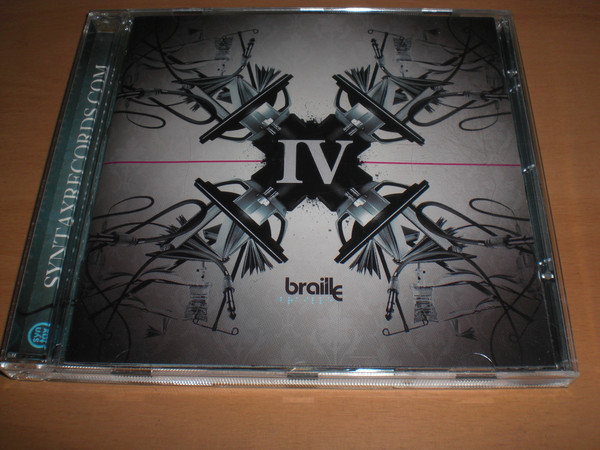
Frequent collaborators
- Ohmega Watts
- Various
- CunninLynguists
- Speech
- Voicst
- Marcus D
- Tone Spliff
- Tony Stone (2)
Around the web
See who really made the music.
Gatefold maps every producer, engineer, and player across your shelf — the credits no one else surfaces.
Start your shelf →Free forever. Works with 10 records or 10,000.