
Performance · Other credits
Arturo Toscanini
conductor
Italy · 1867-03-25 – 1957-01-16
Arturo Toscanini is credited on 2,454 releases across 372 albums tracked on Gatefold, active 1950–2024 — the collector-built map of who actually made the music.

2,454
Credits
372
Albums
8
Decades active
12
In collections
Biography
Showing the Discogs bio
Arturo Toscanini (25 March 1867, Parma — 16 January 1957, New York, USA) was a distinguished Italian conductor often cited among the greatest maestros of the late XIX—early XX century. He was the father of choreographer Walter Toscanini (1898—1971) and Wanda Toscanini (opens in a new tab) (1907—1998), who later married pianist Vladimir Horowitz, and grandfather of architect Walfredo Toscanini (1929—2011) and photographer Sonia Toscanini Horowitz (opens in a new tab) (1934—1975).
Toscanini began as a cellist, studying under Carini Severino Leandro (1834—1910) and Giusto Dacci (1840—1915) on a scholarship at Parma Conservatory (opens in a new tab). In June 1886, shortly after graduation, 19-year-old Arturo had a highly unorthodox debut at the rostrum. He just became a principal cellist and assistant choirmaster for a new opera company established by Italian set designer and architect Claudio Rossi (1850—1935), who primarily worked as South American tour contractor for leading European troupes. Amidst his ill-fated premiere tour, Rossi's principal conductor Leopold Amérigo Miguéz resigned right before Verdi (opens in a new tab)'s Aida performance in São Paulo; since neither the assistant conductor nor choirmaster could replace him, teenager Toscanini agreed to be a stand-in. Despite his young age, Toscanini excelled and decided to pursue this newly-founded path in favor of cello upon returning to Italy. In November 1886, Arturo gave his "home" debut at Teatro Carignano (opens in a new tab) in Turin, conducting the world premiere of Alfredo Catalani's Edmea opera. From 1898 to 1908, Toscanini was a principal conductor at Teatro alla Scala, Milano.
Between 1908 and 1915, he resided in the USA, employed at The Metropolitan Opera House in New York. In December 1920, on tour with La Scala Orchestra (opens in a new tab), Toscanini made his first acoustic recordings for at Camden Church Studio (opens in a new tab) in New Jersey, featuring works by Mozart (opens in a new tab), Beethoven (opens in a new tab), Pizzetti (opens in a new tab), and Respighi (opens in a new tab) that came out as a series of 78 RPM shellac discs. Besides a few early releases on other gramophone labels, such as Fonotipia, Brunswick Record Corporation, and The Gramophone Co. Ltd / His Master's Voice, Toscanini exclusively recorded for RCA Victor for his entire career.
In 1926, Toscanini began conducting the New York Philharmonic, extensively touring the US and Europe for most of the decade. Under the guidance of the orchestra's press manager, Dorle J. Soria (who later co-founded Angel Records with her husband), the maestro rapidly grew to international superstardom. Despite his brief early support for Benito Mussolini, Toscanini was a fervent critic of the fascist regime and persistently refused to open concerts with the "Giovinezza" hymn. In turn, Mussolini quickly went from praising "the greatest conductor in the world" to ignoring even such iconic La Scala premieres as Puccini (opens in a new tab)'s Turandot in April 1926. Their tensions peaked by the early 1930s after Toscanini's historical appearance at as the first non-German maestro. In May 1931, Blackshirts sabotaged his Teatro Comunale di Bologna concert, physically assaulting Arturo and his wife. They immediately fled the country, narrowly escaping only thanks to the bravery of the event organizer, Cesare Nordio (1891—1977), and Ottorino Respighi's timely protection. Toscanini appeared at the Salzburg Festival (opens in a new tab) (1934 to 1937) and led the Palestine Symphony Orchestra (opens in a new tab)'s inaugural 1936 concert in Tel Aviv.
In 1936, Toscanini resigned from NY Phil and returned to Italy, planning to retire at 69. Soon, the RCA (opens in a new tab) president David Sarnoff (1891—1971) offered him to lead a new radio broadcast symphonic orchestra in the States. Hesitant at first, Arturo agreed — convinced by their mutual friend, pianist Samuel Chotzinoff (1899—1964). In December 1937, Toscanini debuted with a newly established NBC Symphony Orchestra. His third US tenure lasted for 17 years and was most illustrious, with Toscanini eventually recognized as a nationwide household name. He left the stage at 87 after suffering a transient ischemic attack during a Carnegie Hall concert in April 1954.
Bio from Discogs
Credited work
2,454 releases · 372 albums · active 1950–2024
- Performance · 2,542
- Other credits · 93
Studios: Carnegie Hall · Studio 8H · NBC Studios, New York · Queen's Hall, London
Discography
Records they worked on — most-collected first.
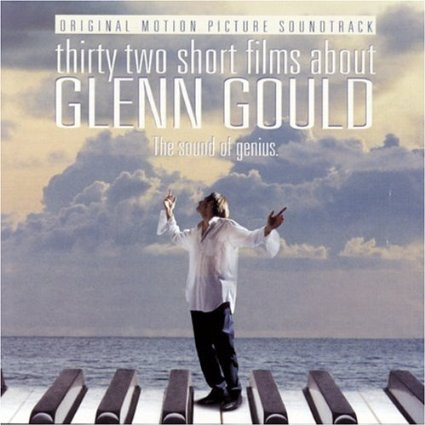
Thirty Two Short Films About Glenn Gould (Original Motion Picture Soundtrack)
1994

Beethoven: Symphony No. 5 In C Minor, Op. 67 / Schubert: Symphony No. 8 In B Minor "Unfinished"
1981

Die Meistersinger ● Lohengrin ● A Faust Overture ● Siegfried Idyll
1967

All Star Spectacular
1959

Toscanini Conducts Wagner
1954

Tchaikovsky's Nutcracker Suite
1953
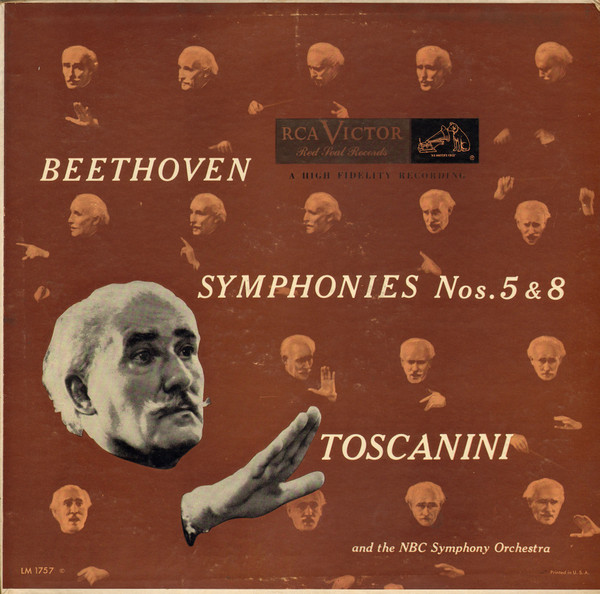
Symphonies Nos. 5 & 8
1952

Symphony No. 1 In C Minor Op. 68
1952

Grand Canyon Suite
1946

Rossini Overtures
1945

Concerto No. 2, In B Flat Major For Piano And Orchestra, Op. 83
1941

Otello

Mendelssohn Symphony No. 4 / Schubert Symphony No. 8
1972
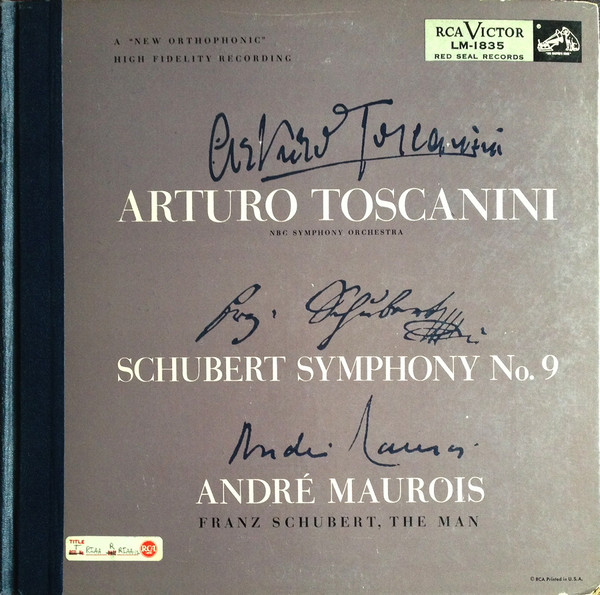
Symphony No. 9 In C
1954

Dvořák's Symphony (From The New World)
1954
Four Brahms Symphonies
1954
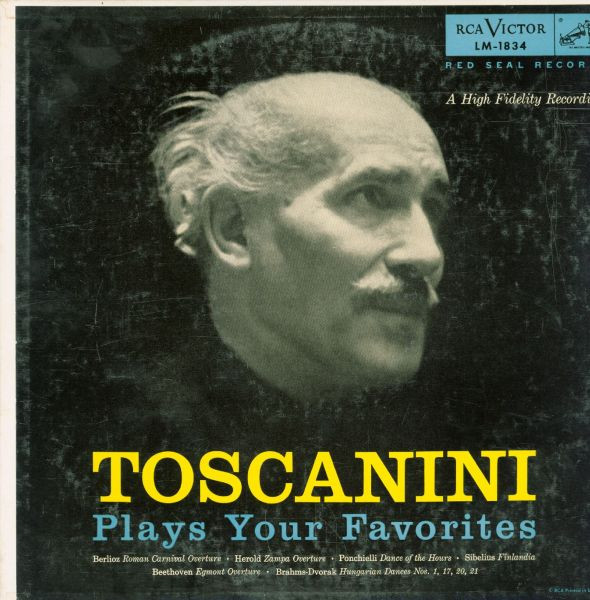
Toscanini Plays Your Favorites
1954
Frequent collaborators
- Beethoven
- Toscanini
- Various
- Wagner
- Mozart
- Brahms
- Verdi
- Schubert
Around the web
See who really made the music.
Gatefold maps every producer, engineer, and player across your shelf — the credits no one else surfaces.
Start your shelf →Free forever. Works with 10 records or 10,000.