
Artist
Art Tatum
US jazz pianist
Toledo, United States · 1909 – 1956
Art Tatum is a musician from Toledo, United States, active 1909–1956. Their discography on Gatefold includes 24 records. They also recorded with Art Tatum Trio.

27
Albums tracked
25
In collections
1909
Since
Biography
The man was born with cataract-ravaged eyes and essentially taught himself to play by mimicking player piano rolls that were actually cut by two different people. He didn’t realize the rolls featured four hands, so he just figured out how to make ten fingers do the work of twenty. When he showed up in New York in '32 to cut 'Tiger Rag' for Brunswick, the rest of the stride masters—James P. Johnson, Fats Waller, Willie 'The Lion' Smith—realized their entire technical world had just been nuked. Fats famously announced to a room, 'I only play the piano, but tonight God is in the house.' Most of his career was spent in the relative obscurity of 52nd Street clubs or playing private after-hours cutting sessions until the sun came up. He didn't care about the record industry hustle. He just wanted a beer and a piano that wasn't missing too many keys. His technique was so fast it sounded like he was skipping across the surface of the melody, never losing the stride pulse even when he was throwing 16th-note runs in both directions. It’s not just speed; it’s the fact that he was reharmonizing standard tunes on the fly with chords that wouldn't become common in jazz for another fifteen years.
Bio from The Clerk
The Arc of Art Tatum
The pivots — what forced Art Tatum to reinvent.
The Stride Executioner
After arriving in New York to accompany singer Adelaide Hall, Tatum spent the early 30s destroying the egos of the established stride royalty at rent parties. These early solo recordings for Brunswick and Decca showcase a terrifying lack of restraint, where he treats 1920s show tunes like math problems to be solved at 300 beats per minute. You hear the ghost of the player piano rolls in his left hand, providing a rock-solid foundation while his right hand executes runs that shouldn't be physically possible on a weighted action. It was a hostile takeover of the piano bench that forced every other player in town to go back to the practice room.
The Trio Shift
By 1943, the solo genius format was wearing thin commercially, so he formed a trio with Tiny Grimes on guitar and Slam Stewart on bass. This wasn't a democratic band—it was a high-wire act where the rhythm section had to anticipate his erratic, chromatic shifts without any sheet music to guide them. Stewart’s trademark of humming along with his bowed bass lines added a weird, eerie texture to the records that contrasted with Tatum’s diamond-cut precision. These sessions proved he could actually play well with others, even if he still functionally played enough notes for all three of them.
The Norman Granz Marathons
Toward the end of his life, Verve founder Norman Granz dragged him into the studio for a series of marathon sessions to document everything he had left. Granz didn't care about radio hits or three-minute limits; he just let the tape roll while Tatum sat at a Steinway and emptied his brain. These solo and group masterpieces, recorded between '53 and '56, are the definitive documents of his late-period harmonic expansion. He was battling uremia and drinking heavily, but the recordings with Ben Webster and Roy Eldridge show zero decline in his finger-speed or his ability to find weird, beautiful substitute chords in the middle of a chorus.
Influences
- James P. Johnson — Tatum explicitly cited the 'Father of Stride Piano' as his primary technical foundation. You hear it in the relentless, walking tenths of the left hand that ground his most chaotic solo improvisations. He took Johnson's structure and just overclocked the CPU.
- Fats Waller — Before he was a star, Tatum obsessed over Waller’s early pipe organ and piano recordings for the Victor label. He lifted Waller’s sense of humor and decorative right-hand flourishes, though he eventually stripped away the vaudeville and turned the flourishes into high-velocity weaponry. Waller was the only contemporary Tatum treated as a true peer.
- Earl Hines — Hines pioneered the 'trumpet-style' piano approach, playing octaves in the right hand to cut through big bands, which Tatum adopted to give his solos more punch. You hear this influence in the way Tatum accents the top notes of his runs to mimic a lead horn player. It gave his playing a rhythmic bite that the older stride players lacked.
- Vladimir Horowitz — Tatum was a frequent guest at classical recitals and studied the technique of world-class concert pianists to improve his own touch. Horowitz reportedly sat in the front row of Tatum's club dates, mesmerized by the way he could maintain a perfectly even tone at breakneck speeds. The sheer clarity of Tatum's articulation is a direct result of this classical cross-pollination.
- Lee Sims — A largely forgotten radio pianist from the 20s, Sims used unusual harmonic modulations and sophisticated rubato that caught Tatum's ear early on. Tatum took Sims' idea of drifting away from the melody and expanded it into a full-blown system of harmonic substitution. It's the secret sauce behind why Tatum's chords sounded so 'modern' compared to his peers.
Art Tatum — solo
Their records — most-collected first.
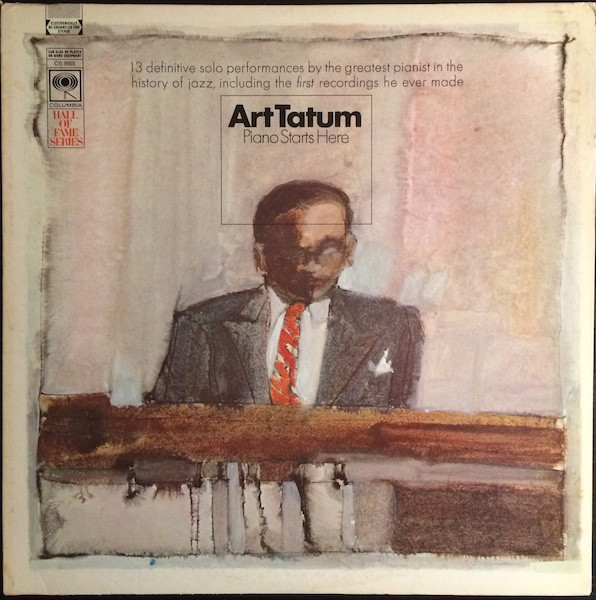
Piano Starts Here
1968

The Tatum Group Masterpieces Vol. 2
1975

Art Tatum Legacy
1974

Art Tatum Masterpieces
1973
Piano Genius
1992
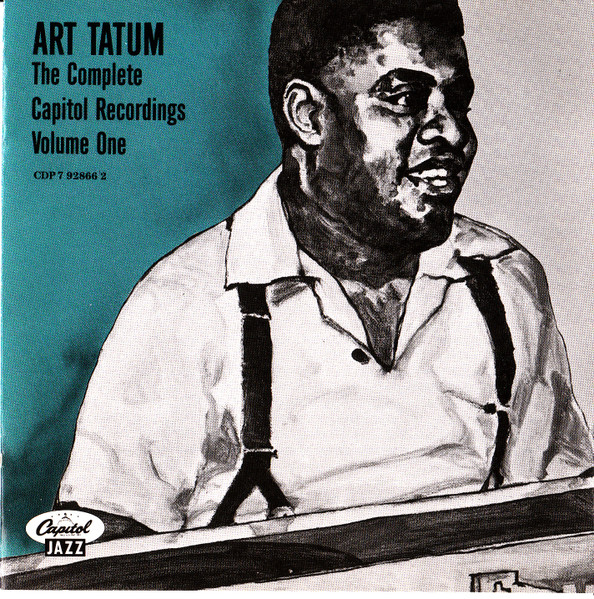
The Complete Capitol Recordings Volume One
1989

20th Century Piano Genius
1986

The Best Of Art Tatum
1983
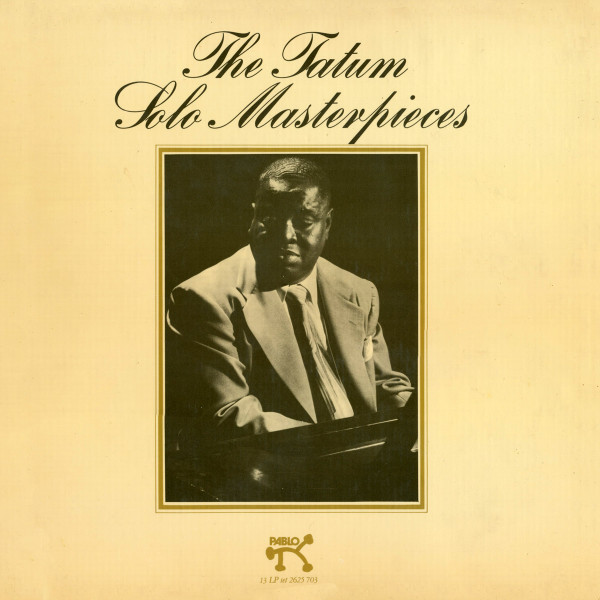
The Tatum Solo Masterpieces
1974

The Art Of Tatum
1958

Piano Solos
1957

Giants Of The Piano
1956

Gene Norman Presents An Art Tatum Concert
1952
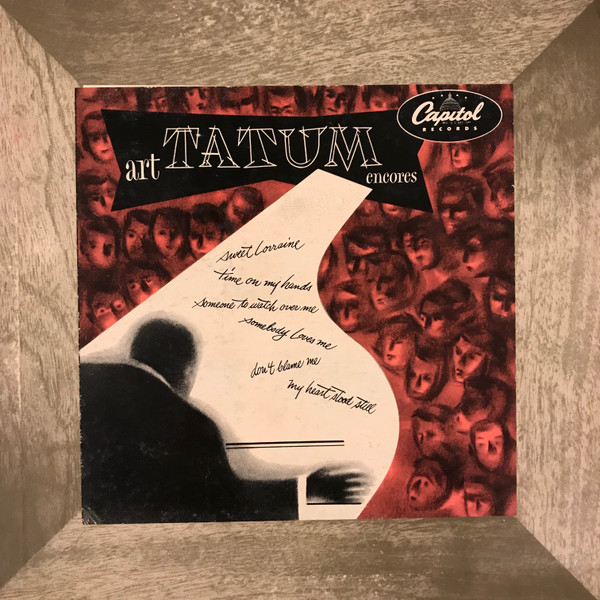
Art Tatum Encores
1951

Ain't Misbehavin' / (When Your Heart's On Fire) Smoke Gets In Your Eyes
1948

The Art Of Art

Swings
1999

In Private
1990

Art Tatum
1980

Art Tatum At The Crescendo Vol. II
1975

The Tatum Group Masterpieces Vol. 1
1975

Still More Of The Greatest Piano Of Them All
1960
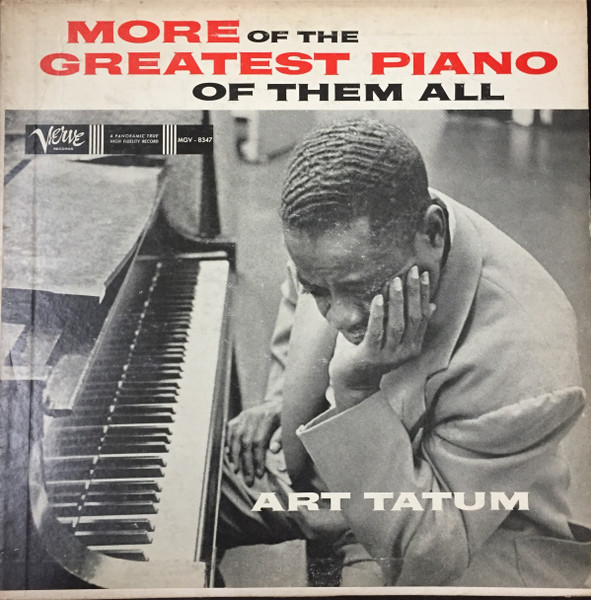
More Of The Greatest Piano Of Them All
1959

The Genius Of Art Tatum # 7
1955
Art Tatum Trio
A project Art Tatum was part of.

Related artists
Frequent collaborators
Around the web
Follow every record they touch.
Start your shelf and Gatefold tracks Art Tatum's new pressings, tour dates, and the whole discography — automatically.
Start your shelf →Free forever. Works with 10 records or 10,000.