
Artist
Taj Mahal
US blues musician
New York City, United States · b. 1942
Taj Mahal is a musician from New York City, United States, active since 1942. Their discography on Gatefold includes 24 records. They also recorded with Rising Sons.

51
Albums tracked
152
In collections
1942
Since
Biography
Taj Mahal didn't show up to the blues revival of the late '60s looking for a seat at the table. He showed up with a Mississippian background, a Caribbean curiosity, and a National steel guitar that made every British imitator sound like they were playing toys. While everyone else was busy trying to out-shout Muddy Waters, Taj was in the studio with Jesse Ed Davis and Ry Cooder in the Rising Sons, figuring out how to make rural folk music sound like it had teeth. He wasn't some academic digging for dust; he was a guy who realized that the blues was just one branch of a much bigger, more global tree. He hit a weird lull in the '80s—mostly because the industry didn't know how to market a guy who wanted to record children's albums and world music collaborations while the rest of the world wanted neon synths. For a minute, it felt like he’d traded the raw grit of his 1968 self-titled debut for something a bit too polished and polite. Then he’d turn around and drop a record like Kulanjan, proving he could still trace the DNA of the blues back to West Africa better than anyone with a PhD. He’s the guy who reminds you that if the groove isn't right, the guitar solo doesn't fucking matter.
Bio from The Clerk
The Arc of Taj Mahal
The pivots — what forced Taj Mahal to reinvent.
The Rising Sons and the Columbia Debut
After the Rising Sons folded before their album could even hit the shelves, Taj took Jesse Ed Davis and a young Ry Cooder into the studio to strip the blues down to its chassis. The 1968 self-titled debut was a punch to the gut of the psychedelic era, trading hazy reverb for bone-dry slide guitar and a rhythmic weight that felt ancient. You hear the tension of a guy trying to prove that the old ways were actually the new ways, bypassing the blues-rock tropes of the time for something far more foundational. It established him as the only guy in the scene who could play 'Statesboro Blues' without sounding like he was wearing a costume.
The Tuba and the Roots Expansion
By the time he got to 'The Real Thing' in 1971, Taj was bored with the standard four-piece rock setup and brought in a brass section anchored by four tubas. It was a hell of a risk that could have sounded like a circus act, but instead, it created this bottom-heavy, swampy funk that shouldn't have worked on paper. This era saw him digging into the 'Sounder' soundtrack and 'Mo' Roots,' where he started pulling in reggae and Calypso rhythms long before it was a trendy move for American artists. The music became less about the individual soloist and more about a massive, communal groove that felt like a backyard party in the islands.
The Global Archivist
The later years saw Taj completely abandoning the constraints of the American blues market to follow the instruments themselves, whether it was the kora or the ukulele. Collaborations like 'Kulanjan' with Toumani Diabaté weren't just vanity projects; they were documented proof of his theory that the Delta and Mali were talking to each other across the centuries. He stopped worrying about the charts and started playing with the Hula Blues Band, proving that a steel guitar belongs on a beach just as much as it does on a porch. It’s the sound of a man who finally realized he didn't have to carry the blues on his back if he just let the world carry it with him.
Influences
- Sleepy John Estes — Taj has cited Estes as a primary vocal influence and famously covered 'Diving Duck Blues' on his 1968 debut. You hear it in that strained, expressive vocal delivery that prioritizes feeling over technical perfection. It’s the blueprint for Taj's ability to make a recording feel like a lived-in porch session.
- Mississippi John Hurt — Hurt's fingerpicking style is the DNA of Taj’s acoustic work, specifically on the 'De Ole Folks at Home' side of his 1969 double album. He captures that gentle, rhythmic thumb-thumping that makes a single guitar sound like a whole band. Taj took Hurt's sweetness and added a layer of modern grit.
- Blind Willie McTell — The 12-string guitar technique Taj uses on tracks like 'Statesboro Blues' is a direct lineage from McTell’s Piedmont style. It’s about that clean, liquid slide work and the sophisticated chord voicings that set Taj apart from the heavy-handed Chicago players. He didn't just learn the licks; he learned the swing.
- Chuck Berry — Taj played bass in the 1960s behind various acts and frequently noted Berry’s rhythmic drive as the reason he stayed obsessed with the groove. You hear the rock and roll attitude in the way Taj and Jesse Ed Davis attack the guitar on 'The Natch’l Blues.' It’s the blues with a restless, forward-leaning energy.
- Mance Lipscomb — Taj spent time with the Texas 'songster' and learned the philosophy that a musician should be a jukebox for their community, not just a one-genre act. This is where Taj gets his 'omnivorous' approach to music, covering everything from folk to pop. It’s why he never felt trapped by the 'bluesman' label.
Taj Mahal — solo
Their records — most-collected first.

Taj Mahal
1968
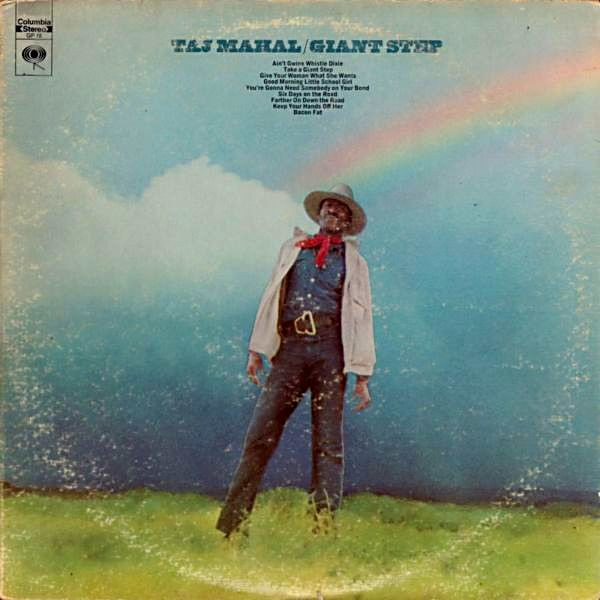
Giant Step / De Ole Folks At Home
1969

Recycling The Blues & Other Related Stuff
1972
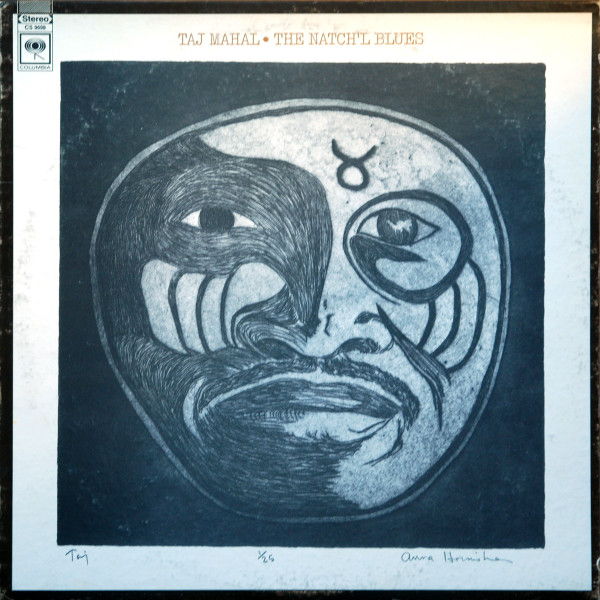
The Natch'l Blues
1968
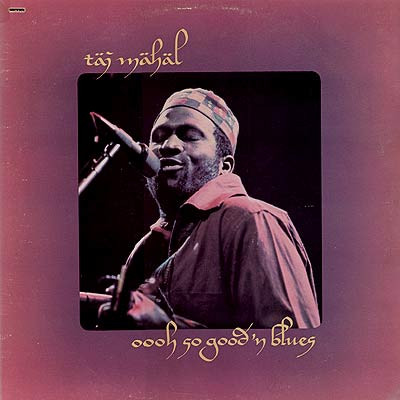
Oooh So Good 'N Blues
1973
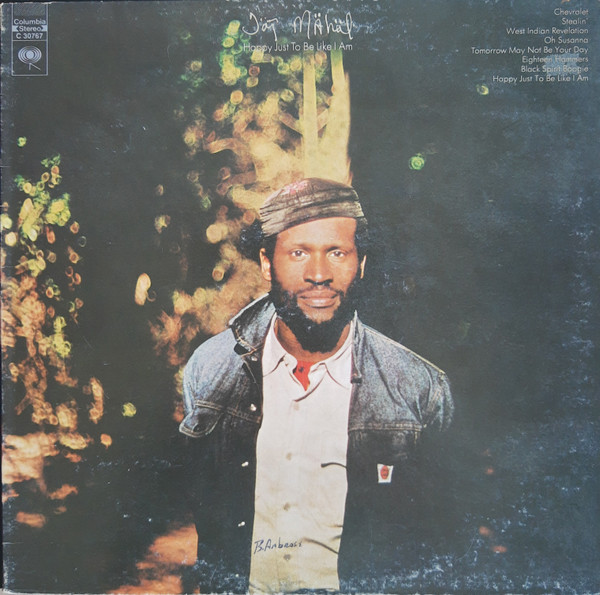
Happy Just To Be Like I Am
1971

The Real Thing
1971
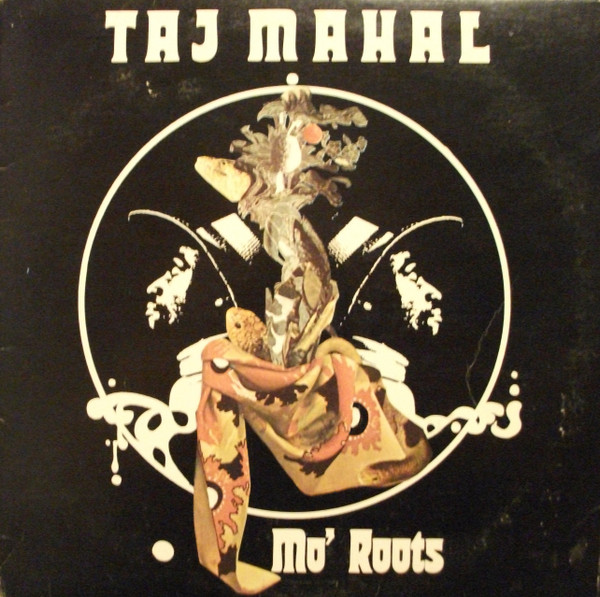
Mo' Roots
1974

The Taj Mahal Anthology (Volume 1)
1977

Satisfied 'N Tickled Too
1976

Room On The Porch
2025

Taj
1986
Music Fuh Ya' (Musica Para Tu)
1977
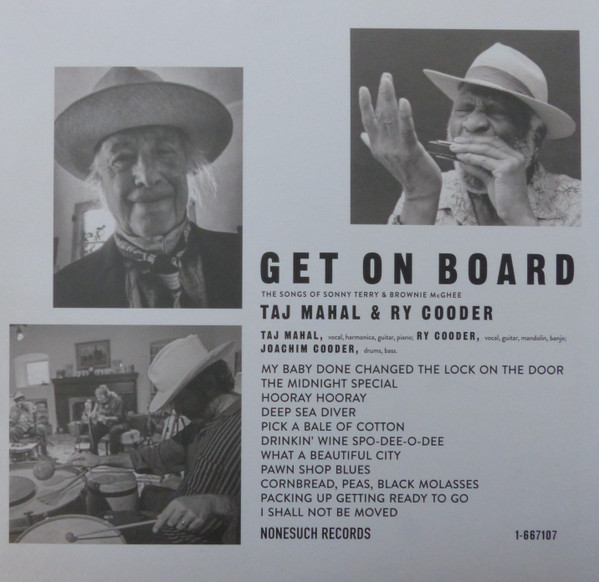
Get On Board (The Songs Of Sonny Terry & Brownie McGhee)
2022

The Best Of Taj Mahal
1981
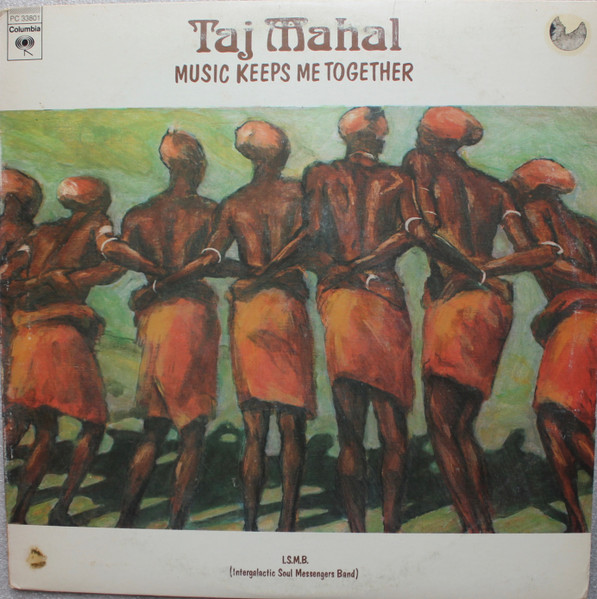
Music Keeps Me Together
1975

Sounder (Original Soundtrack Recording)
1972

Time
2026

Savoy
2023

Maestro
2008
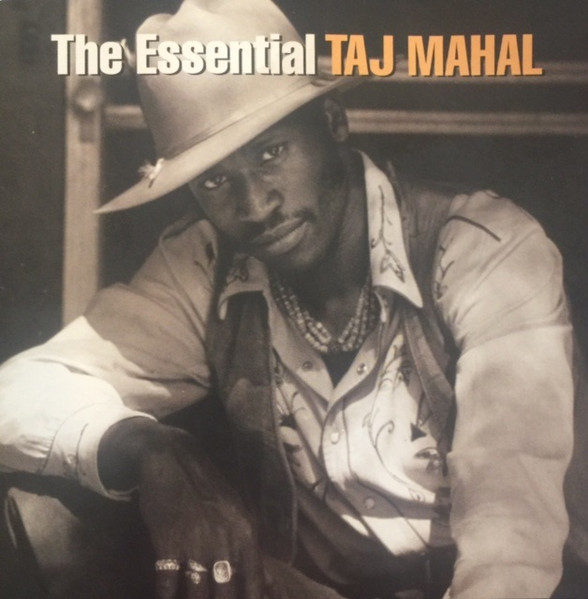
The Essential Taj Mahal
2005

Taj's Blues
1992
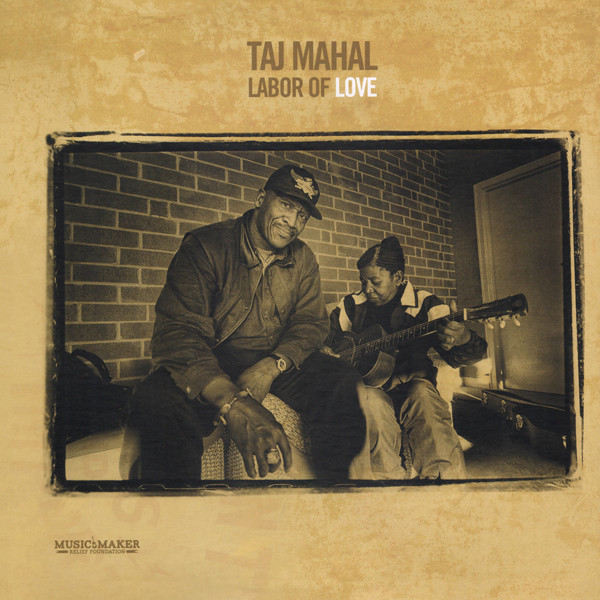
Labor of Love
2016

The Best Of Taj Mahal
2000
Rising Sons
A project Taj Mahal was part of. Former member.

Related artists
Around the web
Follow every record they touch.
Start your shelf and Gatefold tracks Taj Mahal's new pressings, tour dates, and the whole discography — automatically.
Start your shelf →Free forever. Works with 10 records or 10,000.