
Artist
Sugar
Minnesota, United States · 1992 – 1995
Sugar is a music group from Minnesota, United States, active 1992–1995. Their discography on Gatefold includes 9 records.

9
Albums tracked
101
In collections
1992
Since
Biography
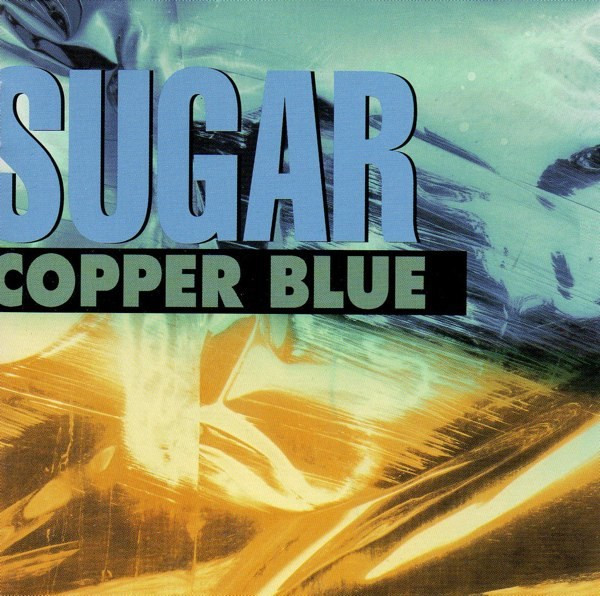
Bob Mould didn't waste a second after the Hüsker Dü van crashed and burned. He spent a few years doing the acoustic, introspective thing with Workbook and Black Sheets of Rain, but the man needed volume. He grabbed David Barbe from Mercyland and Malcolm Travis from the Zulus, plugged into a wall of stompboxes, and decided to prove he could out-crunch the very grunge bands that had spent the last three years ripping off his old band. It wasn't a comeback; it was a reclamation project. Copper Blue is the gold standard for how to be a veteran in a kid’s game. While everyone else in '92 was getting muddy and heroin-chic, Sugar was surgical. They played with a terrifying precision that made the Pixies look sloppy and Nirvana look like amateurs. It’s all about the tension between Mould’s sandpaper roar and those deceptively sweet pop hooks. If the guitars weren't loud enough to bleed your ears, the melodies were strong enough to live in your head for a decade. They flamed out fast because Mould doesn't do 'settled,' but they never put out a bad minute of tape.
Bio from The Clerk
The Arc of Sugar
The pivots — what forced Sugar to reinvent.
The Precision Crunch of Copper Blue
Mould went into the studio with Lou Giordano and a stack of songs that were too loud for his solo career but too melodic for the hardcore scene. They tracked the debut with a focused, metallic sheen that felt like a reaction against the loose, muddy production dominating Seattle at the time. You can hear the separation in the guitars—thick as a brick but clear enough to catch every suspended chord. It turned into a massive hit because it bridged the gap between college radio darlings and the new alternative mainstream without losing its teeth.
The Exhausted Darkness of Beaster
The Beaster EP was recorded during the same sessions as Copper Blue but sat on a shelf because it was too heavy and religious for a debut. When it finally dropped in '93, it felt like the floor falling out from under the band’s pop success. It’s one continuous, sprawling exercise in guitar feedback and lyrical exorcism that showed the band's darker, more experimental side. The tracks bleed into each other, proving Travis and Barbe could handle Mould at his most frantic and unhinged.
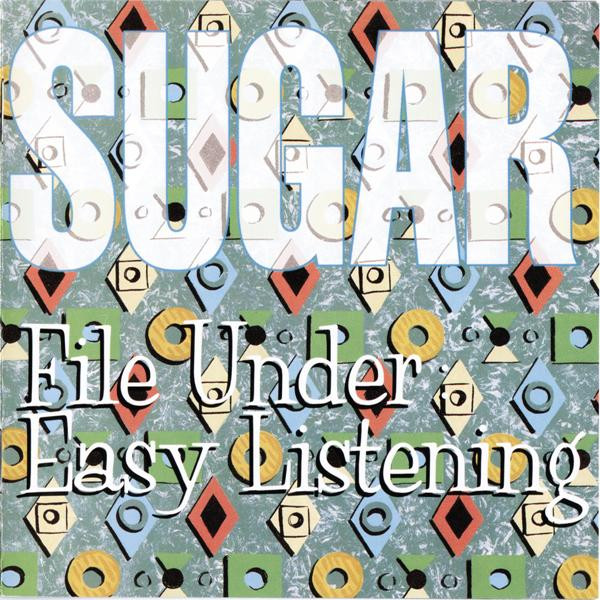
The Final Pop Fracture
By the time they got to File Under: Easy Listening, the internal gears were grinding to a halt. The initial sessions in Atlanta were scrapped entirely because the vibe was off, forcing them to re-record everything in Woodinville, Washington. The result is a brighter, almost power-pop record that hides the fact that the band was essentially over. You hear a songwriter trying to find a way out, leaning into cleaner tones before finally pulling the plug to go solo again.
Influences
- Buzzcocks — Mould has constantly cited Pete Shelley’s ability to wrap jagged punk energy around a perfect two-minute pop hook. You hear it in the frantic melodicism of 'A Good Idea' and the way Sugar prioritizes a singalong chorus over aimless jamming. It’s the blueprint for the entire Sugar sound.
- The Byrds — The 12-string jangle of Roger McGuinn is baked into Mould’s DNA, even when it's buried under ten layers of distortion. He’s explicitly pointed to their vocal harmonies and Rickenbacker shimmer as the source for his guitar layering. It’s folk-rock played through a jet engine.
- Ramones — The down-stroke guitar technique is the literal engine room for every Sugar record. Mould learned the value of the 'wall of sound' through their relentless, no-nonsense rhythmic attack. Without the Ramones, Sugar wouldn't have that breathless, forward-leaning momentum.
- Cheap Trick — Mould has praised Rick Nielsen’s ability to write massive, arena-ready riffs that don't sacrifice intelligence. The heavy-but-tunable production on records like In Color informed how Sugar balanced their loudest moments with radio-friendly structures. It’s power-pop with a 훨씬 meaner streak.
- The Beatles — The obsession with the two-and-a-half-minute single comes straight from the Fab Four. Mould often mentions the Revolver era as a touchstone for his songwriting economy and his love for vocal double-tracking. Even at their loudest, Sugar is fundamentally a pop band built on 1960s architecture.
Discography
Their records — most-collected first.


Related artists
Frequent collaborators
Around the web
Follow every record they touch.
Start your shelf and Gatefold tracks Sugar's new pressings, tour dates, and the whole discography — automatically.
Start your shelf →Free forever. Works with 10 records or 10,000.