
Artist
Popol Vuh
German
Munich, Germany · 1969 – 2001
Popol Vuh is a music group from Munich, Germany, active 1969–2001. Their discography on Gatefold includes 24 records.

30
Albums tracked
45
In collections
1969
Since
Biography
Florian Fricke had one of the very first Moog modular synthesizers in Germany, hauled it into the studio for Affenstunde, and then abruptly sold it to Klaus Schulze because he decided the machine had no soul. That is the whole Popol Vuh ethos right there. While the rest of the Kosmische scene spent the early seventies chasing space-rock freakouts or sequencer grids, Fricke walked away from electronics entirely to sit at a grand piano, hire an oboe player, and chase sacred music. Then Werner Herzog came calling. The pairing was lethal: Herzog's megalomaniacal cinematic fever dreams needed something that sounded ancient rather than modern, and Popol Vuh delivered scores built on acoustic guitars, choir swells, and devotional chants. Daniel Fichelscher stepped over from Amon Düül II to supply shimmering 12-string guitars and rolling percussion, locking in a sound that felt less like Krautrock and more like a cathedral collapsing in slow motion. The late-period stuff got bogged down in muddy new-age production and questionable ambient techno experiments like City Raga, but when Fricke was locked in with Herzog and Fichelscher, nobody touched them.
Bio from The Clerk
The Arc of Popol Vuh
The pivots — what forced Popol Vuh to reinvent.
The Big Moog Period
Fricke kicked off the project armed with a massive Moog IIIp synthesizer and percussionist Holger Trülzsch. Across Affenstunde and In den Gärten Pharaos, they created deep, meditative ambient drones punctuated by African and Turkish percussion rather than rock beats. It was pioneering electronic music, but Fricke found the machine cold and spiritually deadening. By the end of 1971, he dumped the synthesizer for good and turned back to acoustic instruments.
The Devotional Awakening
Ditching electronics entirely, Fricke recruited Korean soprano Djong Yun and oboist Robert Eliscu to record 1972's Hosianna Mantra. The record was a radical pivot to Christian-mystical chamber music, built purely around grand piano, acoustic strings, and devotional soprano lines. Critics didn't know what to do with a German experimental outfit making unironic sacred music. It completely reset the band's identity and established Fricke as a composer obsessed with spiritual transcendence.
The Herzog Collaborations and Fichelscher Era
Guitarist and drummer Daniel Fichelscher joined from Amon Düül II, fundamentally changing the band's sonic weight. This lineup hit a creative peak soundtracking Werner Herzog's masterpieces, including Aguirre, The Wrath of God, Nosferatu, and Fitzcarraldo. Fichelscher's layered, ringing electric guitars and driving percussion anchored Fricke's choral arrangements and Mellotron-heavy textures. The result was a run of cinematic, apocalyptic folk-rock that defined their golden era through the late seventies.
The Ambient Lull and Digital Experiments
By the late eighties and nineties, the band's organic intensity began to dissolve into slick contemporary instrumental territory. Soundtracks like Cobra Verde still had bite, but standalone efforts drifted into lightweight new-age arrangements. The pivot hit an awkward low on 1995's City Raga, where Fricke and Frank Fiedler layered dance beats and digital synth pads over world-music samples. It was a misguided attempt to modernize a sound that had always thrived on timeless, acoustic depth.
Influences
- Johann Sebastian Bach — Fricke was classically trained on piano from childhood and studied under Rudolf Hindemith, openly citing Bach's choral architecture as his foundational blueprint. You hear the strict counterpoint and sacred devotional structure driving every piano motif on Hosianna Mantra. It gave Popol Vuh a classical spine that separated them from self-taught rock bands.
- Wolfgang Amadeus Mozart — Fricke frequently cited classical masterworks over any rock or pop contemporaries when discussing his melodic sensibilities. Mozart's sacred vocal compositions directly informed Fricke's use of operatic soprano voices over acoustic instrumentation. You can hear that pure, unadorned melodic clarity in Djong Yun's vocal lines on Seligpreisung.
- Ravi Shankar — Indian classical music's modal drone systems heavily influenced the West German underground in the late sixties. Fricke studied North Indian raga structures and adapted their non-Western scales directly to his keyboard improvisations. That modal, hypnotic progression forms the entire foundation of the side-long title track on In den Gärten Pharaos.
- Claudio Monteverdi — Fricke's obsession with early European choral traditions led him straight to Renaissance and early Baroque vocal masters. The choral arrangements on records like Das Hohelied Salomos draw straight from Monteverdi's sacred madrigals and vespers. Popol Vuh mirrored that specific interplay between solitary acoustic instruments and massed, reverent vocal polyphony.
- Tibetan Monastic Chant — Fricke immersed himself in Eastern religious texts, leading directly to deep field studies of Tibetan and tantric vocal traditions. You hear these low, sustained, repetitive vocal drones replicated across 1979's Die Nacht der Seele: Tantric Songs. It provided the template for his post-1975 approach to spiritual music as an active meditative ritual.
Discography
Their records — most-collected first.
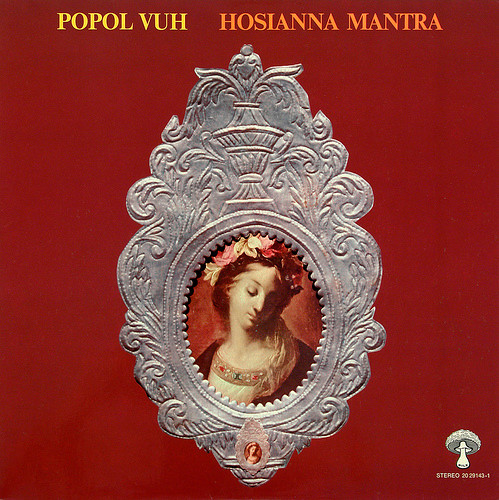
Hosianna Mantra
1972

In Den Gärten Pharaos
1971

Einsjäger & Siebenjäger
1975

Affenstunde
1970

Herz Aus Glas
1977

Letzte Tage - Letzte Nächte
1976
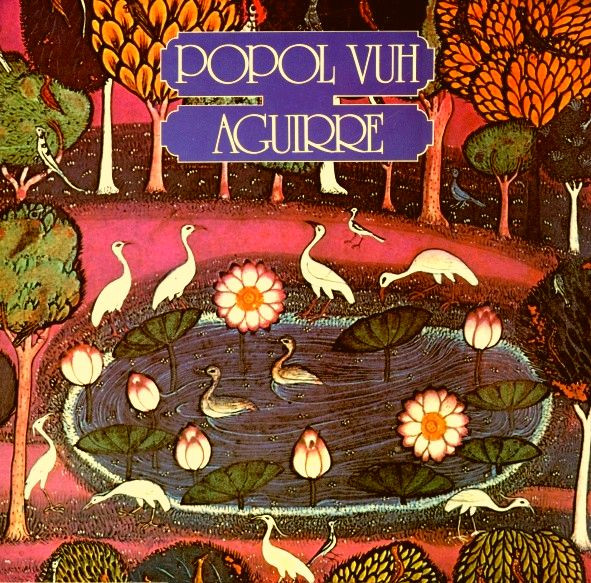
Aguirre
1976

Das Hohelied Salomos
1975

The Two Original Soundtracks Of Werner Herzog's Nosferatu

Kailash
2015

Messa Di Orfeo
1999

Sing, For Song Drives Away The Wolves
1993
Spirit Of Peace
1985
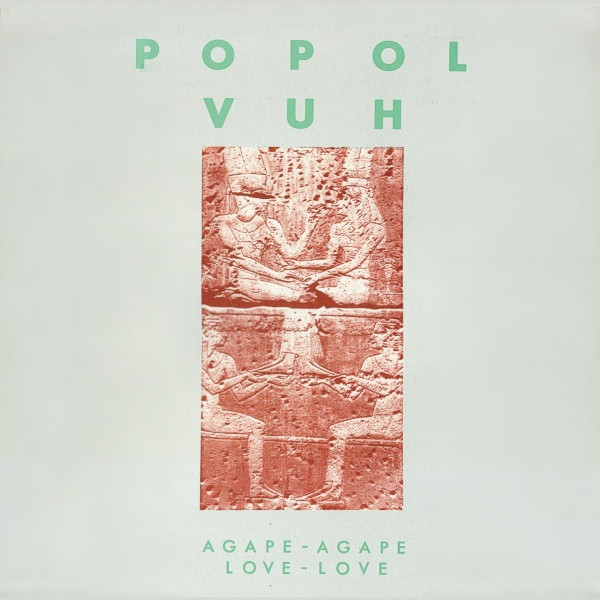
Agape-Agape Love-Love
1983

In The Gardens Of Pharao / Aguirre
1983

Tantric Songs
1981
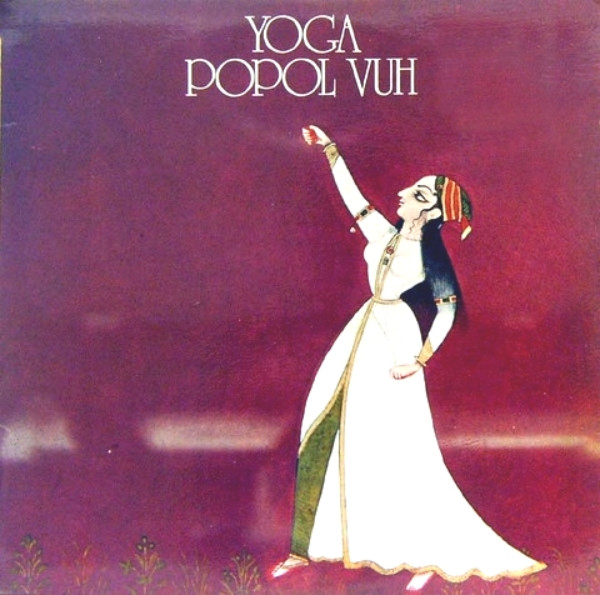
Yoga
1976

Seligpreisung
1973
Revisited & Remixed 1970-1999
2011

Future Sound Experience
2002

Shepherd's Symphony
1997

City Raga
1995

Best Of Popol Vuh From The Films Of Werner Herzog
1993

For You And Me
1992
Related artists
Members
Frequent collaborators
Around the web
Follow every record they touch.
Start your shelf and Gatefold tracks Popol Vuh's new pressings, tour dates, and the whole discography — automatically.
Start your shelf →Free forever. Works with 10 records or 10,000.