
Artist
Minutemen
early 80s US hardcore punk band
Los Angeles, United States · 1980 – 1985
Minutemen is a music group from Los Angeles, United States, active 1980–1985. Their discography on Gatefold includes 16 records.

16
Albums tracked
119
In collections
1980
Since
Biography
D. Boon played a cheap Fender Mustang with the treble maxed out and the bass rolled completely off to make room for Mike Watt's dense, trebly Gibson SG bass lines. They recorded Paranoid Time in a single night at Spot's Media Art studio in Hermosa Beach on leftover tape from other SST bands. There was no money for overdubs or second takes. They didn't even use a hi-hat on those early tracks because Frank Tonche hated the sound of it, which forced the band to invent a frantic, skeletal rhythm that became their trademark. They didn't fit the Black Flag mold of heavy, thudding hardcore, which pissed off the local beach punks who just wanted to slam dance. Watt and Boon were working-class kids from San Pedro who obsessed over funk, classic rock, and leftist politics. They ran their band like a small business, calling their tours 'gigs' and refusing to buy into the self-destructive myths of the scene. They proved that punk didn't have to be a dumb, three-chord prison.
Bio from The Clerk
The Arc of Minutemen
The pivots — what forced Minutemen to reinvent.
The Chrome-Dipped Hardcore Sprint
From Paranoid Time through The Punch Line, the band operated under a self-imposed rule that no song could run over two minutes or feature guitar solos. They cut everything live to two-track with Spot engineering, resulting in a dry, claustrophobic sound where every instrument had to fight for survival. Boon's slashing, funk-damaged guitar style was born out of this scarcity, leaving massive gaps of silence for Watt's hyperactive bass lines to fill. This was the band at their most hostile, stripping rock music down to its absolute bare chassis.
Double Nickels and the Jam
When Husker Du released Zen Arcade, it broke the unwritten rules of American punk and pushed the Minutemen to respond with their own double-album masterpiece, Double Nickels on the Dime. Working with Ethan James at Radio Tokyo studio, they opened the doors to jazz fusion, spoken word, acoustic guitars, and Steely Dan references. The record redefined what punk could sound like, swapping out the raw speed of their early EPs for intricate, swinging rhythms driven by George Hurley's brilliant drumming. It was a massive, sprawling document of three guys who had finally mastered their chemistry.
The Mersh Experiment
In 1985, the band decided to mock the mainstream music industry by deliberately trying to make 'mersh'—their slang for commercial—records. They hired producer Joe Carducci, added synthesizers, trumpet, and even guitar solos to the Project: Mersh EP, resulting in a confusing, tongue-in-cheek release that alienated some of their core hardcore audience. It was a conceptual joke that fell flat on record, but it showed their refusal to be boxed in by punk orthodoxy. The pivot was cut tragically short later that year when Boon was killed in a van crash, ending one of the most singular runs in American underground music.
Influences
- Wire — The Minutemen regularly cited Wire's Pink Flag as the blueprint for their short, sharp shock approach to songwriting. You can hear this influence in the rapid-fire structures of The Punch Line, where songs end the second they run out of ideas. They even covered Wire's '12XU' during their early live sets.
- Captain Beefheart & His Magic Band — Mike Watt has consistently pointed to Trout Mask Replica as the record that taught him how to play bass outside of traditional blues structures. The jagged, non-linear interplay between Boon's guitar and Watt's bass on tracks like 'Toadies' is a direct descendant of Beefheart's fractured, polyrhythmic blues. It gave them permission to be weird.
- The Pop Group — The Bristol post-punk band's collision of radical leftist politics and abrasive funk grooves was a major inspiration for the Minutemen's rhythm section. You hear it in the popping, elastic bass line of 'The Punch Line' and George Hurley's heavily syncopated drum patterns. They took the British post-punk danceability and sped it up for the Southern California suburbs.
- Creedence Clearwater Revival — D. Boon and Mike Watt grew up playing CCR covers in their childhood bedrooms, obsessing over John Fogerty's working-class lyricism and tight songwriting. They paid direct tribute by covering 'Don't Look Now' on Double Nickels on the Dime. Fogerty's lack of pretension became the ethical foundation for how the Minutemen ran their band.
- Blue Oyster Cult — Before they discovered punk, Boon and Watt were arena rock kids who loved the heavy, complex riffs of Blue Oyster Cult. They recorded a cover of 'The Red and the Black' for their 3-Way Tie (for Last) album. That arena-rock DNA gave them a technical precision that most of their three-chord punk peers completely lacked.
Discography
Their records — most-collected first.
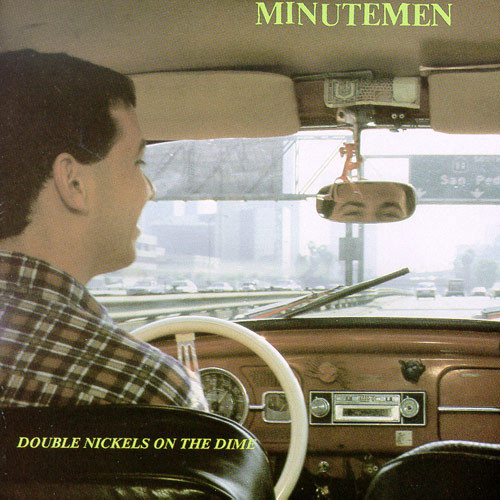
Double Nickels On The Dime
1984
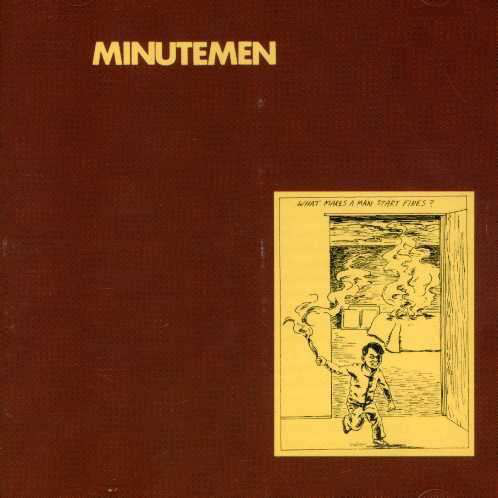
What Makes A Man Start Fires?
1983

3-Way Tie (For Last)
1985

Buzz Or Howl Under The Influence Of Heat
1983

The Punch Line
1981
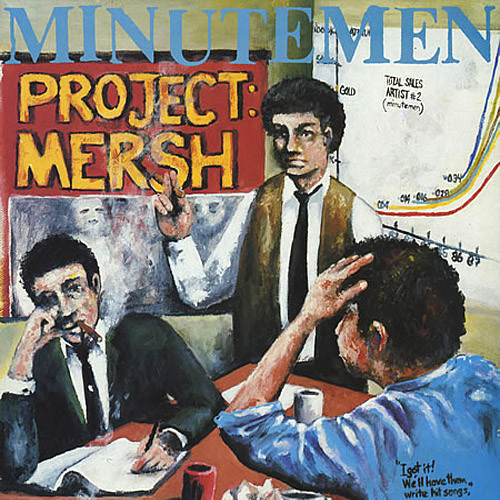
Project: Mersh
1985

The Politics Of Time
1984
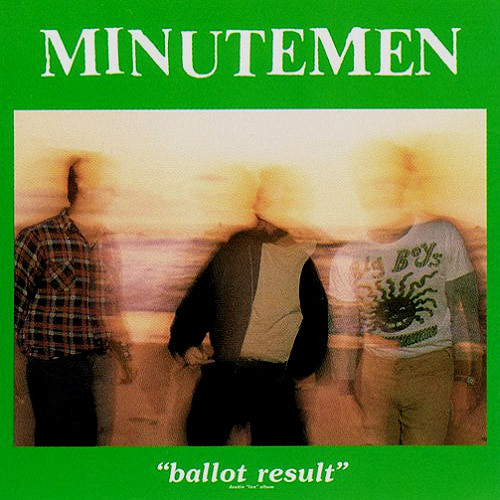
Ballot Result
1986

Paranoid Time
1980

Post-Mersh, Vol. 1

OK, Alright
1989

Bingo Bongo
1988

Post-Mersh, Vol. 2
1987
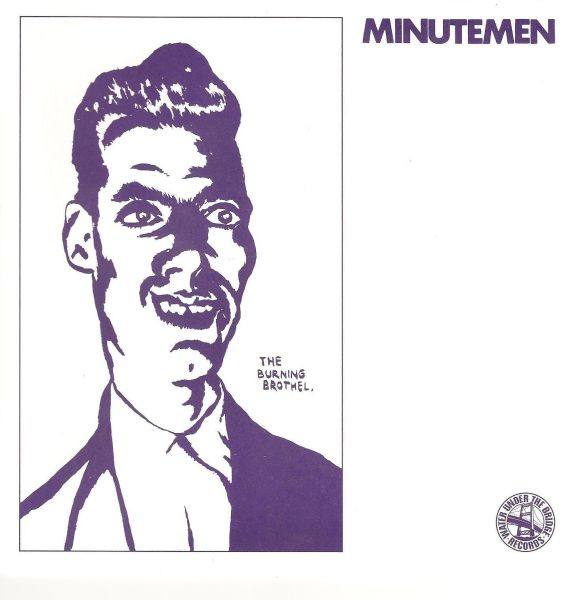
The Burning Brothel. / My Heart Bleedz Pink Lemonade
2011
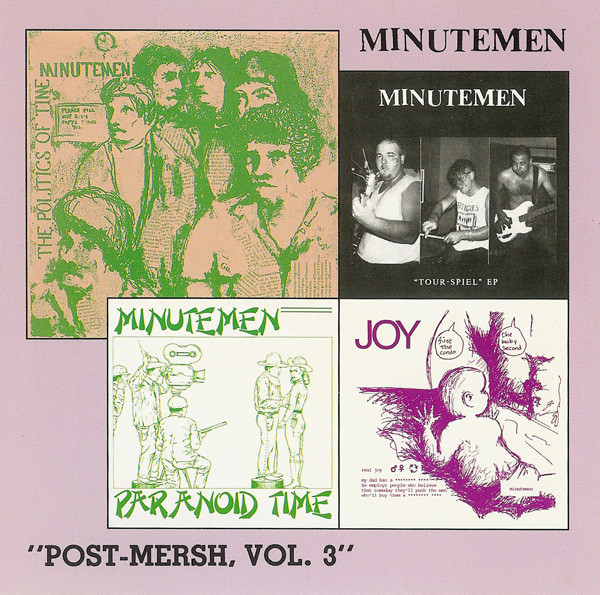
Post-Mersh, Vol. 3
1988
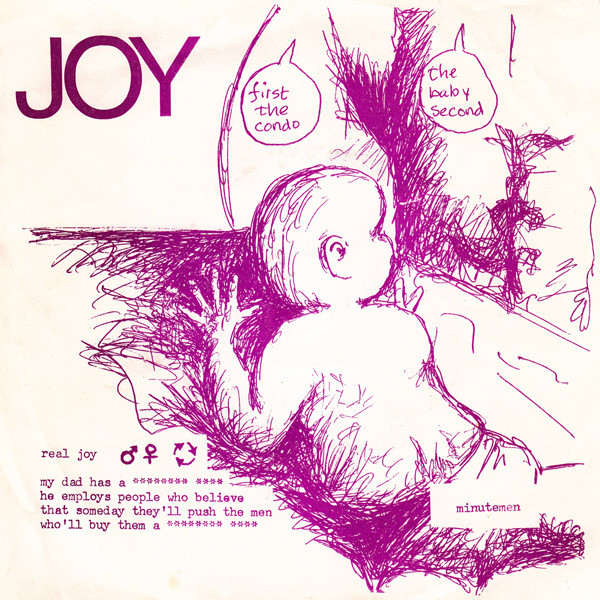
Joy
1981
Related artists
Frequent collaborators
Around the web
Follow every record they touch.
Start your shelf and Gatefold tracks Minutemen's new pressings, tour dates, and the whole discography — automatically.
Start your shelf →Free forever. Works with 10 records or 10,000.