
Artist
Material
New York City, United States
Material is a music group from New York City, United States. Their discography on Gatefold includes 19 records.

19
Albums tracked
23
In collections
—
Since
Biography
Bill Laswell and Michael Beinhorn started this in 1979 as a backing band for Daevid Allen before they realized they could just treat the entire New York underground like a construction site. They hunkered down in OAO Studios in Brooklyn with a pile of Moogs, a Roland TR-808, and Laswell’s heavy-gauge precision bass, pulling in anyone from the avant-garde or the street who could keep up. It wasn't about a fixed lineup—it was about who was standing in the room when the tape started rolling. They went from jagged No Wave instrumentals to straight-up post-disco dance floor hits in the blink of an eye. One day they were cut-and-pasting noise with Fred Frith, the next they were producing Whitney Houston’s first lead vocal on a ballad. It’s a mess of a discography if you’re looking for a consistent brand, but if you want to hear the exact moment where jazz-fusion, hip-hop, and world music crashed into each other in a cold Brooklyn basement, this is it.
Bio from The Clerk
The Arc of Material
The pivots — what forced Material to reinvent.
The Squat-Rock No Wave Days
Early on, the core trio of Laswell, Beinhorn, and Fred Maher operated like a street-tough version of Gong, fueled by the aggressive friction of the New York No Wave scene. They tracked the Temporary Music EPs with a raw, abrasive edge that favored sharp angles and jagged basslines over any semblance of pop structure. You hear the physical stress of the gear in those recordings, especially the way they pushed the synthesizers into red-line distortion to match the chaos of the city outside. It was cerebral music played with a switchblade mentality.
The Celluloid Dance Floor Pivot
Everything shifted when they hooked up with Jean Karakos and the Celluloid label, pushing the band toward a heavy, dub-influenced club sound that predated the electro-funk explosion. Adding Nona Hendryx and Bernard Fowler on vocals turned them from a basement experiment into a legit powerhouse that could actually chart. The 1982 album One Down is the pivot point, where the avant-garde noise gets smoothed out by professional polish and an obsession with the emerging hip-hop groove. This era is defined by the heavy use of the DMX drum machine and a thick, bottom-heavy production style that made the avant-garde feel danceable.
The Axiom World-Dub Expansions
By the late 80s and early 90s, Laswell used the Material name as a flagship for his Axiom label, turning the project into a global collective that ignored genre boundaries entirely. He brought in guys like Bernie Worrell for that P-Funk grease and paired them with Moroccan Gnawa musicians or jazz legends like Wayne Shorter. The record Seven Souls, featuring William S. Burroughs narrating over slow-burn ambient dub, is the peak of this phase. It’s no longer a band—it’s a curated sonic environment where the studio board is the primary instrument.
Influences
- Miles Davis — Laswell has constantly cited the Bitches Brew era as his blueprint for leadership and studio assembly. You hear it in the way Material tracks are edited and spliced together after the jam, a direct nod to Teo Macero’s work with Miles. It’s the sound of organized chaos.
- Magma — Before forming Material, Laswell was obsessed with the Zeuhl sound and Christian Vander’s martial, repetitive rhythms. The early Material rhythm section plays with that same heavy, relentless momentum that feels like it’s marching off a cliff. It gave their early No Wave stuff a discipline most of their peers lacked.
- King Tubby — The entire Material philosophy is built on the Jamaican dub concept of the 'version.' Laswell’s bass playing and his use of the mixing desk as a weapon are direct descendants of Tubby’s work at Waterhouse. The space and the dropouts on the Memory Serves tracks are pure Kingston methodology.
- The Meters — Michael Beinhorn has pointed to the Meters as the gold standard for how a rhythm section should breathe together. You hear that lean, syncopated funk underneath even their most abrasive 80s tracks like 'Bustin' Out.' They took the New Orleans pocket and moved it to a Brooklyn warehouse.
- Ornette Coleman — The 'Harmolodic' theory Coleman developed was the guiding light for the free-jazz elements Material injected into their funk. Collaborating with Coleman students like Billy Bang or James Blood Ulmer wasn't a coincidence; it was a way to keep the music from ever getting too predictable. It’s why their pop songs still feel like they might fall apart at any second.
Discography
Their records — most-collected first.
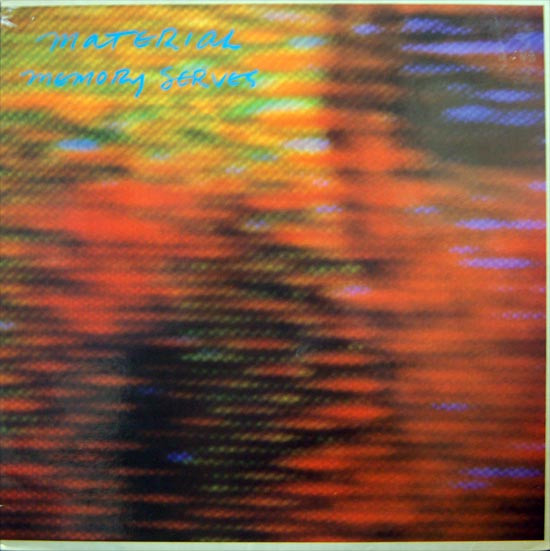
Memory Serves
1981
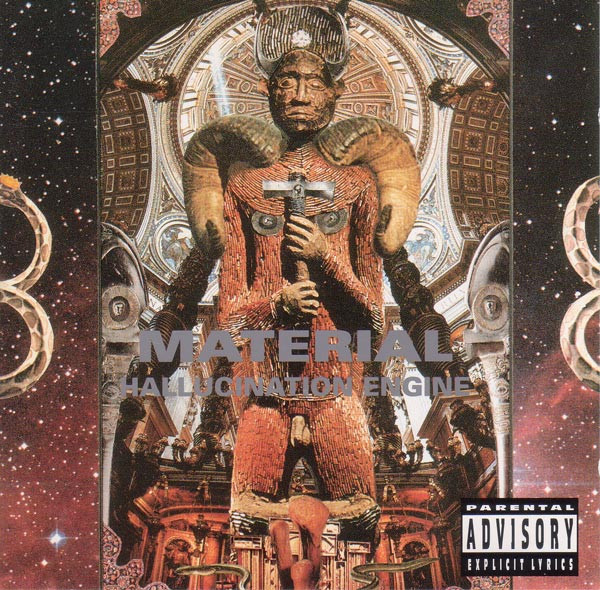
Hallucination Engine
1994
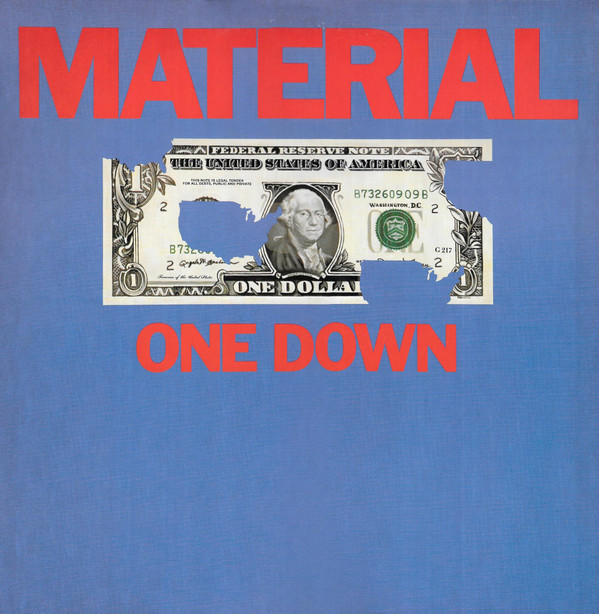
One Down
1982

Bustin' Out
1981

Intonarumori
1999

The Road To The Western Lands
1998

Mantra
1993

Temporary Music 2
1981

Temporary Music - Compilation
1980

Temporary Music 1
1979

Maura Maura
2024

Frankfurt
2021

At Soundscape, Hell's Kitchen
2020

Rap Is Still An Art
1999
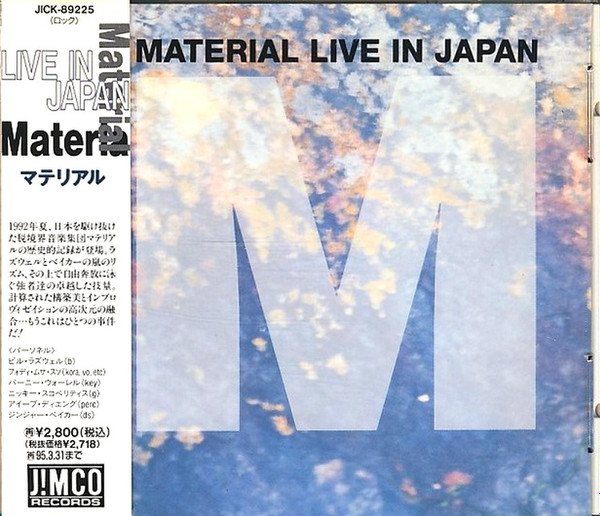
Live In Japan
1993

Playin' With Fire
1992

The Third Power
1991

Seven Souls
1989

American Songs
1981
Related artists
Members
Frequent collaborators
Around the web
Follow every record they touch.
Start your shelf and Gatefold tracks Material's new pressings, tour dates, and the whole discography — automatically.
Start your shelf →Free forever. Works with 10 records or 10,000.