
Artist
Justin Townes Earle
Nashville, United States · 1982 – 2020
Justin Townes Earle is a musician from Nashville, United States, active 1982–2020. Their discography on Gatefold includes 10 records.
10
Albums tracked
44
In collections
1982
Since
Biography
Justin Townes Earle didn't have the luxury of being a blank slate. He started out getting fired from his dad’s touring band, The Dukes, for being a mess and a liability. That’s a hell of a way to start a career, but it forced him into a corner where he had to out-write the family name just to stay alive. He recorded his debut EP, Yuma, on a shoe-string, and it sounded like a ghost haunting a Nashville barroom. It wasn't folk and it wasn't quite country—it was the sound of a guy who had memorized every crack in a Lightnin' Hopkins record while living through a modern heroin itch. He hit a peak when he teamed up with Skylar Wilson to produce Harlem River Blues. They cut it at The House of Blues in Nashville, and for a minute, he looked like he was going to be the savior of the whole damn scene. He had that sharp, woody acoustic guitar snap—almost a percussion instrument the way he played it—and a voice that sounded like it had been cured in tobacco and regret. Then things got slick. He moved to New York, started wearing suits that cost more than my car, and some of the records started feeling a little too curated. But even when the production got polished, the songwriting remained lethal. He never lost that ability to write about a father-son dynamic like he was picking a scab that wouldn't heal.
Bio from The Clerk
The Arc of Justin Townes Earle
The pivots — what forced Justin Townes Earle to reinvent.
The Bloodshot Years
After the Yuma EP put people on notice, Justin signed with Bloodshot Records and leaned hard into a scrappy, rhythmic fingerpicking style that felt like a bridge between the 1930s and a dive bar in 2008. Midnight at the Movies was the turning point, where he stopped just mimicking his heroes and started finding his own cadence. He was working with a sparse palette, letting the upright bass and his own thumb-heavy guitar work do the heavy lifting. You can hear the hunger in those tracks, a guy trying to prove he wasn't just a nepotism hire in the Americana world.
The New York Soul Pivot
Moving to New York and getting sober for a stretch changed his internal clock. He moved away from the rural porch-stomp and started chasing a sound that felt more like Memphis soul and refined Brill Building pop. Harlem River Blues is the result of that shift, trading the lonely folk vibe for gospel backups and a bigger, brassier production. It was his most confident moment, a record that felt like it belonged in a different era entirely without feeling like a costume party.
The Late Career Realism
The final run of albums, specifically Kids in the Street and The Saint of Lost Causes, saw him moving toward a more cinematic, social-commentary style of writing. He brought in Adam Bednarik to produce and stripped away some of the vintage artifice to focus on the grit of the American landscape. These records aren't as catchy as the early stuff, but they’re deeper, trading the 'bad boy' persona for a weary, clear-eyed look at the world around him. The arrangements got more expansive, incorporating blues-rock and jazz-inflected rhythms that showed he’d finally stopped running from his own shadow.
Influences
- Lightnin' Hopkins — Justin openly cited Hopkins as the reason he developed his unique, percussive thumb-lead guitar style. You hear it most clearly on the Yuma EP and 'Train in the Distance,' where he mimics that relentless, driving Texas blues shuffle. It’s the skeleton beneath every song he wrote.
- Townes Van Zandt — His middle name wasn't an accident, and he spent his life covering 'Mr. Mudd and Mr. Gold' and 'White Freightliner Blues' in his live sets. He inherited Townes’s knack for the 'dead-end' lyric—songs where nobody wins and the highway is the only answer. It's the DNA of his darker, more desolate tracks.
- The Replacements — He frequently covered 'Can't Hardly Wait' and praised Paul Westerberg’s ability to hide a bleeding heart under a layer of snotty attitude. That punk-rock soul-baring informed Justin's middle-period records, where the songwriting felt like a raw nerve even when the arrangements were tight. He treated Westerberg like a blues titan.
- Mance Lipscomb — He studied Lipscomb’s 'songster' tradition, which blended blues, ragtime, and folk into one seamless style. This shaped Justin's refusal to be boxed into a single genre, especially his ability to play a complicated ragtime lick while singing a pop melody. It’s why his solo acoustic sets felt as full as a four-piece band.
- Woody Guthrie — Justin often spoke about Guthrie’s 'hard hitting' songs as the blueprint for his own social commentary on his final two albums. He moved away from the personal and toward the observational, much like Guthrie did on the Dust Bowl Ballads. You can hear that direct, unadorned storytelling on tracks like 'The Saint of Lost Causes.'
Discography
Their records — most-collected first.



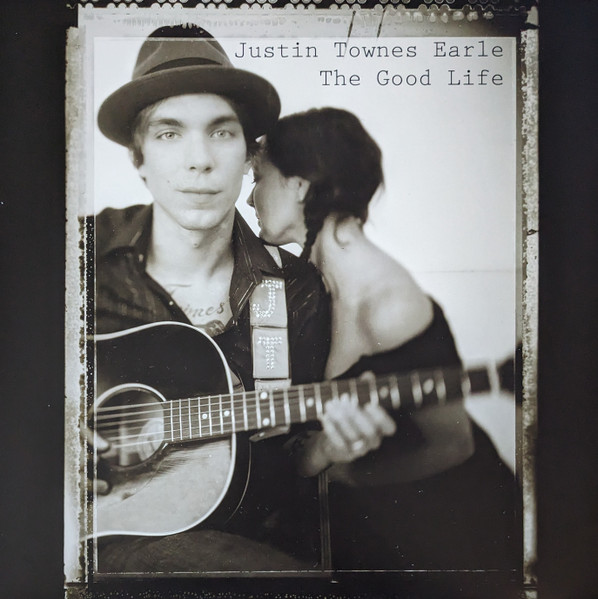

Related artists
Frequent collaborators
Around the web
Follow every record they touch.
Start your shelf and Gatefold tracks Justin Townes Earle's new pressings, tour dates, and the whole discography — automatically.
Start your shelf →Free forever. Works with 10 records or 10,000.