
Artist
Jefferson Airplane
San Francisco, United States · 1965 – 1973
Jefferson Airplane is a music group from San Francisco, United States, active 1965–1973. Their discography on Gatefold includes 24 records.

50
Albums tracked
352
In collections
1965
Since
Biography
Signe Toly Anderson walked out after the matrix of their debut record was already set. Grace Slick walked in from the Great Society with a pair of songs that turned a moody folk-rock outfit into a multi-platinum monster. What most people forget is that RCA had no idea how to record this band. The label's engineers were used to clean pop sessions, not Jack Casady's modified Versatone bass amp overloading the board or Jorma Kaukonen's redlining Gibson ES-345. By 1969, the band was a political street gang running on sheer volume and substances. They abandoned the radio-friendly pop structures of their breakout for chaotic, feedback-heavy jams that drove RCA executives completely insane. The records got sloppier, the live sets got louder, and the inner circle began splintering into side projects like Hot Tuna before the ship finally sank under the weight of its own excess and the terrible transition into the Starship era.
Bio from The Clerk
The Arc of Jefferson Airplane
The pivots — what forced Jefferson Airplane to reinvent.
The Folk-Rock Launch
Before Grace Slick arrived, Marty Balin led a polite, acoustic-leaning folk-rock group centered around Signe Toly Anderson's vocals. The debut album, Jefferson Airplane Takes Off, was recorded on three-track equipment with RCA's house engineers constantly trying to turn down Jack Casady's bass. It was a clean, safe record that sounded more like the Weavers with a drum kit than a psychedelic revolution. The departure of Anderson and drummer Skip Spence forced an immediate scramble for replacements.
The Slick Takeover
Grace Slick joined the lineup and brought two massive songs she had already recorded with her previous band, the Great Society. Producer Rick Jarrard was brought in to corral the band at RCA Victor's Music Center of the World in Hollywood. The result was Surrealistic Pillow, an album defined by Slick's icy, operatic delivery and Jorma Kaukonen's sharp, blues-informed guitar work. The record made them massive stars and established the blueprint for the entire San Francisco acid rock scene.
The Baxter's Mutiny
Tired of commercial pressures and pop constraints, the band revolted against producer Al Schmitt during the sessions for After Bathing at Baxter's. They insisted on handling their own tracking, resulting in an album of sprawling, multi-part suites filled with feedback and electronic noise. The record was a commercial disappointment compared to its predecessor but established their reputation as uncompromising experimentalists. You can hear the chaos in the tracks, with songs bleeding into each other through walls of guitar static.
The Militant Decline
By the time they recorded Volunteers in 1969, the band had fully embraced political radicalism. They demanded that RCA allow profanity on the record and spent fortune in studio time at Wally Heider's new 16-track facility in San Francisco. Nicky Hopkins was brought in to play piano, adding a driving, barrelhouse roots-rock feel to the band's deteriorating chemistry. The record was their last great statement before individual drug habits and the creation of Hot Tuna tore the core lineup apart.
Influences
- The Great Society — This was Grace Slick's pre-Airplane band with her husband Jerry Slick. Jefferson Airplane took 'White Rabbit' and 'Somebody to Love' directly from their repertoire. The Great Society's original, slower versions of these songs provided the exact arrangement framework for the Airplane's breakthrough hits.
- Fred Neil — Marty Balin was obsessed with the Greenwich Village folk icon's songwriting style. Jefferson Airplane covered Neil's track 'The Other Side of This Life' on their debut album. You can hear his dark, baritone folk sensibility running through the band's earliest acoustic arrangements.
- Rev. Gary Davis — Jorma Kaukonen studied under the legendary blues guitarist and fingerpicker in the early sixties. His acoustic fingerstyle work on 'Embryonic Journey' is a direct extension of Davis's gospel-blues techniques. That traditional Piedmont blues training gave the band's psychedelic jams a heavy, rooted groove.
- John Coltrane — Jack Casady and Jorma Kaukonen spent their free time listening to Coltrane's modal jazz improvisations. The long, modal instrumental jams on After Bathing at Baxter's were an attempt to translate Coltrane's sheets-of-sound saxophone runs to electric guitar and bass. It shifted the band away from standard pop structures into open-ended sonic exploration.
- The Byrds — The Byrds' electric folk-rock hybrid on 'Mr. Tambourine Man' served as the catalyst for Marty Balin to form a rock band. The original Airplane lineup adopted the 12-string guitar jangle and three-part vocal harmony style popularized by the LA group. It was the commercial template they had to mimic before they were allowed to get weird.
Discography
Their records — most-collected first.
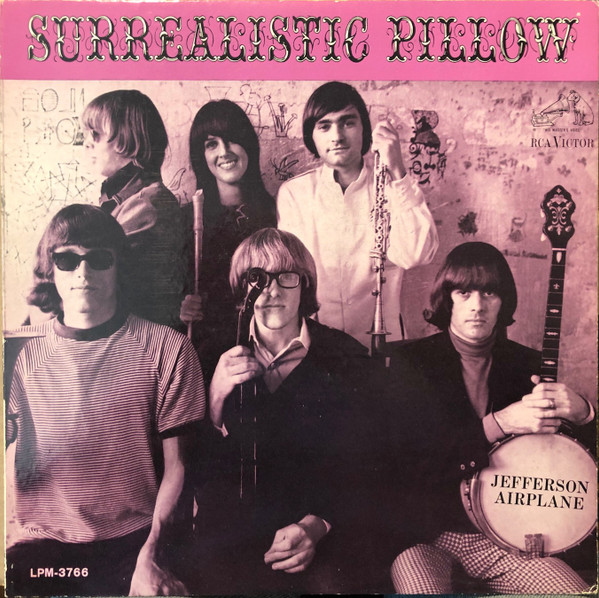
Surrealistic Pillow
1967
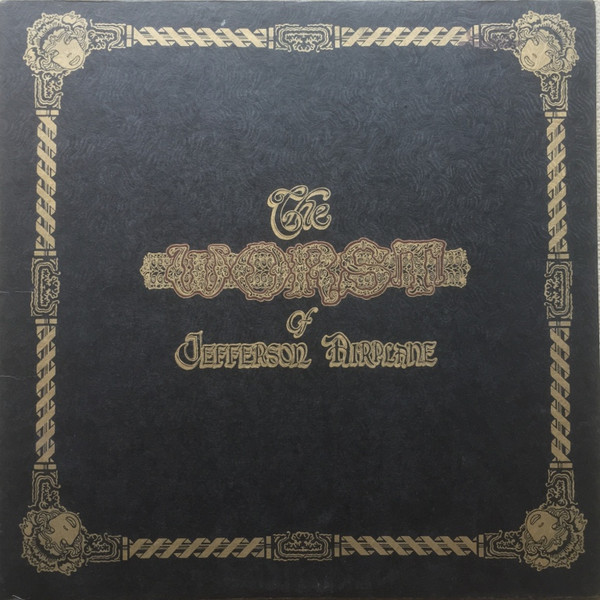
The Worst Of Jefferson Airplane
1970

Volunteers
1969
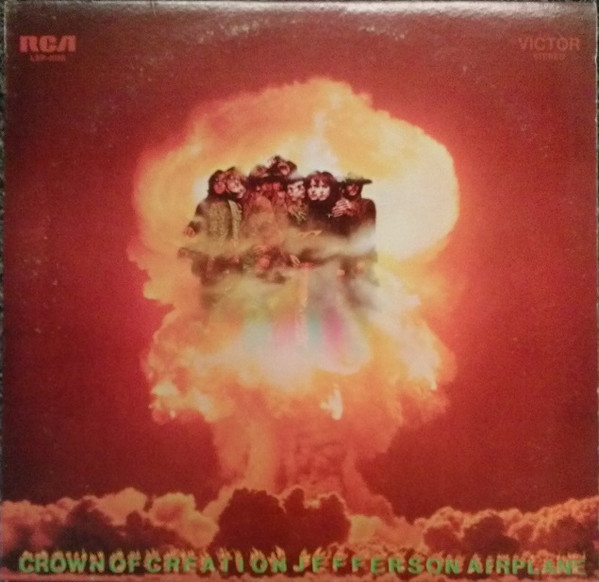
Crown Of Creation
1968
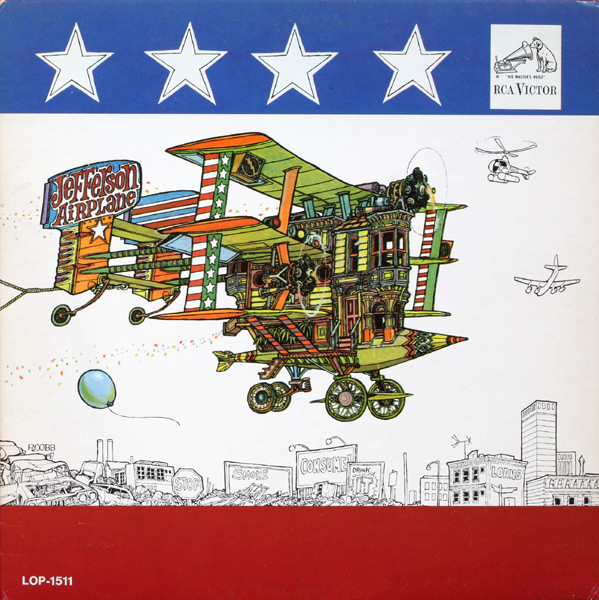
After Bathing At Baxter's
1967
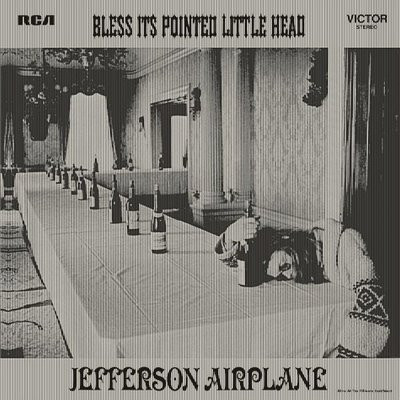
Bless Its Pointed Little Head
1969
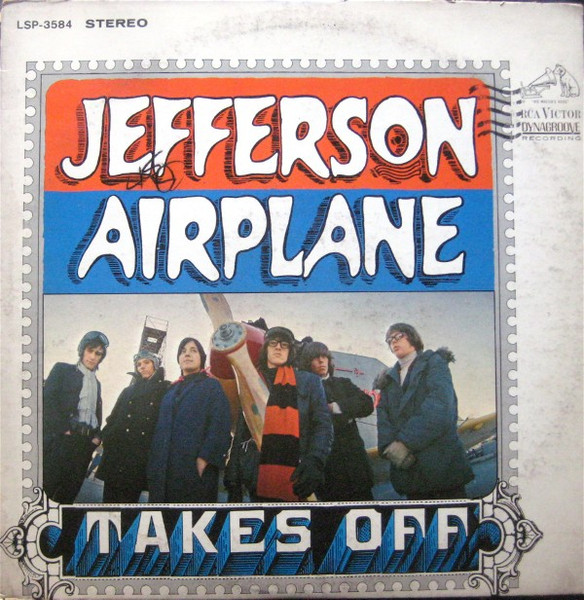
Jefferson Airplane Takes Off
1966
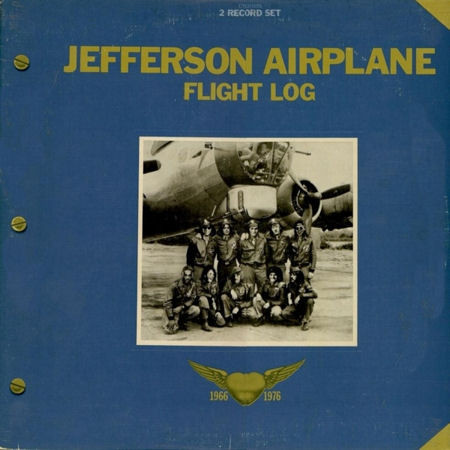
Flight Log (1966 - 1976)
1977
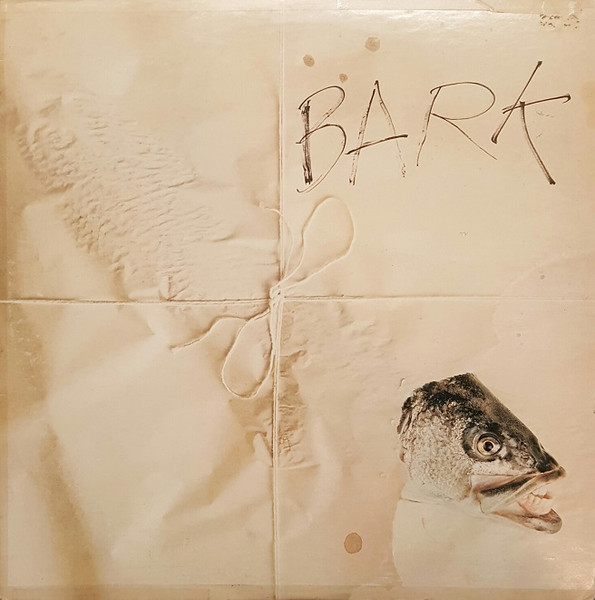
Bark
1971
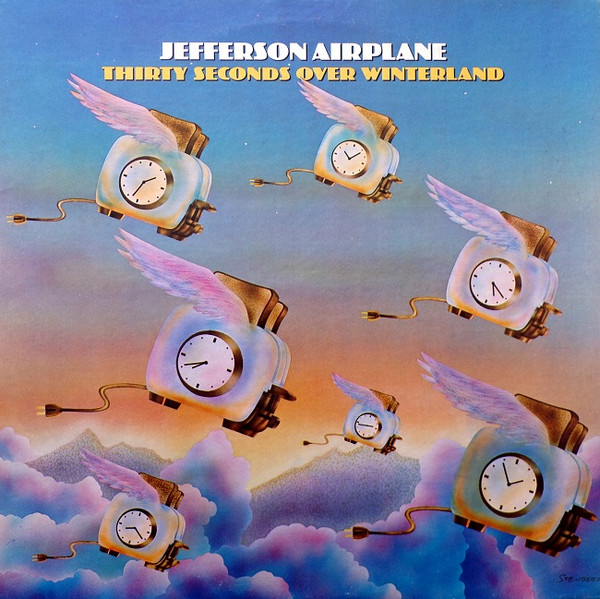
Thirty Seconds Over Winterland
1973
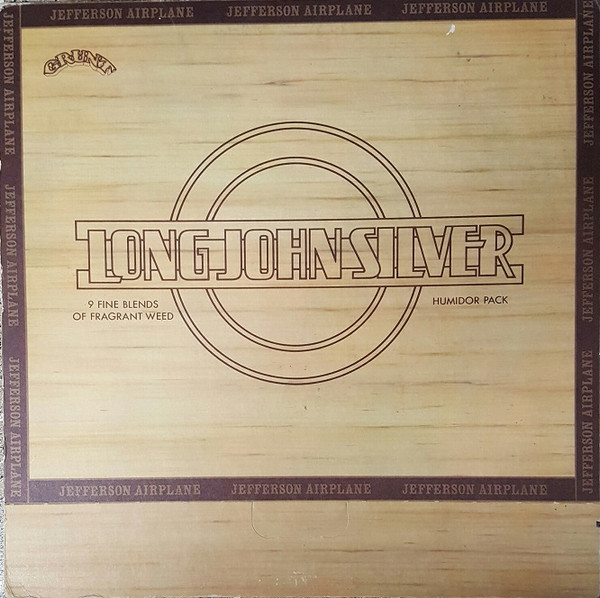
Long John Silver
1972

Early Flight
1974
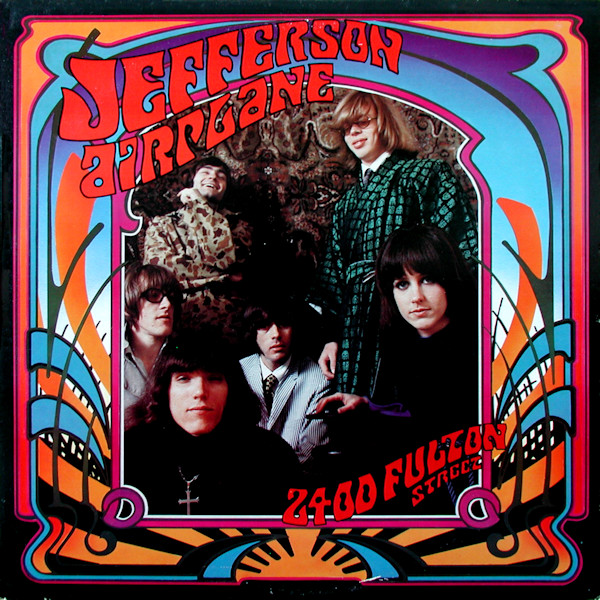
2400 Fulton Street
1987

The Best Of Jefferson Airplane
1978

Somebody To Love
1967
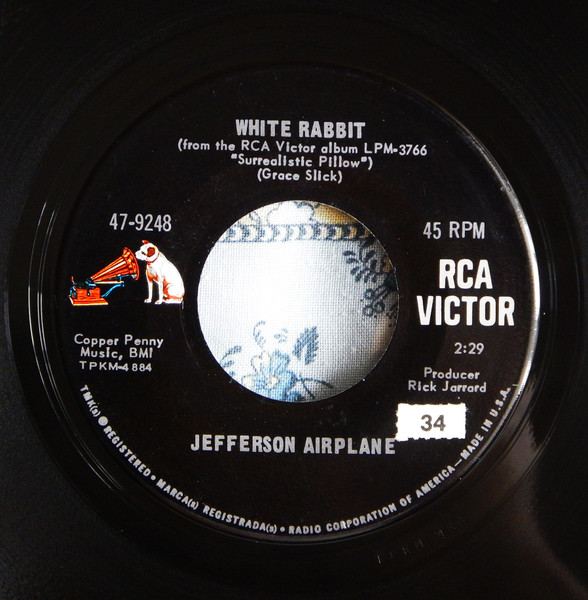
White Rabbit / Plastic Fantastic Lover
1967

Acid, Incense And Balloons: RSD-Collected Gems From The Golden Era Of Flight
2021

Woodstock (Sunday August 17, 1969)
2019
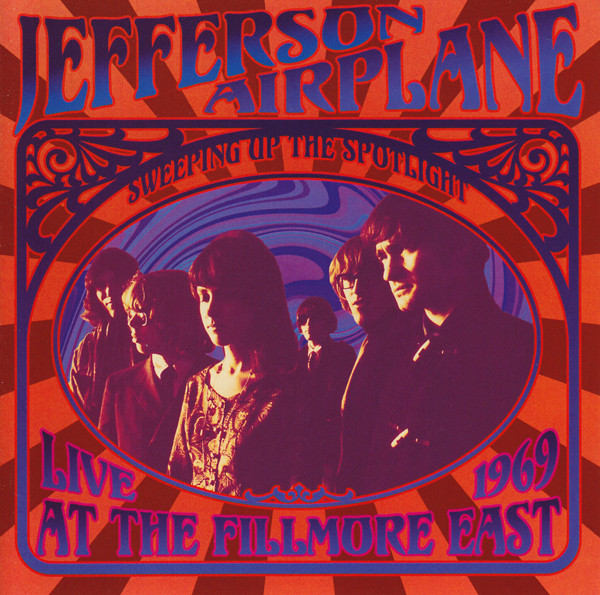
Sweeping Up The Spotlight - Live At The Fillmore East 1969
2007

The Best Of Jefferson Airplane
2001

The Woodstock Experience
2009

Playlist: The Very Best Of Jefferson Airplane
2009
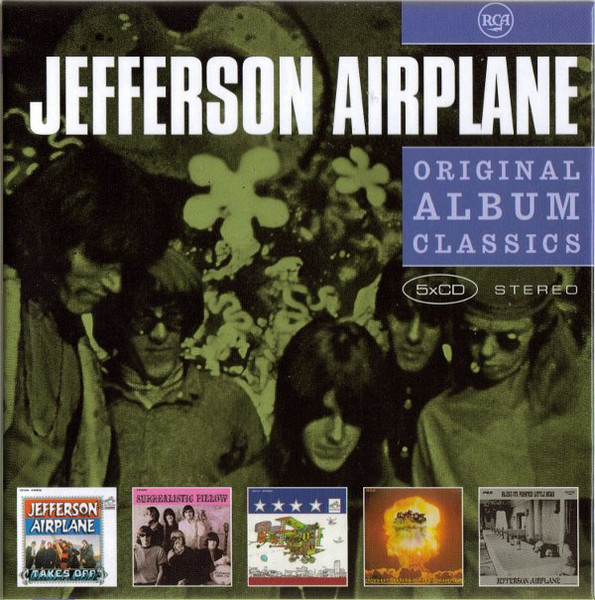
Original Album Classics
2008

The Essential Jefferson Airplane
2005
Related artists
Members
Frequent collaborators
Around the web
Follow every record they touch.
Start your shelf and Gatefold tracks Jefferson Airplane's new pressings, tour dates, and the whole discography — automatically.
Start your shelf →Free forever. Works with 10 records or 10,000.