
Artist
Jane’s Addiction
Los Angeles, United States · 1986 – 2025
Jane’s Addiction is a music group from Los Angeles, United States, active 1986–2025. Their discography on Gatefold includes 24 records.

27
Albums tracked
272
In collections
1986
Since
Biography
Perry Farrell didn’t just want a band; he wanted a circus that could survive a riot. Before they signed a major deal, they tracked a live record at the Roxy just to prove they could out-perform the hair-metal zombies rotting on the Sunset Strip. Dave Navarro was basically a teenager with a Hendrix fixation and a goth’s wardrobe, while Eric Avery and Stephen Perkins locked into these tribal, rolling rhythms that made most rock drummers look like they were playing in slow motion. By the time they hit the studio with Dave Jerden for Nothing’s Shocking, the friction was the point. Avery’s bass lines were the actual architecture of the songs—clean, repetitive, and menacing—while Farrell’s voice acted like a high-pitched frequency meant to shatter glass. They were too art-school for the metal kids and too heavy for the post-punk crowd. That tension didn't last, and the mid-aughts comeback records like Strays felt like a polished corporate hologram compared to the original filth. But for a three-year window, they were the only band on the planet that understood how to make decadence sound like a threat.
Bio from The Clerk
The Arc of Jane’s Addiction
The pivots — what forced Jane’s Addiction to reinvent.
The Triple X Residency
Before the major label bidding war, the band lived and died by their reputation at clubs like the Scream in Los Angeles. They recorded their self-titled debut live at the Roxy because their energy was too volatile to capture in a sterile booth without a crowd to feed off of. You hear it in those early versions of 'Jane Says'—it’s acoustic, but it’s played with the desperation of people who haven't slept in three days. This era defined the 'Jane’s' sound as a ritualistic, communal experience rather than a studio product.
The Jerden Sessions
Warner Bros. threw real money at them and Dave Jerden moved them into Eldorado Studios to capture Nothing’s Shocking. Jerden focused on isolating Avery’s massive bass tone and Navarro’s multi-tracked, flange-heavy guitar heroics to create a wall of sound that felt both psychedelic and claustrophobic. This is where the band moved from local curiosities to the architects of the Lollapalooza blueprint. The result was a record that sounded expensive but felt dangerous, anchored by 'Mountain Song' which remains the gold standard for late-80s alt-rock production.
The Ritual Implosion
By 1990, the band was physically falling apart under the weight of addiction and internal power struggles while tracking Ritual de lo Habitual. They split the record into two halves: the funk-metal blast of the A-side and the sprawling, progressive dirges of the B-side like 'Three Days.' It was a suicide note disguised as a masterpiece, climaxing with the first Lollapalooza tour which was effectively a moving wake. They broke up at the peak of their power because there was simply no oxygen left in the room for four people who couldn't stand each other anymore.
The Bob Ezrin Polish
After a decade of silence, they brought in Pink Floyd producer Bob Ezrin for 2003’s Strays to try and recapture the lightning. Chris Chaney stepped in on bass, and while the playing was technically perfect, the grit was gone. Ezrin’s production was massive and radio-ready, turning their tribal mysticism into a streamlined hard-rock product. It was a successful pivot for the charts, but it traded the band's signature chaos for a professional sheen that felt alien to the fans who grew up on the 1987 club tapes.
Influences
- The Velvet Underground — Farrell has cited them as the reason he started making music, even covering 'Rock & Roll' during the band's early years. You hear it in the way they use repetition and drone to build tension before a blowout. It’s that New York art-damaged sensibility transported to a California beach.
- Led Zeppelin — Navarro’s entire approach to the guitar is a warped tribute to Jimmy Page’s heavy blues and acoustic folk textures. The dynamic shifts in 'Three Days' are a direct descendant of the light-and-shade philosophy Page used on Zeppelin IV. Without Bonham’s swing, Perkins doesn't play those rolls.
- Siouxsie and the Banshees — Dave Navarro frequently credits John McGeoch’s flanged, swirling guitar work as his primary blueprint. The cold, atmospheric textures on 'Summertime Rolls' are a straight lift from the Banshees' post-punk playbook. It gave their metal side a much-needed layer of goth sophistication.
- Joy Division — Eric Avery’s bass style—high-register melodies played with a pick—is a direct homage to Peter Hook. You can hear the bleak, driving influence of 'Closer' in the skeletal framework of 'Ted, Just Admit It.' It’s the engine that keeps the band from drifting too far into hippy-jam territory.
- Bauhaus — The band’s theatricality and Farrell’s vocal affectations owe a massive debt to Peter Murphy’s dramatic delivery. They covered 'Transmission' and 'Stigmata Martyr' in early rehearsals, soaking up that jagged, skeletal punk energy. It’s the DNA of their visual aesthetic and their darker, more ritualistic lyrical themes.
Discography
Their records — most-collected first.
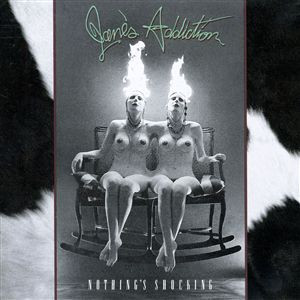
Nothing's Shocking
1988
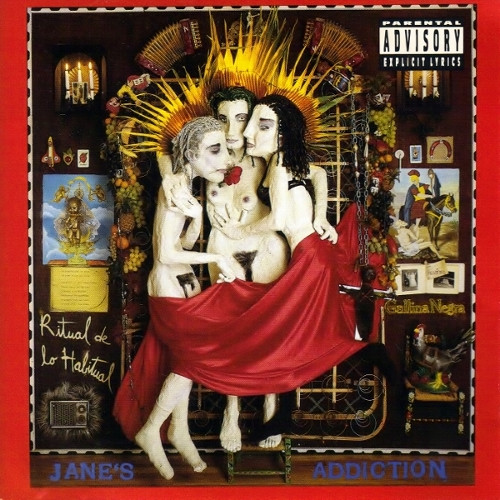
Ritual De Lo Habitual
1990
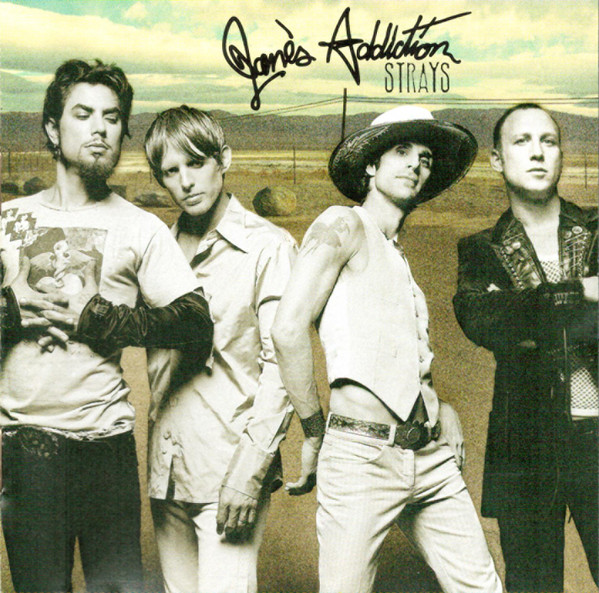
Strays
2003

Janes Addiction
1987

Kettle Whistle
1997

Been Caught Stealing
1990

The Great Escape Artist
2011

Sex'n'Drugs'n'Rock'n'Roll
1995

Imminent Redemption
2024
Live And Rare
1991

Classic Girl
1991

Three Days
2003

Idiots Rule
1992

The Head Shop
1991
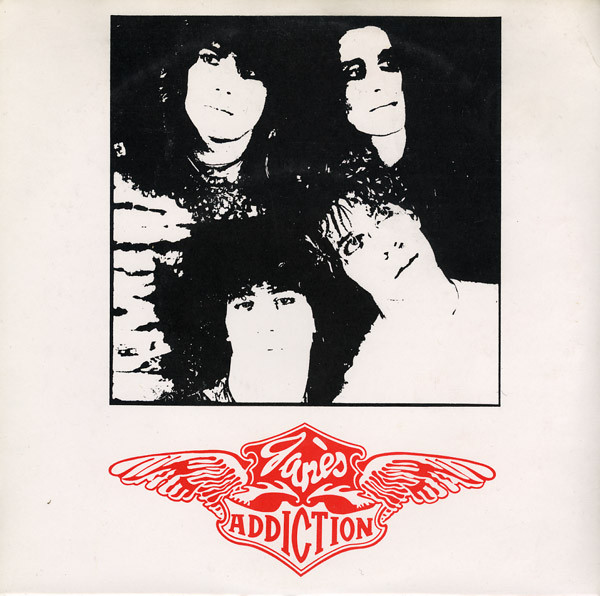
Whole Lotta Love / Slow Diver
1989

Alive At Twenty-Five: Ritual De Lo Habitual
2017

Live In NYC
2013

Live Voodoo
2010

A Cabinet Of Curiosities
2009

True Nature
2003

Nothing's Shocking / Ritual De Lo Habitual
1997

Live And Profane!
1991

Mountain Song
1988

La La Palooza
Related artists
Around the web
Follow every record they touch.
Start your shelf and Gatefold tracks Jane’s Addiction's new pressings, tour dates, and the whole discography — automatically.
Start your shelf →Free forever. Works with 10 records or 10,000.