
Artist
The Gil Evans Orchestra
New York, United States
The Gil Evans Orchestra is a music group from New York, United States. Their discography on Gatefold includes 8 records.

8
Albums tracked
31
In collections
—
Since
Biography
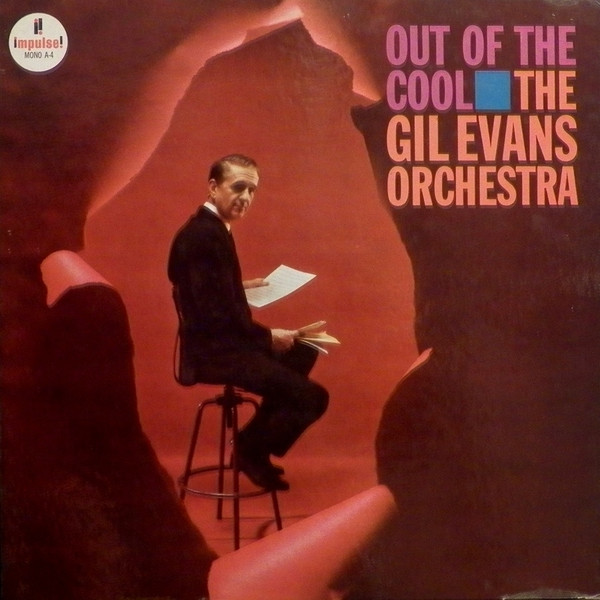
Rudy Van Gelder had to track *Out of the Cool* in late 1960 with Creed Taylor riding the producer chair, juggling an oversized ensemble that had no business fitting neatly into a stereo spread. Evans dragged French horns, tuba, and bass trombones right into the front line next to Johnny Coles and Jimmy Knepper, treating the brass section like a woodstove instead of a blast furnace. Most bandleaders used big bands to show off firepower and hit audiences over the head with deafening ensemble rips. Evans went the other way, stripping away the clutter to leave vast, freezing pockets of empty space where Elvin Jones and Ron Carter could just simmer. It was patient, menacing, and completely alien to anyone expecting another swing revival. Then he blew up his own format. By the time the seventies hit, he junked the polite acoustic voicings, dragged synthesizers and fuzzboxes into the room, and turned a massive brass orchestra into a snarling, heavy electric beast. Purists hated it and called it noisy chaos. They were dead wrong—it was the exact same obsession with weird tonal color, just plugged into a wall socket and cranked until the meters bled.
Bio from The Clerk
The Arc of The Gil Evans Orchestra
The pivots — what forced The Gil Evans Orchestra to reinvent.
The Impulse! Open Spaces
Creed Taylor launched Impulse! and handed Evans the floor at Rudy Van Gelder's room, giving him room to stretch beyond standard modal arrangements. The result was 1961's *Out of the Cool*, built on creeping dynamics, dry textures, and massive rhythmic breathing room anchored by drummer Elvin Jones. Evans quickly grew frustrated with label obligations, following Taylor out the door to Verve shortly after. To burn off his remaining contractual session time for 1962's *Into the Hot*, he pulled a brilliant stunt: he did not play a single note or arrange a single bar, handing the entire record over to split sides from John Carisi and Cecil Taylor.
The Electric Rebuild
After stepping away in the mid-1960s to raise a family, Evans rebuilt the entire orchestra in 1969 with an unapologetic fusion pivot. He gutted the traditional big horn sections, stacking the floor with fuzz guitars, synthesizers, electric bass, and an army of percussionists. The payoff came on the 1971 sessions released as *Blues in Orbit*, ditching cool swing for thick, churning vamps. You hear the brass fighting against electric squalls instead of neatly framing a soloist, setting up a chaotic new decade.
The Hendrix Re-Imagining
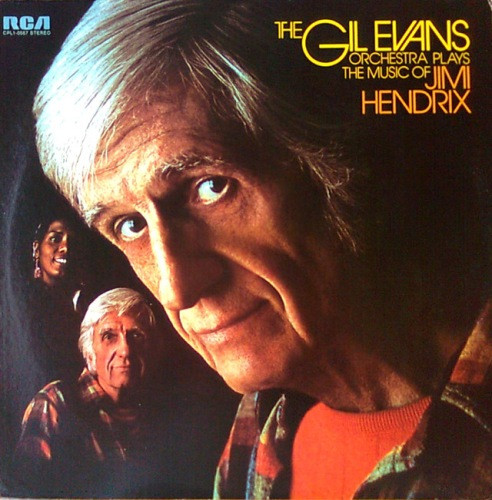
A scheduled studio summit between Evans and Jimi Hendrix evaporated when Hendrix died in 1970, leaving the charts in limbo. Evans refused to scrap the concept, eventually dragging players like John Abercrombie and David Horowitz into RCA's studio to track 1974's *Plays the Music of Jimi Hendrix*. Instead of cranking out cheap big-band novelty covers, the orchestra mutated Hendrix's feedback and blues structures into dense, screaming ensemble arrangements. It alienates traditionalists immediately, leaning heavy on dissonant synthesizers and bruising fuzz bass.
The Live European Nomads
By the late 1970s, keeping a massive experimental orchestra afloat in American studios was financially impossible, so Evans took the band on the road across Europe. Label deals turned into loose, documentary-style live captures on independent imprints, yielding fierce documents like 1979's *Parabola* on Italy's Horo Records. Later releases of these road dates, including 1989's *Little Wing*, captured a fluid, ever-shifting ensemble that operated more like an unruly jam collective than a sheet-music outfit. Evans directed from behind a keyboard with subtle nods, letting the orchestra rage on tape until his death in 1988.
Influences
- Claude Debussy — Evans explicitly credited Debussy's impressionist voicings and non-functional harmonies as the bedrock of his entire arranging philosophy. You hear it immediately in the brooding, unresolved woodwind textures and pedal points on *Out of the Cool*. He treated a jazz horn section like a French symbolist orchestra.
- Duke Ellington — Evans studied Ellington's scores obsessively, adopting Duke's rule of voicing brass for the specific idiosyncratic tone of an individual player rather than a generic chair. That DNA runs straight through the horn voicings tailored for Johnny Coles on *Out of the Cool*. It made a sixteen-piece outfit sound like a single living lung.
- Charlie Parker — Evans lived in a tiny New York basement apartment in the late 1940s where Parker, Miles, and Gerry Mulligan hung out daily analyzing bebop phrasing and harmony. Bird's fluid linear chromaticism became the direct melodic language Evans orchestrated across entire brass sections. He turned Parker's frantic solo lines into slow-motion ensemble backdrops.
- Manuel de Falla — Spanish classical composers fascinated Evans, particularly De Falla's dark, dramatic use of folk scales and modal tension. That direct structural influence defined the expansive, brooding brass arrangements Evans built across his late-fifties and early-sixties orchestra dates. It gave his charts an earthy, ceremonial weight that traditional swing arrangers never possessed.
- Jimi Hendrix — Hendrix completely rewired Evans's concept of tone, volume, and harmonic texture late in his career, prompting Evans to abandon acoustic restraints entirely. The obsession culminated directly in 1974's *Plays the Music of Jimi Hendrix*, where Evans treated electric guitar feedback and wah-wah pedals as legitimate orchestral colors. It dragged a swing-era arranger into the eye of the rock-and-roll hurricane.
Discography
Their records — most-collected first.




Related artists
Around the web
Follow every record they touch.
Start your shelf and Gatefold tracks The Gil Evans Orchestra's new pressings, tour dates, and the whole discography — automatically.
Start your shelf →Free forever. Works with 10 records or 10,000.