
Artist
Georges Brassens
Sète, France · 1921 – 1981
Georges Brassens is a musician from Sète, France, active 1921–1981. Their discography on Gatefold includes 24 records.

54
Albums tracked
40
In collections
1921
Since
Biography
Georges Brassens walked into a recording studio in 1952 because a cabaret singer named Patachou literally pushed him there. He was thirty years old, terrified of the stage, and spent years living in a house with no running water or electricity. He didn't want to be a performer. He wanted to be a poet, but the words needed the wood of that cheap acoustic guitar to stay grounded. His voice sounded like a gravel pit, and his thumb technique on the strings was primitive, but it was the only way to deliver those dense, anarchic lyrics without the Parisian elite ruining them. He spent decades on the Philips label stubbornly refusing to change a damn thing. While everyone else was chasing the Yé-yé pop boom or polished orchestrations, Brassens stuck with Pierre Nicolas on the upright bass. That was the whole setup. If you listen to the records, the bass is the only thing keeping the songs from floating away into pure literature. He wrote about sex, death, and hating the police with the same dry, rhythmic precision. He stayed in the same small circle until the end, proving that if your rhymes are sharp enough, you don't need a string section to scare the hell out of the establishment.
Bio from The Clerk
The Arc of Georges Brassens
The pivots — what forced Georges Brassens to reinvent.
The Impasse Patachou Years
Before he was a star, Brassens was a ghost-writer living in a shack in the 14th arrondissement. He was handing songs to Jacques Grello and Patachou because he hated his own voice and felt his stage presence was non-existent. Patachou eventually forced him to sing his own material at her cabaret because no one else could handle the complex metrics and the sheer vulgarity of his verse. This shift turned him from a failed novelist into a recording artist for Polydor, setting the template for the lonely man with a guitar.
The Nicolas Partnership
The defining shift in his sound happened when he teamed up with bassist Pierre Nicolas, who would stay by his side for thirty years. Brassens realized his guitar playing was just a metronome, so he brought in Nicolas to provide the melodic counterpoint that actually makes those records swing. You hear it on tracks like 'Le Gorille' where the bass is doing all the heavy lifting while Brassens just spits fire. It created a minimalist jazz-folk hybrid that became his permanent sonic signature, ignoring every production trend of the 1960s.
Influences
- Charles Trenet — Brassens explicitly called Trenet the man who 'opened the door' for every French songwriter. You hear it in the way Brassens swings his phrasing against the beat. He took Trenet’s 'Fou Chantant' energy and stripped away the grin.
- François Villon — Brassens was obsessed with this 15th-century outlaw poet and eventually set Villon’s 'Ballade des dames du temps jadis' to music. The influence is all over his lyrical DNA—the obsession with gallows humor and the lives of the marginalized. It’s why his songs feel hundreds of years old and brand new at the same time.
- Django Reinhardt — The Manouche swing style was the only guitar language Brassens truly respected. While he wasn't a virtuoso, his rhythmic 'la pompe' style is a direct, simplified descendant of what Django was doing in the Hot Club de France. It’s the engine room of every single track he ever cut.
- Mireille Hartuch — Mireille was the one who broke the mold of the 'chanson réaliste' and taught Brassens that you could be clever and musically sophisticated simultaneously. He attended her 'Petit Conservatoire' and credited her with showing him how to marry a complex rhyme to a simple melody. Without her, his lyrics would have stayed on the page.
- Paul Fort — Brassens recorded an entire album’s worth of Paul Fort’s poems, including the famous 'Le Petit Cheval.' Fort was a mentor figure who validated Brassens's belief that a song was just a poem that hadn't found its legs yet. You hear Fort’s rhythmic structure in almost every original Brassens composition.
Discography
Their records — most-collected first.

7
1965

X
1969

6
1965

Interprète Ses Dernières Compositions, 2ème Série
1954

Georges Brassens
2018

Les Copains D'Abord
1989

Nouvelles Chansons
1976

Georges Brassens
1972
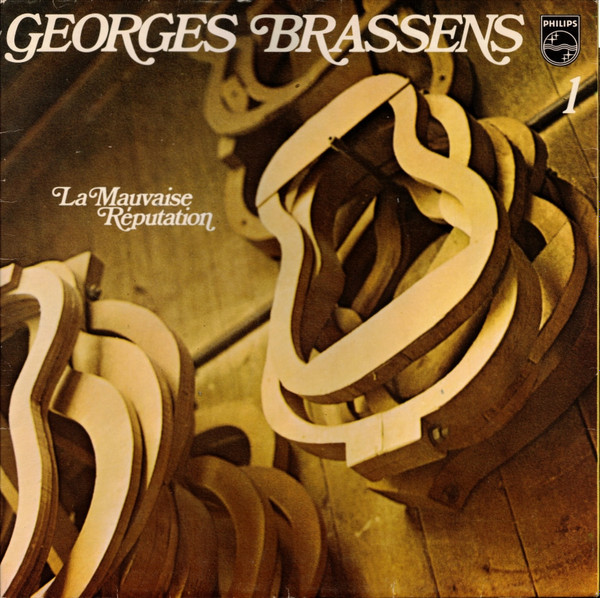
1
1965

5
1965

4
1965

Georges Brassens A 100 Ans
2021

Les Amoureux Des Bancs Publics
1985
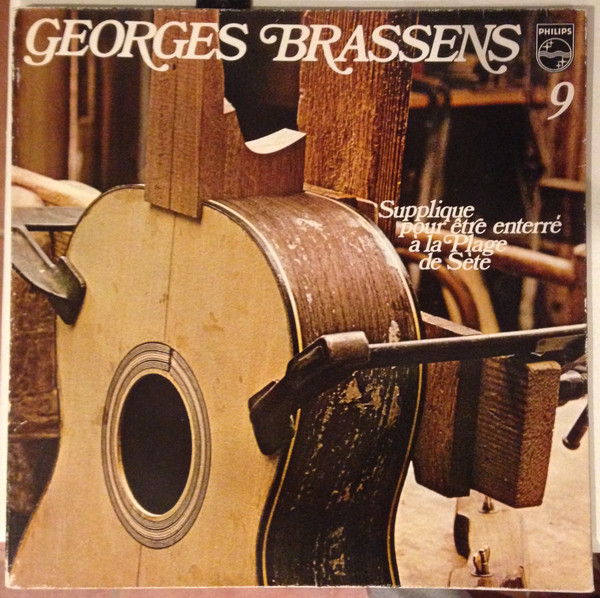
IX
1966
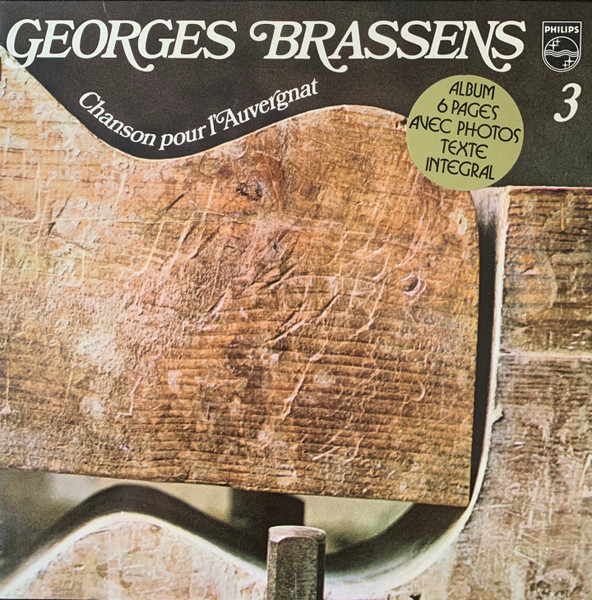
3
1965

2
1965

N° 9
1962
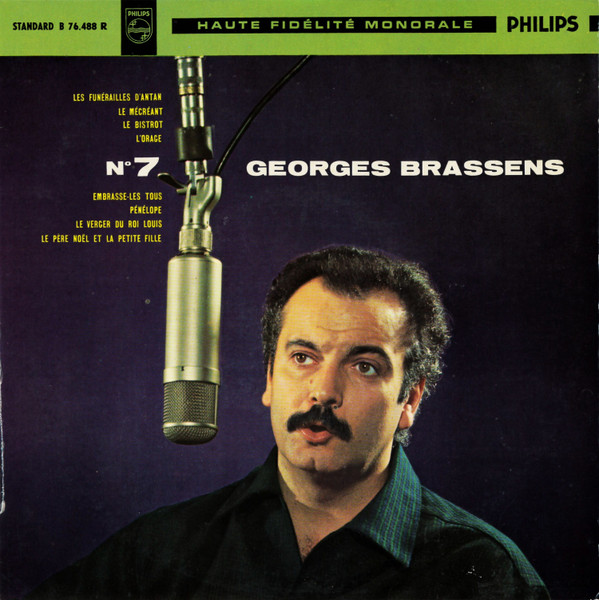
N° 7
1960
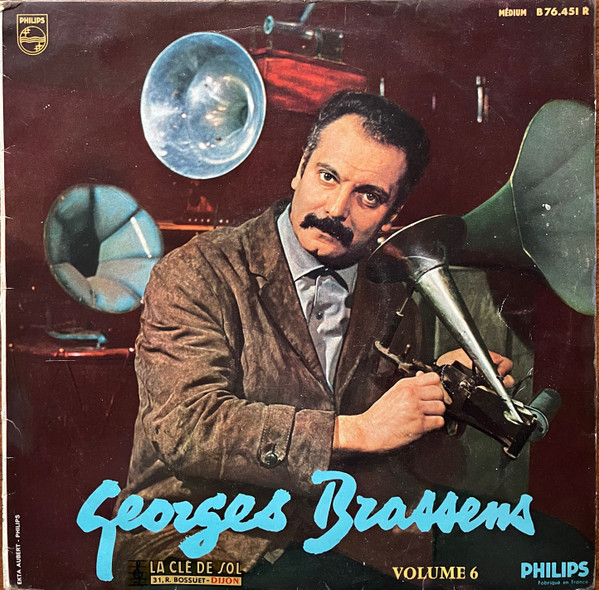
Volume 6
1958

N°3
1954

N° 1 - Georges Brassens Chante Les Chansons Poétiques (... Et Souvent Gaillardes) De... Georges Brassens
1953

Les 50 Plus Belles Chansons

L'intégrale Des Albums Originaux
2010

La Mauvaise Réputation + Les Amoureux Des Bancs Publics
2009
Related artists
Frequent collaborators
Around the web
Follow every record they touch.
Start your shelf and Gatefold tracks Georges Brassens's new pressings, tour dates, and the whole discography — automatically.
Start your shelf →Free forever. Works with 10 records or 10,000.