
Artist
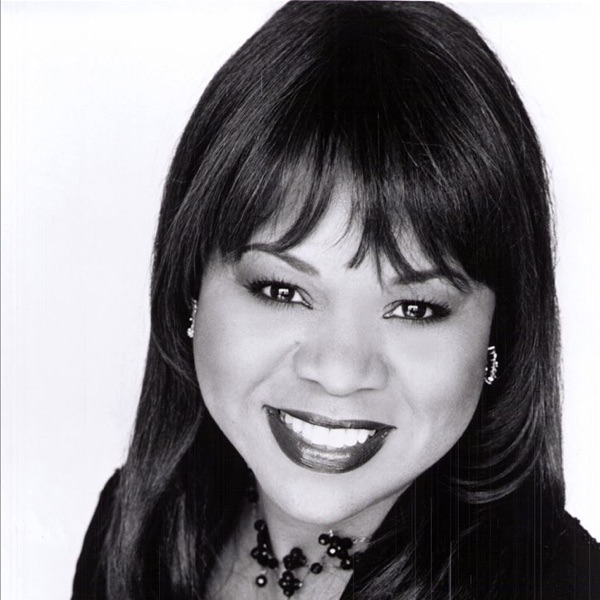
Deniece Williams
US soul/funk vocalist/songwriter
Gary, United States · b. 1951
Deniece Williams is a musician from Gary, United States, active since 1951. Their discography on Gatefold includes 24 records. They also recorded with Karma.
27
Albums tracked
28
In collections
1951
Since
Biography
Stevie Wonder did not just hire backing singers; he ran them through a masterclass. When Deniece Williams joined Wonderlove in the early seventies, she was a licensed nurse who could hit notes that registered as dog whistles. Stevie taught her how to structure a vocal arrangement around those freak-of-nature high registers. By the time Maurice White of Earth, Wind & Fire signed her to his Kalimba Productions imprint, she was ready to bypass the standard industry assembly line. Her 1976 debut 'This Is Niecy' blew the doors off because she was not just a voice; she was co-writing the tracks and co-producing. Working with Charles Stepney and Maurice White meant she had access to the tightest rhythm section on the planet. They gave her a foundation of heavy, syncopated funk that made her four-octave soprano soaring overhead sound downright dangerous. Then the eighties arrived, and the industry demanded neon paint and cheap synths. The 'Footloose' soundtrack gig with 'Let's Hear It for the Boy' made her a pop star, but it also locked her into a sanitized, drum-machine-heavy corner that ignored the grit of her seventies work. She pivoted to gospel to save her own sanity, reclaiming her vocal freedom away from the top 40 meat grinder.
Bio from The Clerk
The Arc of Deniece Williams
The pivots — what forced Deniece Williams to reinvent.
The Kalimba Years
After leaving Wonderlove, Maurice White and legendary arranger Charles Stepney brought her into the Earth, Wind & Fire orbit. This era was defined by the Kalimba sound—deeply spiritual, heavy on kalimba thumb pianos, and driven by a massive, horn-heavy rhythm section. On 'Free' and 'Cause You Love Me Baby,' you hear Stepney's complex orchestral arrangements wrapping around her massive vocal leaps. It was sophisticated, adult soul that refused to be dumbed down for the disco market.
The Pop-Chart Pivot
By the early eighties, Columbia Records wanted pop crossover hits. They paired her with legendary producer Thom Bell for 'Silky' soul ballads, but the real shift came when George Duke stepped behind the board for 'Let's Hear It for the Boy' in 1984. The title track was a massive synth-pop juggernaut designed for the silver screen. Suddenly, her complex, jazz-inflected vocal runs were stripped back to fit inside the tight, programmed grids of eighties FM radio.
The Gospel Reclamation
Tired of chasing the pop dragon, she signed with Sparrow Records in 1986 to record 'So Glad I Know.' This move allowed her to abandon the synth-pop formulas and return to her church roots. The production shifted from plastic drum machines back to organic pianos and live choirs. You can hear the relief in her voice on 'They Say'—she was no longer competing with MTV imagery and could just sing.
Influences
- Stevie Wonder — He hired her for Wonderlove in 1972 and taught her vocal arrangement. You hear this masterclass in the complex backing vocal stacks she arranged on 'Free.' He gave her the confidence to write her own charts instead of relying on studio heads.
- Minnie Riperton — Riperton set the template for the whistle-register soprano in seventies soul. Williams directly followed this blueprint, using that extreme upper register not as a gimmick, but as a lead instrument. You can hear the direct lineage in the airy, delicate phrasing of 'Loving You' reflected in 'Free.'
- Maurice White — He signed her to Kalimba Productions, co-produced her early albums, and brought the Earth, Wind & Fire rhythm section to her sessions. His signature kalimba and Afro-centric percussion arrangements are the literal bedrock of 'This Is Niecy.' He kept her sound grounded in heavy funk.
- Charles Stepney — He co-produced and arranged her debut album before his sudden death in 1976. Stepney's signature baroque-soul string arrangements and complex chord changes defined the shape of 'That's What Friends Are For.' He taught her how to marry orchestral classical music with street-level soul.
- Aretha Franklin — Williams grew up listening to Franklin's Atlantic Records run, which shaped her gospel-inflected phrasing. You hear this grit underneath the high soprano on 'Baby, Baby My Love's All For You.' She kept Williams from ever sounding too sweet or lightweight.
Deniece Williams — solo
Their records — most-collected first.
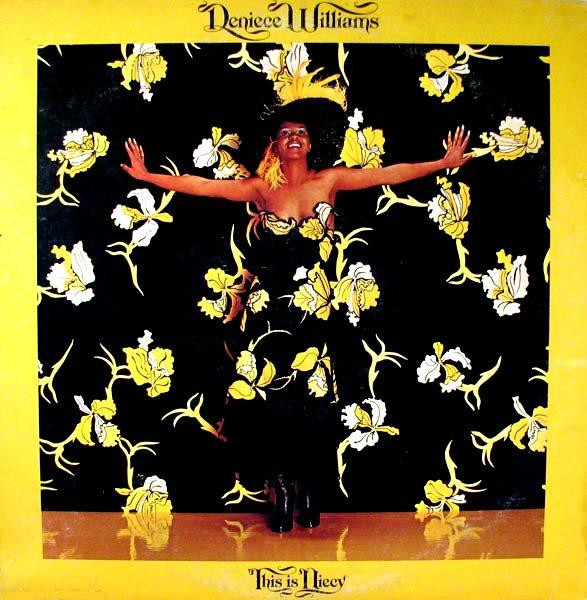
This Is Niecy
1976

Song Bird
1977
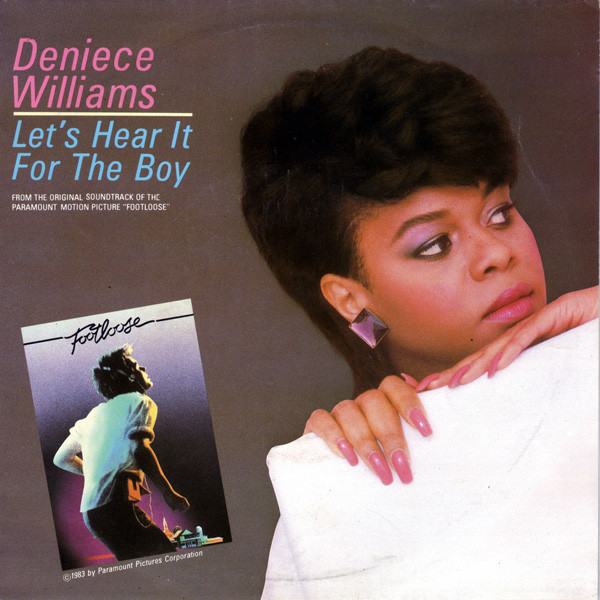
Let's Hear It For The Boy
1984

So Glad I Know
1986

Free / Cause You Love Me Baby
1976

I'm So Proud
1983

Do What You Feel
1983
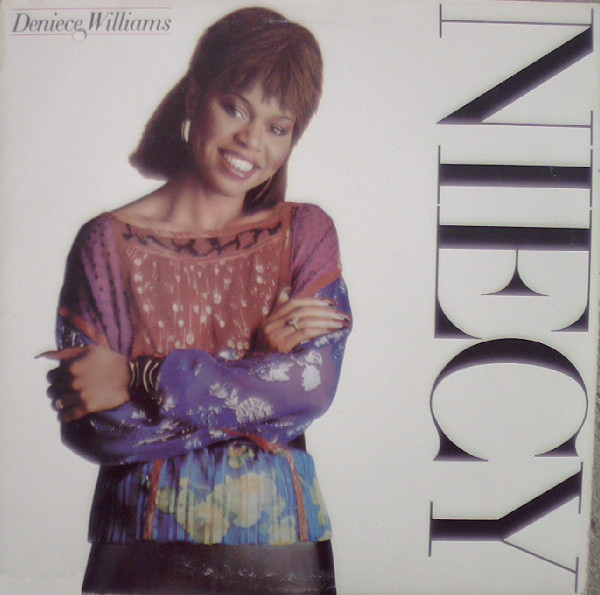
Niecy
1982
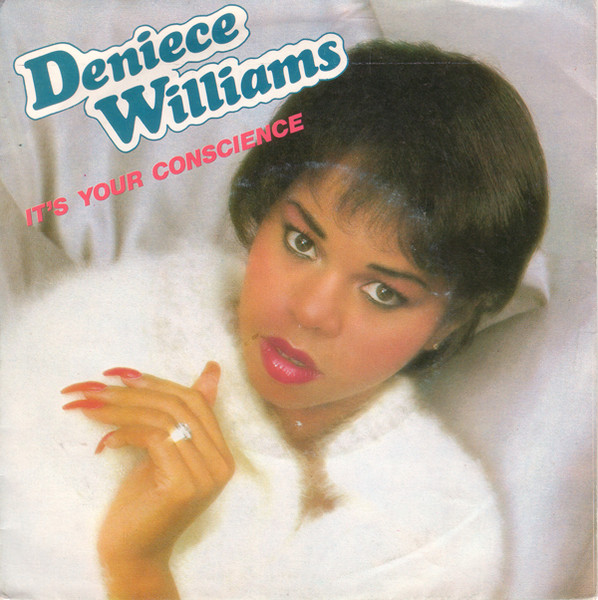
It's Your Conscience
1981

Free / It's Important To Me
1976

Black Butterfly • The Essential Niecy
2016

Love, Niecy Style
2007

Love Songs
2000

This Is My Song
1998

Gonna Take A Miracle: The Best Of Deniece Williams
1996

Greatest Gospel Hits
1994

Lullabies To Dreamland
1991

From The Beginning
1990

Change The World
1990
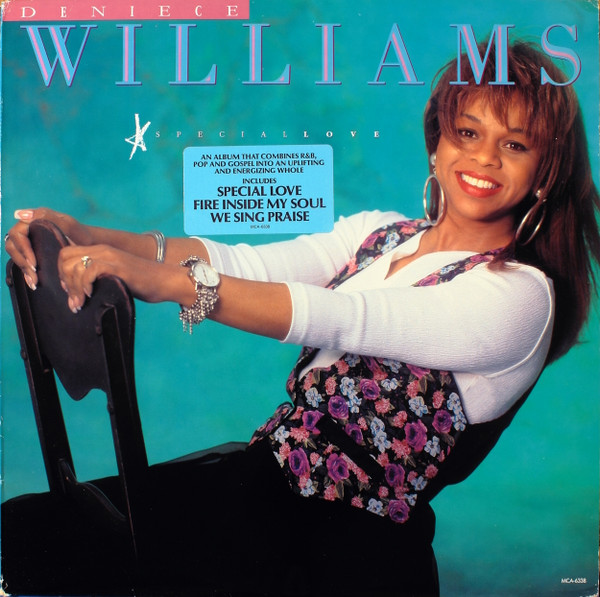
Special Love
1989

As Good As It Gets
1988

Water Under The Bridge
1987

Hot On The Trail
1986

My Melody
1981
Karma
A project Deniece Williams was part of. Former member.


Related artists
Around the web
Follow every record they touch.
Start your shelf and Gatefold tracks Deniece Williams's new pressings, tour dates, and the whole discography — automatically.
Start your shelf →Free forever. Works with 10 records or 10,000.