
Artist
Charles Aznavour
6th arrondissement of Paris, France · 1924 – 2018
Charles Aznavour is a musician from 6th arrondissement of Paris, France, active 1924–2018. Their discography on Gatefold includes 24 records.

44
Albums tracked
27
In collections
1924
Since
Biography
Charles Aznavour started out getting told his voice was too rough and his height was a problem for the stage. He spent his early days lugging gear and writing hits for Édith Piaf while playing second fiddle in a duo with Pierre Roche. The guy wasn't some overnight sensation—he was a songwriter for hire who finally decided he was the only one who could sell his own brand of world-weary misery. He didn't just sing about love; he sang about the laundry, the gray hair, and the quiet desperation of a marriage falling apart. While other French crooners were playing it safe with radio-friendly fluff, Aznavour was digging into the dirt. He was a workhorse who released hundreds of records, and yeah, some of those later orchestral pop albums are pure schmaltzy filler, but when he hits, he hits like a heavyweight.
Bio from The Clerk
The Arc of Charles Aznavour
The pivots — what forced Charles Aznavour to reinvent.
The Piaf Apprenticeship
After the war, Aznavour was essentially Édith Piaf’s shadow, acting as her driver, songwriter, and general fix-it man. He toured the States with her and Pierre Roche, absorbing the pacing of American vaudeville and the raw emotional delivery Piaf demanded from her stable. You hear it in the early 1950s cuts—he’s learning how to turn a three-minute song into a one-act play. This era wasn't about him being a star; it was about him learning the mechanics of a heartbreak from the best in the business.
The Barclay Breakthrough
Signing with Eddie Barclay in the mid-50s changed the game because Barclay actually let him lean into the grit. Records like 'Sur ma vie' proved that his 'frog in the throat' delivery wasn't a defect—it was a feature. He started working with arrangers like Paul Mauriat, who knew how to wrap those raspy vocals in cinematic strings without smothering the honesty. This is the run where he stops being a songwriter who sings and starts being the face of the French chanson.
The International Pivot
By the 1970s, Aznavour realized he could take the melancholy global by re-recording his hits in English, Spanish, and Italian. This is when 'She' became a massive hit and the production got glossier, trading the smoky club vibe for a stadium-sized polish. Some of the arrangements from this period feel like they’re chasing a specific kind of easy-listening chart success. It’s a pivot away from the raw Parisian theater and toward a more calculated, professional entertainer status that lasted decades.
Influences
- Édith Piaf — She was his mentor and boss for eight years, famously taking him on tour and forcing him to rewrite his phrasing. You hear her influence in his 'theatrical' delivery where the lyric takes precedence over the melody. Without her boot camp, he never finds that balance of vulnerability and grit.
- Maurice Chevalier — Aznavour explicitly cited Chevalier as the reason he understood the importance of stage presence and the 'storyteller' archetype. You hear it in the way Aznavour uses his hands and eyes to sell a song as much as his voice. It's the DNA of the old-school French music hall.
- Carlos Gardel — Aznavour's parents were immigrants who loved tango, and he grew up listening to the dramatic, percussive phrasing of Gardel. The rhythmic tension in Aznavour’s faster tracks reflects that Argentinian swing. It's the secret sauce behind his more rhythmic, staccato vocal delivery.
- Charles Trenet — Trenet was the one who broke the mold for French songwriting before the war, introducing a poetic, surrealist touch that Aznavour studied closely. He took Trenet’s lyrical complexity and stripped away the optimism. He wanted the craft of Trenet but with a lot more dirt under the fingernails.
- Al Jolson — Aznavour often pointed to Jolson as a master of the 'big' performance, specifically how to project emotion to the back of the room. You hear that Vaudeville influence in his 1960s live recordings at the Olympia. He took the American showman energy and applied it to the French chanson.
Discography
Their records — most-collected first.
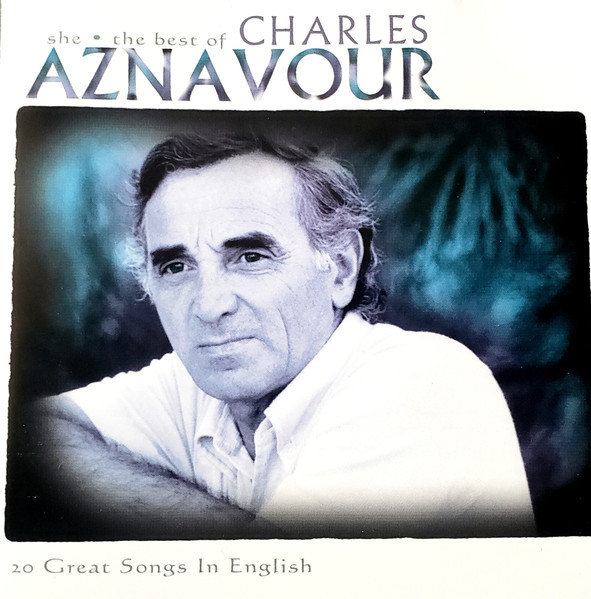
She. The Best Of Charles Aznavour
1996
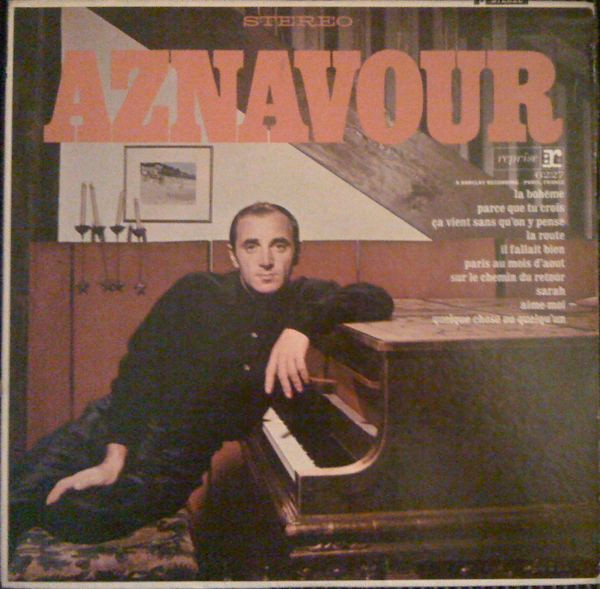
Charles Aznavour
1966

A Tapestry Of Dreams
1974

Désormais...
1969

Les Plus Belles Chansons
2025

L'album De Sa Vie
2019
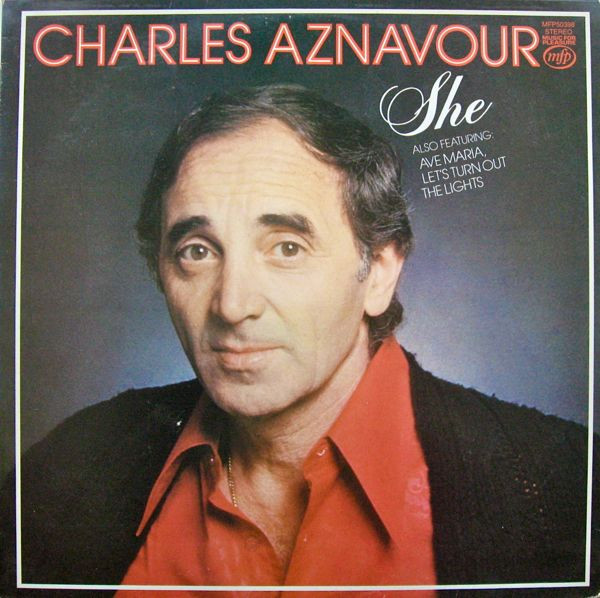
Charles Aznavour
1979
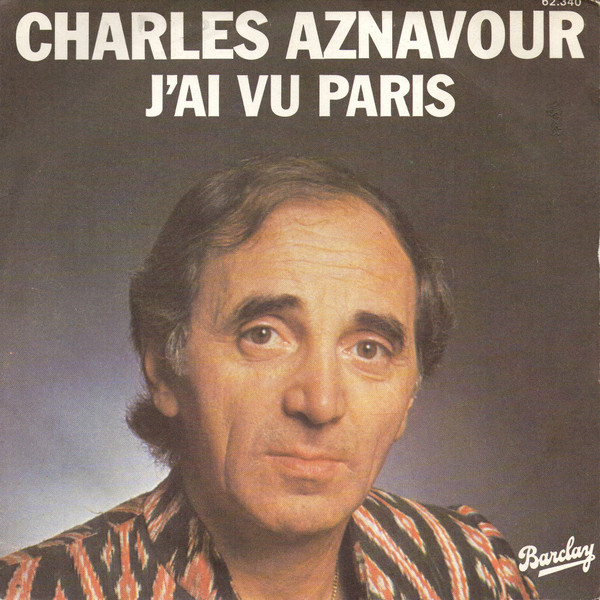
J'ai Vu Paris
1977

Grandes Exitos En Español
1977

I Sing For... You
1975

La Mamma
1975

She
1974
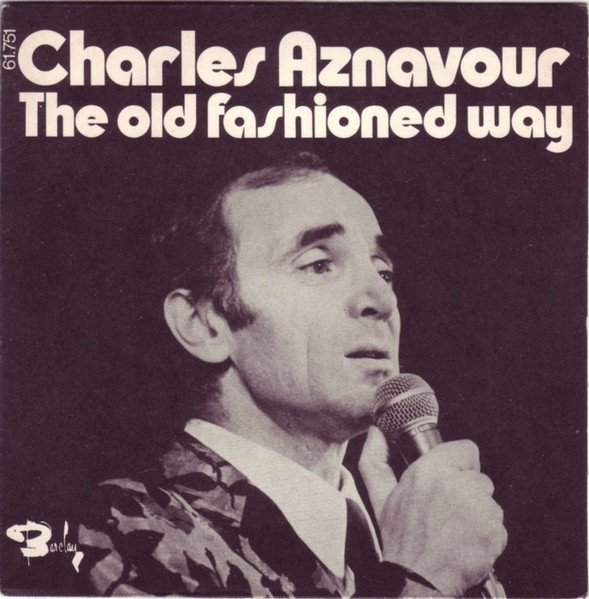
The Old Fashioned Way
1973
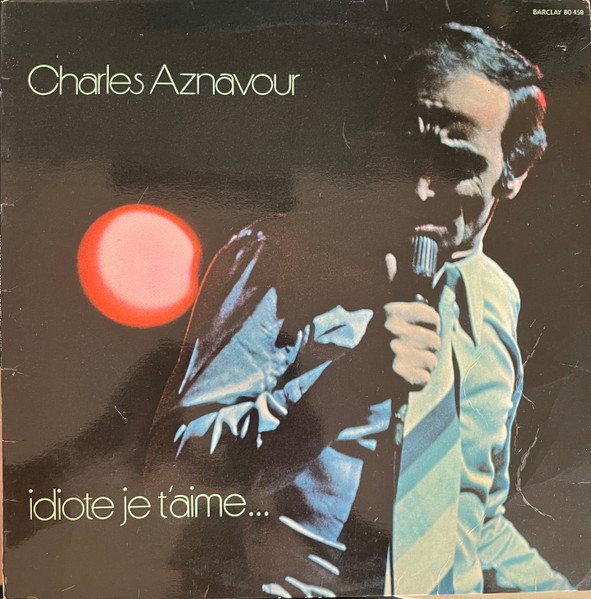
Idiote Je T'Aime...
1972

Charles Aznavour
1972
Non, Je N'ai Rien Oublié
1971

Chante En Multiphonie Stereo Album No 3
1967
La Bohême
1965
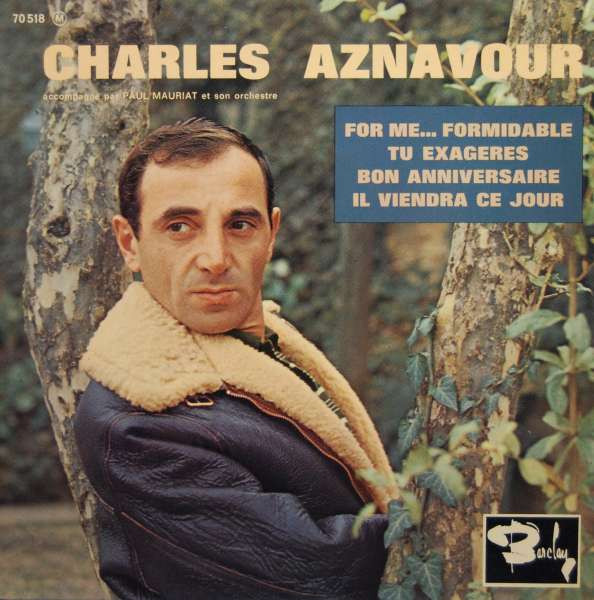
For Me... Formidable
1963
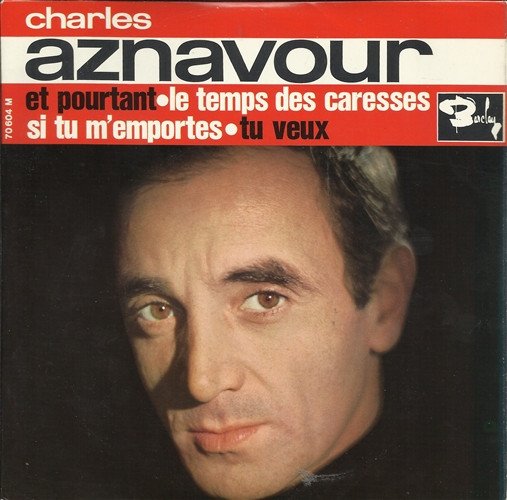
Et Pourtant
1963

Je M'voyais Déjà
1960

Colore Ma Vie
2007

Je Voyage
2003

Palais Des Congrès 2000
2001
Related artists
Bands & projects
Around the web
Follow every record they touch.
Start your shelf and Gatefold tracks Charles Aznavour's new pressings, tour dates, and the whole discography — automatically.
Start your shelf →Free forever. Works with 10 records or 10,000.