
Artist
Carole King
Manhattan, United States · b. 1942
Carole King is a musician from Manhattan, United States, active since 1942. Their discography on Gatefold includes 24 records.

40
Albums tracked
407
In collections
1942
Since
Biography
The Brill Building was a literal song factory where you didn't have the luxury of waiting for the muse. Carole King was sixteen years old, grinding out hits on a vertical piano in a cubicle for Don Kirshner. She wasn't an 'artist' then; she was a worker bee writing 'Will You Love Me Tomorrow' for the Shirelles and 'The Loco-Motion' for her babysitter, Little Eva. It was a high-pressure trade that demanded a perfect hook and a bridge that killed every single time, or the label wouldn't buy the demo. When she finally stepped behind the mic for 1970's Writer, it tanked because she was still writing for other people's voices. She had to strip the varnish off. Lou Adler convinced her to stop trying to sound like a pop star and just play like she was in a living room with a few friends. That shift from the assembly line to the Laurel Canyon wood-paneling changed everything. She turned the technical precision of a professional songwriter into something that felt like a private conversation, and she did it without any of the psychedelic bullshit that was cluttering up the charts in '71.
Bio from The Clerk
The Arc of Carole King
The pivots — what forced Carole King to reinvent.
The Brill Building Factory
Between 1960 and 1968, King was one half of a songwriting machine with Gerry Goffin, churning out chart-toppers for Atlantic and Dimension. They weren't concerned with self-expression; they were writing to order for girl groups and teen idols under the thumb of Don Kirshner. You can hear the structural perfection in those early tracks, where every chord change is designed for maximum radio impact. It was a masterclass in economy that stripped away the fluff and focused entirely on the hook.
The Laurel Canyon Pivot
After the Goffin marriage imploded, King moved to Los Angeles and formed The City with Danny Kortchmar and Charles Larkey. Their lone 1968 album, Now That Everything’s Been Said, was a commercial ghost but a massive creative blueprint. It shifted her sound toward a raw, piano-driven folk-rock that discarded the orchestral polish of New York for a dry, intimate room sound. This era forced her to find her own vocal identity, moving from a demo singer’s utility to a frontwoman’s vulnerability.
The Tapestry Phenomenon
Producer Lou Adler sat King down at A&M Studios in 1971 with a simple mandate: keep it small. With James Taylor on acoustic guitar and a rhythm section that stayed out of the way, they captured a sound so dry you can practically hear the felt hitting the piano strings. This wasn't a studio creation so much as a documented rehearsal. It took the Brill Building craft and buried it under a layer of denim and domesticity, creating the template for every singer-songwriter record of the decade.
Influences
- The Shirelles — King wrote 'Will You Love Me Tomorrow' specifically for them, and their vocal phrasing heavily informed how she structured her own melodies. You hear that girl-group innocence and longing buried in the DNA of her early solo demos. It provided the rhythmic bounce she never quite abandoned.
- Jerry Leiber & Mike Stoller — They were the kings of the Brill Building scene and mentors who showed her how to write R&B-inflected pop with a narrative arc. Their 'Yakety Yak' style of storytelling directly influenced her ability to cram a whole short story into three minutes. They taught her that the arrangement starts with the lyric.
- Fats Domino — King has cited his heavy, triplets-driven piano style as a fundamental building block for her own rhythmic playing. You can hear that rolling New Orleans left-hand influence on tracks like 'I Feel the Earth Move.' It’s the rock and roll foundation beneath her folk-pop exterior.
- Aretha Franklin — Before King recorded '(You Make Me Feel Like) A Natural Woman,' she and Goffin wrote it specifically for Aretha at Jerry Wexler's request. Hearing Aretha’s gospel-trained delivery of her lyrics forced King to broaden her melodic range. It pushed her to write songs that required more soul and less artifice.
- Burt Bacharach — As a contemporary in the early 60s, Bacharach's sophisticated use of unconventional chord progressions pushed King to move beyond simple I-IV-V structures. You hear his influence in her more complex jazz-adjacent changes on the Fantasy album. He proved that pop music didn't have to be harmonically boring.
Discography
Their records — most-collected first.
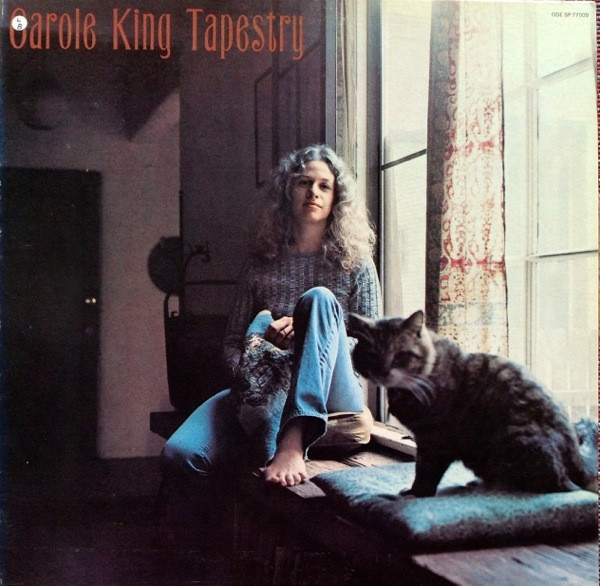
Tapestry
1971
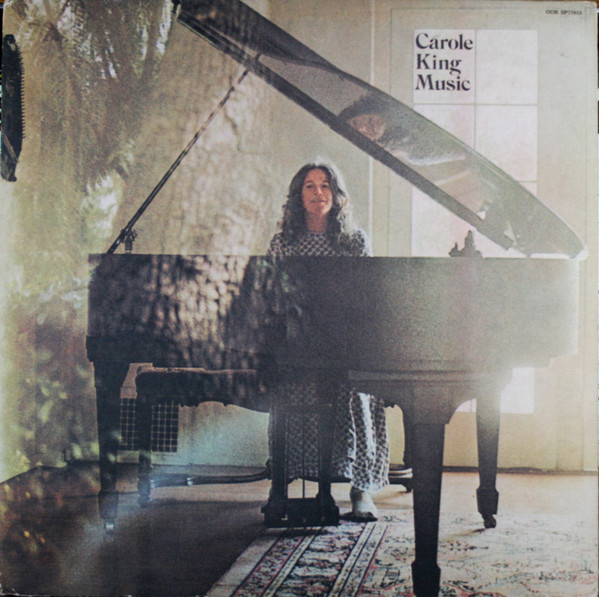
Music
1971

Rhymes & Reasons
1972

Her Greatest Hits (Songs Of Long Ago)
1978
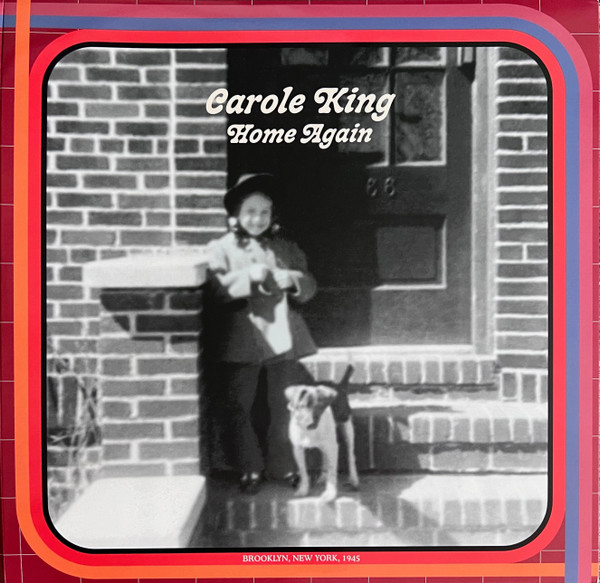
Home Again
2022
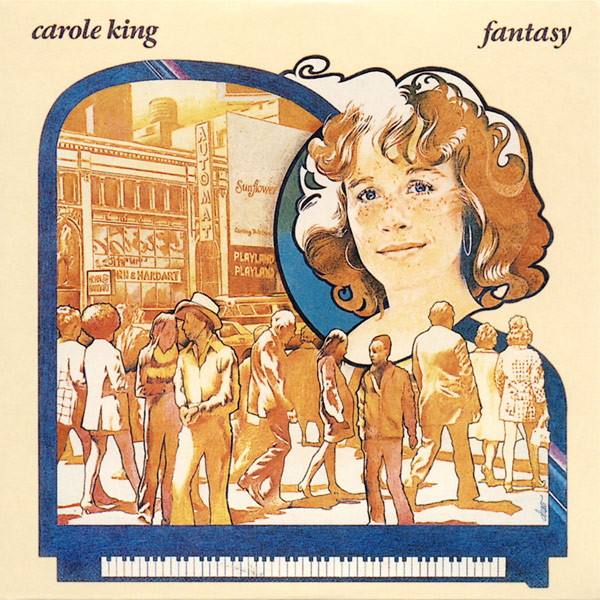
Fantasy
1973

Wrap Around Joy
1974
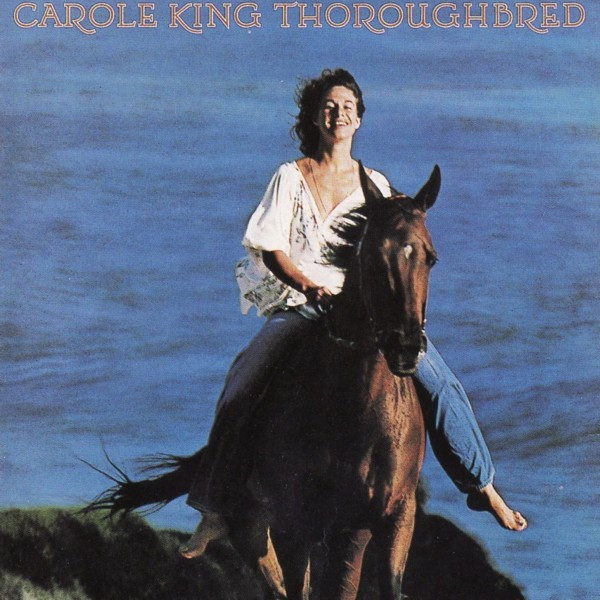
Thoroughbred
1975
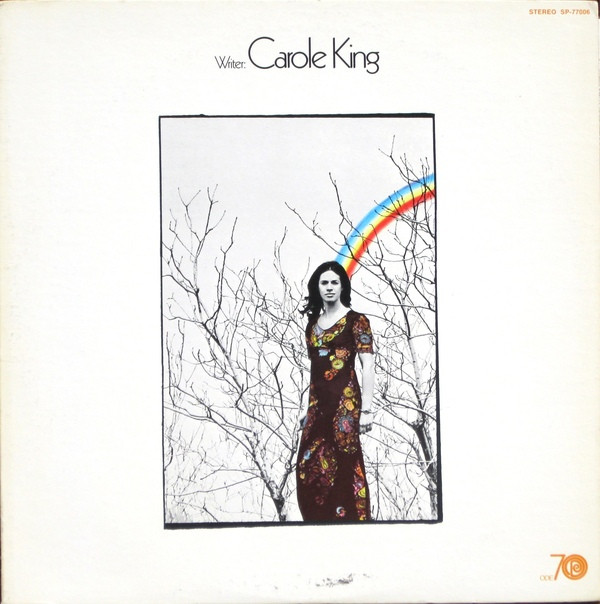
Writer
1970

The Legendary Demos
2012

Live At The Troubadour
2010

Simple Things
1977
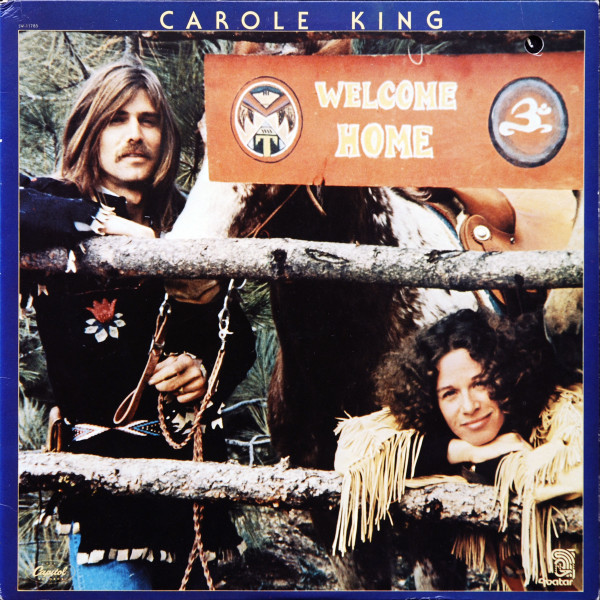
Welcome Home
1978
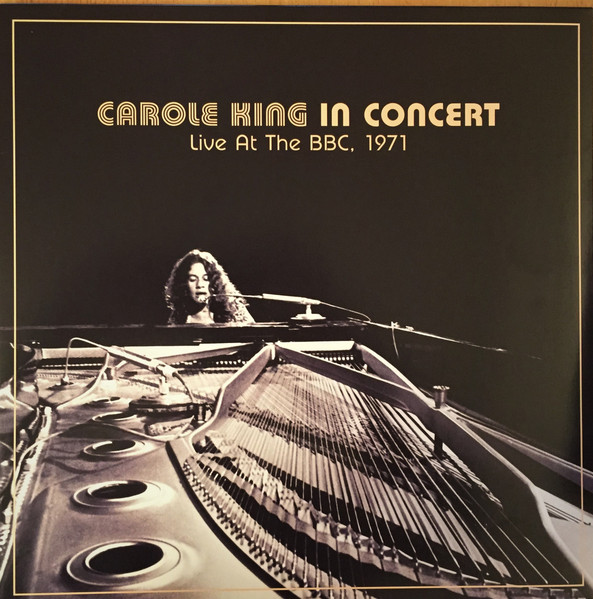
In Concert (Live At The BBC, 1971)
2021
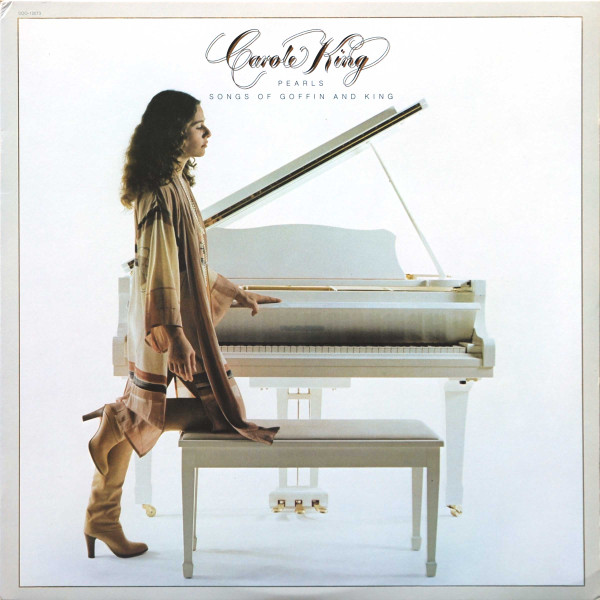
Pearls Songs Of Goffin And King
1980
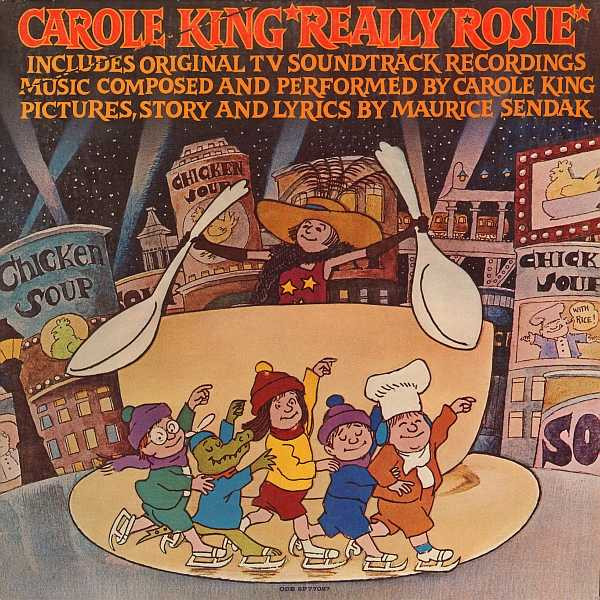
Really Rosie
1975
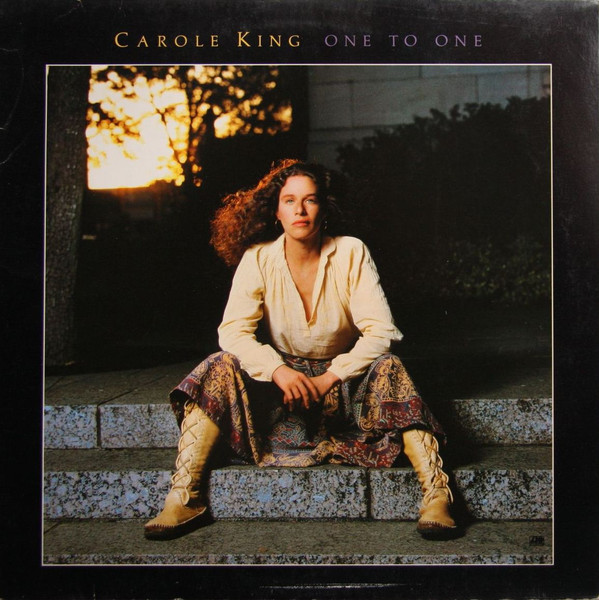
One To One
1982

Touch The Sky
1979

It's Too Late / I Feel The Earth Move
1971

It Might As Well Rain Until September
1962

Live At Montreux 1973
2019

Goin' Back
1997

In Concert
1994

Jazzman / You Go Your Way, I'll Go Mine
1974
Related artists
Around the web
Follow every record they touch.
Start your shelf and Gatefold tracks Carole King's new pressings, tour dates, and the whole discography — automatically.
Start your shelf →Free forever. Works with 10 records or 10,000.