
Artist
Carl Perkins
Tiptonville, United States · 1932 – 1998
Carl Perkins is a musician from Tiptonville, United States, active 1932–1998. Their discography on Gatefold includes 24 records. They also recorded with Class Of '55.

47
Albums tracked
33
In collections
1932
Since
Biography
Sam Phillips kept the tape rolling at 706 Union Avenue while Carl Perkins ran a Les Paul through a tiny amplifier, snapping the bass strings with his thumb and picking lead runs with bare fingers. That slapback echo wasn't a studio gimmick; it was a desperate attempt to make three guys from Lake County sound like a ten-piece dance band. Perkins didn't just play rockabilly guitar—he wrote the damn playbook that every kid in Liverpool spent their adolescence trying to copy note for note off import 45s. The 1956 car crash on Route 13 outside Dover nearly killed him, fractured his neck, and put him in a hospital bed while Elvis took "Blue Suede Shoes" to national television. By the time Perkins recovered, the lightning-in-a-bottle moment at Sun had splintered, leaving him stranded between country balladeering and rock-and-roll novelty cuts that Columbia Records never knew how to sell. He spent the sixties battling the bottle on the road with Johnny Cash, playing second-banana lead guitar just to keep the lights on. What saved him was sheer survival instinct and the fact that his right hand never slowed down. When rockabilly revivalists came knocking in the late seventies and eighties, Perkins didn't have to fake anything. He plugged straight in, hit that syncopated rhythm chop, and reminded everybody that he was the only architect of the genre who actually wrote his own hits and played the solos himself.
Bio from The Clerk
The Arc of Carl Perkins
The pivots — what forced Carl Perkins to reinvent.
The Sun Studio Ground Zero
Between 1954 and 1957, Perkins walked into Sun Studios with his brothers Jay and Clayton and cut the foundational texts of rockabilly. Under Sam Phillips' watchful ear, Perkins developed a hybrid picking style that fused delta blues bends with rapid-fire country bluegrass licks. The breakout success of 'Blue Suede Shoes' proved that an original country-boogie songwriter could top the pop, R&B, and country charts simultaneously. The March 1956 car crash derailed his momentum just as the record exploded, leaving Sun scrambling while peers took the spotlight.
The Columbia Wilderness and Nashville Exile
Signing with Columbia in 1958 pushed Perkins into the polished Nashville machine, which actively diluted his raw edge. Producers tried swamping his guitar bite with smooth backing choruses and polite arrangements on records like 'Whole Lotta Shakin''. Perkins kept writing sharp country-rock tunes, but the label treated him like an obsolete teen-idol leftover. You hear a master musician fighting his own rhythm section on almost every late-fifties side, waiting for the suits to get out of the way.
The Cash Road Years and Country Rebound
By the mid-sixties, Perkins dried out and joined Johnny Cash's touring revue, anchoring the Tennessee Three sound as a featured lead guitarist. That decade-long gig rebuilt his reputation and gave him the space to cut unapologetic country records like 1967's 'Country Boy's Dream'. He wasn't chasing pop charts anymore; he leaned into hard honky-tonk songwriting and road-tested rhythm chops. You can hear the relief in his playing—stripped of commercial desperation, sharp, and brutally confident.
The Elder Statesman Revival
The rockabilly resurgence in the late seventies brought European tour offers and younger acolytes seeking the source code. Perkins embraced his catalog on albums like 'Ol' Blue Suede's Back' and reunited with Cash, Jerry Lee Lewis, and Roy Orbison for 'Class of '55' at Sun. His live tone in this era was heavier, trading old tube snap for arena-ready punch without losing the distinctive fingerpicked swing. He spent his final decades being treated like royalty by the very players he had unknowingly trained through cheap vinyl imports.
Influences
- John Westbrook — Westbrook was a Black sharecropper in Lake County, Tennessee, who taught an eight-year-old Perkins how to play open-tuning blues on a cigar-box guitar. Perkins explicitly credited 'Uncle John' with teaching him to bend strings down toward the floor instead of up. You hear that exact heavy-handed delta blues choke inside every rockabilly solo Perkins ever cut.
- Bill Monroe — Perkins grew up glued to the Grand Ole Opry radio broadcasts, studying Monroe's rapid-fire bluegrass mandolin chops. He adapted Monroe's driving, high-speed acoustic rhythm work straight onto an electric guitar fretboard. The breakneck tempo and double-stop picking on 'Matchbox' come directly out of the Blue Grass Boys' playbook.
- Hank Williams — Williams was the gold standard for honky-tonk songwriting during Perkins' formative years playing Southern roadhouses. Perkins routinely covered Williams' catalog in honky-tonks to keep crowds from throwing bottles, later cutting tributes like 'Love Sick Blues'. You hear Hank's straight-talking, plain-language lyric structures throughout Perkins' original Sun-era tracks.
- Arthur Crudup — Crudup's raw acoustic blues recordings on RCA Victor were staples in the Mid-South juke joints where Perkins cut his teeth. Perkins cited Crudup's driving rhythm and field-holler vocal cadence as the bridge between rural blues and uptempo country. The structural bones and pulsing boogie riffs of Perkins' early 1955 Sun sides pull heavily from Crudup's rhythmic template.
- Merle Travis — Travis set the standard for thumb-and-finger country picking on radio transcription discs in the 1940s. Perkins absorbed Travis's synchronized bass-and-melody technique, using it to supply his own rhythm while playing lead runs. You can hear that strict alternating thumb-bass foundation underneath the fiery leads on 'Dixie Fried'.
Carl Perkins — solo
Their records — most-collected first.

Boppin' The Blues
1970

Carl Perkins' Greatest Hits
1969
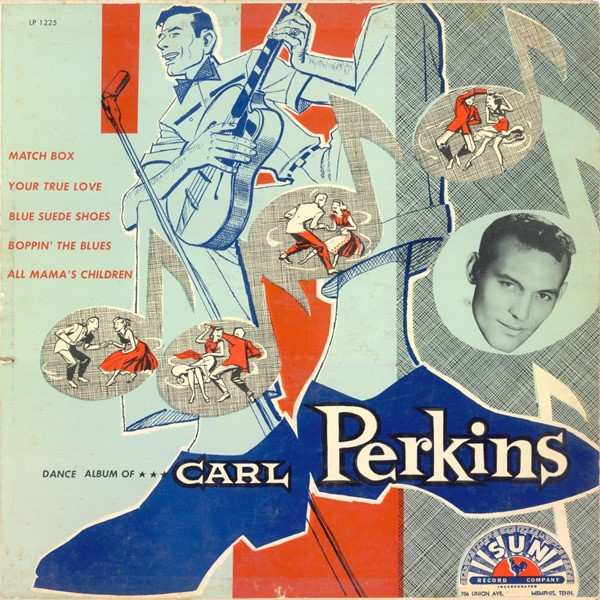
Dance Album Of Carl Perkins
1957

Original Golden Hits
1969

Blue Suede Shoes / Honey, Don't!
1956

Whole Lotta Shakin'
1958

Ol' Blue Suede's Back
1978
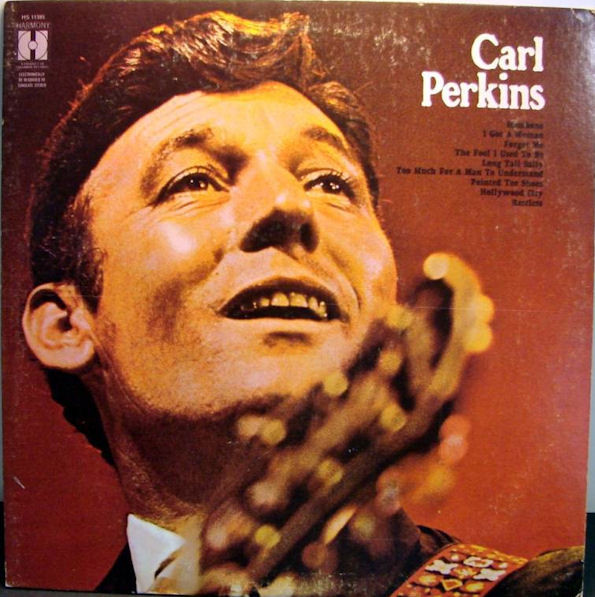
Carl Perkins
1969
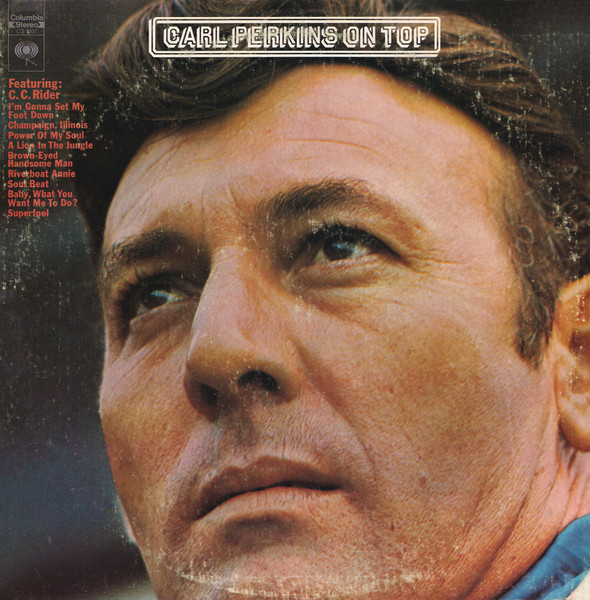
On Top
1969

Pink Pedal Pushers
1958

Matchbox

Some Things Never Change
2025

Best Of The Sun Records Sessions
2017

The Sun Singles Collection
2015

His Greatest Hits
2004
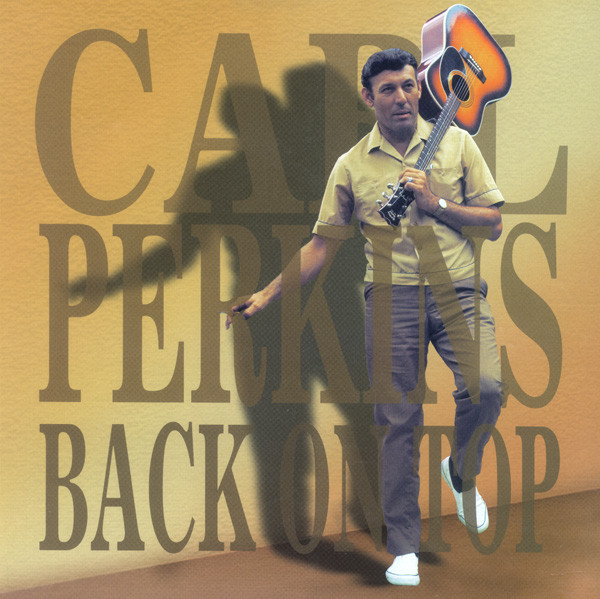
Back On Top
2000

Live At Gilley's
1999

Live!
1997

The Unissued Carl Perkins
1997

Go Cat Go
1996

Boppin' Blue Suede Shoes
1996
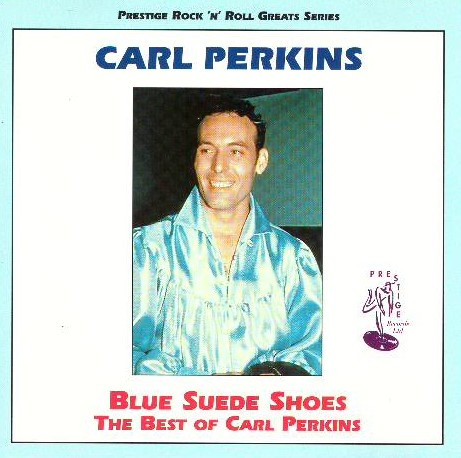
Blue Suede Shoes – The Best Of Carl Perkins
1995
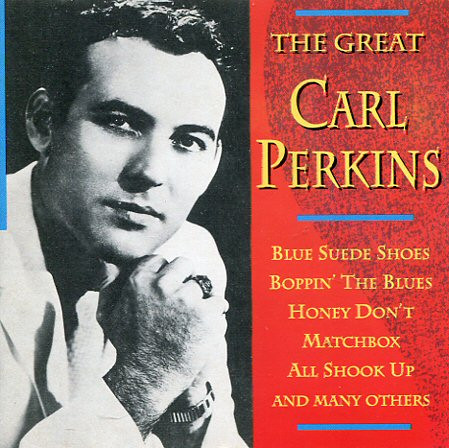
The Great Carl Perkins
1994

Carl Perkins And Sons
1993
Class Of '55
A project Carl Perkins was part of.

Related artists
Around the web
Follow every record they touch.
Start your shelf and Gatefold tracks Carl Perkins's new pressings, tour dates, and the whole discography — automatically.
Start your shelf →Free forever. Works with 10 records or 10,000.