
Artist
The Ahmad Jamal Trio
Chicago, United States
The Ahmad Jamal Trio is a music group from Chicago, United States. Their discography on Gatefold includes 11 records.
11
Albums tracked
83
In collections
—
Since
Biography
Malcolm Chisholm set up two microphones in Chicago's Pershing Lounge in January 1958, caught Jamal's trio locked into an impossibly quiet pocket, and accidentally handed Argo Records a million-seller that stayed on the charts for over two years. The New York jazz snobs hated it at first. They called it cocktail lounge fluff because Jamal wasn't sweating through frantic bebop lines at 240 BPM. Miles Davis knew better. He told everyone with ears that Jamal's use of empty space and Israel Crosby's walking basslines completely rewired his entire concept of dynamic pacing. Jamal didn't treat the piano like a solo horn; he treated it like an entire orchestra operating under strict volume control. With Crosby on upright and Vernel Fournier tapping out that iconic, hypnotic cross-stick groove on the rim, the trio turned standard show tunes into masterclasses in tension and release. You don't get the modal minimalism of mid-period Blue Note or half of '90s hip-hop production without this specific rhythm section leaving whole measures empty just to let the room breathe.
Bio from The Clerk
The Arc of The Ahmad Jamal Trio
The pivots — what forced The Ahmad Jamal Trio to reinvent.
The Pershing Lounge Breakthrough
Jamal stripped away the guitar-led format of his early Three Strings unit, locking in with bassist Israel Crosby and drummer Vernel Fournier for a residency at Chicago's Pershing Hotel. Recording live on Argo in 1958, they captured 'Poinciana' using Fournier's signature New Orleans-inspired drum groove and Jamal's radical use of silence. The record exploded commercially, defying the dominant hard-bop trends by proving quiet restraint could move hundreds of thousands of units.
The Alhambra & Impulse! Expansion
Flush with cash from his crossover success, Jamal opened his own alcohol-free Chicago club, The Alhambra, capturing a series of dense, lush live sets before the room went under. He brought in bassist Jamil Nasser, leaning harder into richer harmonic arrangements and broader dynamic swings that caught the attention of Bob Thiele over at Impulse! Records. The playing grew more forceful and dramatic, shaking off the unfair 'cocktail piano' tag once and for all.
The Awakening & Hip-Hop Blueprint
Tracking at Plaza Sound Studios in New York for Impulse! in 1970, Jamal teamed up with Nasser and drummer Frank Gant to cut *The Awakening*. Ditching traditional lounge gentility, Jamal dug into heavy, resonant chord clusters, modal excursions, and Steinway low-end punch. Decades later, producers like Pete Rock, DJ Premier, and Large Professor sliced up those exact piano vamps to build foundational tracks for Nas, Gang Starr, and Common.
Influences
- Art Tatum — Jamal studied Tatum's runs obsessively as a teenager in Pittsburgh and openly credited him for his left-hand facility. You hear Tatum's harmonic substitutions lurking beneath Jamal's ballad voicings, though Jamal deliberately played a fraction of the notes. He took Tatum's encyclopedia of chord changes and filtered out the clutter.
- Erroll Garner — Garner was another Pittsburgh piano titan whose orchestral approach to the keyboard directly shaped Jamal's early chordal playing. That signature lagging, behind-the-beat bounce in Jamal's left-hand comping is straight out of the Garner playbook. It gave the trio a heavy swing without needing a wall of horns.
- Nat King Cole — Jamal originally patterned his earliest group, The Three Strings, directly after the guitar-bass-piano format of the Nat King Cole Trio. The tight, telepathic interplay and clean arrangements on Jamal's early sides borrowed Cole's radio-ready precision. It laid the technical groundwork before he swapped the guitar for drums.
- Count Basie — Basie pioneered the art of sparse, minimalist piano fills, famously leaving massive gaps for the rhythm section to drive. Jamal took that exact concept and made it the structural centerpiece of tracks like 'Count 'em 88'. Where other players crammed every bar with eighth notes, Jamal channeled Basie by letting single notes ring into dead silence.
- Duke Ellington — Jamal constantly cited Ellington's orchestral arranging and tracked entire albums dedicated to Duke's songbook. You hear Ellington in how Jamal uses the piano's extreme upper and lower registers to mimic different horn sections within a small trio setting. He didn't just cover Duke; he approached three instruments like a miniature big band.
Discography
Their records — most-collected first.
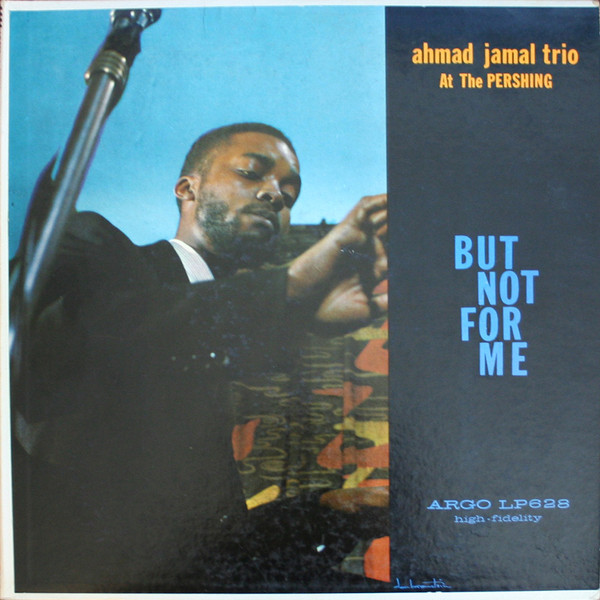
Ahmad Jamal At The Pershing
1958
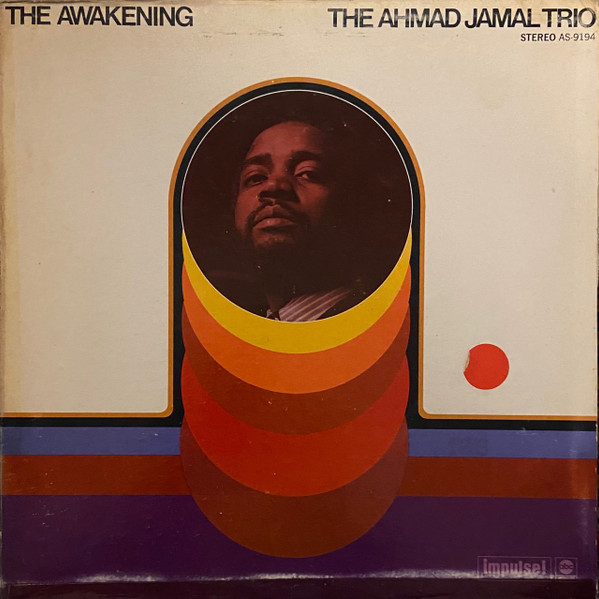
The Awakening
1970
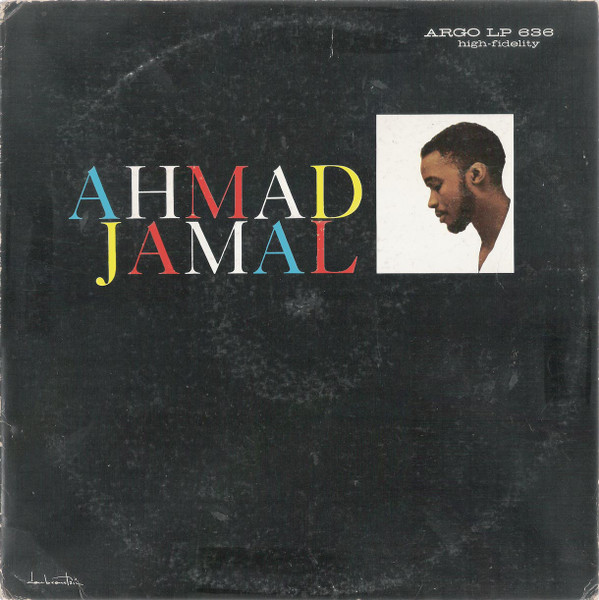
Volume IV
1958
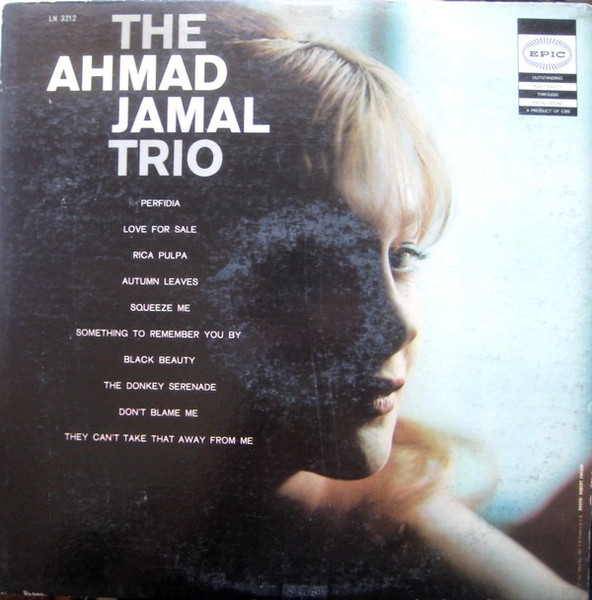
The Ahmad Jamal Trio
1956

Jamal At The Pershing Vol. 2
1961

Complete Live At The Pershing Lounge 1958
2007

Count 'Em 88
1956

The Complete 1961 Alhambra Performances
2022
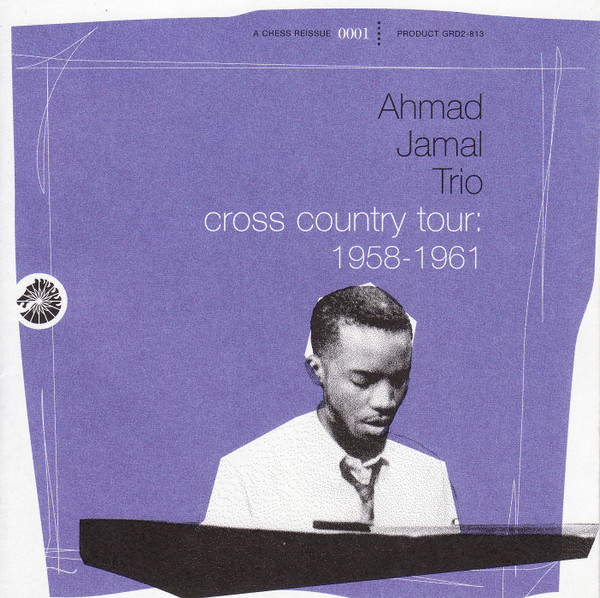
Cross Country Tour: 1958-1961
1998

At The Spotlight Club Vol. II
1958

Something To Remember You By
Related artists
Around the web
Follow every record they touch.
Start your shelf and Gatefold tracks The Ahmad Jamal Trio's new pressings, tour dates, and the whole discography — automatically.
Start your shelf →Free forever. Works with 10 records or 10,000.