
Album
That's How Rumors Get Started
2020 · Folk, World, & Country
17 collectors on Gatefold own this
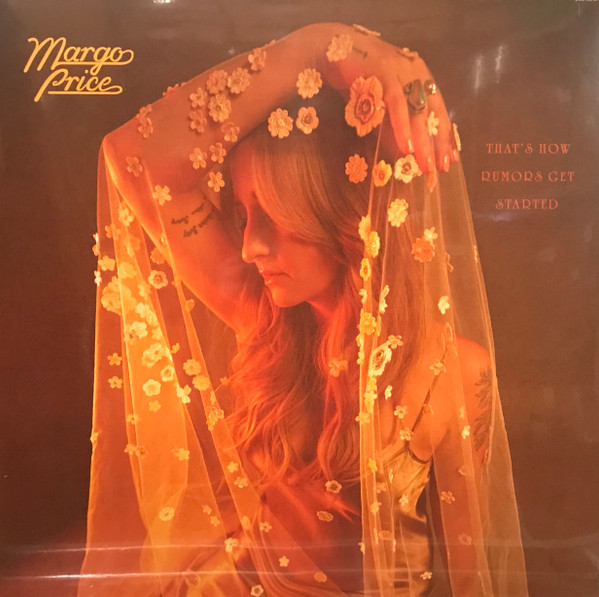
That's How Rumors Get Started is a Folk album by Margo Price, originally released in 2020. On Gatefold: 14 pressings tracked, owned by 17 collectors.
About
Margo Price began writing this album in the middle of touring her last, and says it was a master class in multitasking. “I wrote in Ubers, airports, airplanes, green rooms, hotel rooms, you name it,” she tells Apple Music. “Then, when it was halfway done, I found out I was pregnant. That changed my headspace a bit.” Actually, of all the life forces that had begun to transform her songwriting–fame, motherhood, the loss of a child in 2010, and the demands of touring that put a strain on her marriage–sobriety was the most powerful, she says. It crystallized connections between her past and future (“Gone to Stay” began as a letter to her son Judah but blossomed into a broader meditation about the things parents leave to their children) and led her from introspective outlaw country into glamorous, dazzling classic rock. If the floral veil, curly calligraphy, jangly instrumentation, and <i>Rumours</i> hat tip didn’t give it away, Stevie Nicks is a major influence on the album, which was coaxed along by executive producer Sturgill Simpson. “I grew up listening to a lot of Fleetwood Mac, and like most girls, I idolized Stevie,” she says. “But I haven’t seen a lot of people occupying that space since, you know? Classic rock ’n’ roll heartbreakers. When I decided to make this album with Sturgill, that’s what we set out to do.” Here, Price tells the stories behind all ten tracks. <b>That's How Rumors Get Started</b> “I first heard the phrase from my guitar player, Jamie Davis. We were partying on the bus and someone said something gossipy. And he said, ‘Watch what you say, that's how rumors get started.’ I immediately wrote it down. I knew it was going to be the album title before I even wrote the song. Everybody has ideas about who they think the song is about, and I definitely wrote it with a couple of people in mind, but the great thing is that it can be about anybody. For me, a lot changed when I became successful. Friendships were compromised and challenged, it became hard to tell what people’s motivations were, there was a lot of jealousy and competitiveness. It can be very lonely. Over time, you learn to keep your mouth shut. You learn how rumors get started.” <b>Letting Me Down</b> “[Price’s husband] Jeremy [Ivey] and I co-wrote this song together after we’d both written to high school friends that we’d become estranged from. It was a really therapeutic exercise, writing to someone from my past, and put me back in touch with feelings I’d forgotten about, like when you’re living in a small town and just want to escape but feel stuck. It’s taken on new meaning during the pandemic—it talks about loneliness, isolation, unemployment, poverty, workers who need to make ends meet, the struggle that small towns face right now. It all hits close to home for me.” <b>Twinkle Twinkle</b> “We had played this really terrible beer festival in Florida. There weren't that many people, it was really disorganized, and we didn't have a very good show. Afterwards, I found Marty Stuart in his trailer tuning all of his guitars, which I thought was pretty spectacular. I was like, ‘You don't have a tech that does this for you?’ And he said, ‘You don't need no tech if you do it right!’ And then he asked me, ‘Your band's been on the road a lot lately, do you hate each other yet?’ And I said, ‘Well, no, we don't hate each other, but our marriages are falling apart and our health is deteriorating. But other than that, we're good.’ He smiled really big and just said, ‘You wanted to be a star. Twinkle, twinkle.’ It became this running joke when we were on the road and something went wrong, like a canceled flight that forced us to sleep in the airport all night. We'd turn to each other and go, ‘Twinkle, twinkle.’ My husband brought the guitar riff to me and it had such a cool, gritty vibe. We were going for Neil Young meets Led Zeppelin, but it definitely came out a little more Led Zeppelin.” <b>Stone Me</b> “This song has a few different layers to it. When I was out on the road a lot and my husband and I were having trouble adjusting to it, I wrote the first verse with him in mind and sent it to him in a text message. He took it and put a melody behind it, and I was like, ‘Dude, did you just co-write a song that was supposed to be about you?’ I was also, separately, thinking about these two bloggers who have taken a lot of time to dissect my career. They judge everything that I do, and they’re just so certain they know where I'm coming from. It was really therapeutic to write. My husband threw me the title. I think he was envisioning more of a stoner anthem, but I used it in the biblical sense of, like, those in glass houses shouldn’t throw stones. Because yeah, I’ve learned that once you get put up on the pedestal, you're there to be knocked down.” <b>Hey Child</b> “My husband and I first wrote this song back in 2012, and it used to be our closer when we played with my band Buffalo Clover. We wrote it when we were hanging out with this wild group of friends. Everybody was treating us like we were rock stars, but we were the furthest thing from it. We were out on the road, drinking too much, taking a lot of drugs, and I just felt like there was this recklessness going on. Jeremy and I wrote the verses to some of our friends, but I also think we were writing it to ourselves. I had totally forgotten about the song until Sturgill convinced me to rerecord it, and then we added the Nashville Friends Gospel Choir on background vocals, which took it to a whole other place.” <b>Heartless Mind</b> “This song turned out completely different from how I initially envisioned it. I thought it was going to have a heartbreaker, guitar-driven vibe, but once we got the synths, it became more of a Blondie track. This is the only song that James Gadson didn't play drums on, my drummer Dillon [Napier] did, and he knocked it out of the park. And then later, when we were doing overdubs, David Ferguson–who co-produced this with Sturgill and I–laid down a drum machine that basically doubled the snare. So really, this is my first song with electronic drums, and I love it.” <b>What Happened to Our Love?</b> “I wasn’t expecting to record this song, but my husband loved it and encouraged me to bring it into the studio. It wound up becoming this whole thing that I never knew it could become. Once I figured out how to go into my upper register at the end, with the Nashville Friends Choir on background vocals, it entered this psychedelic Pink Floyd territory that I never expected. I was reading a lot of Leonard Cohen at the time—especially his book <i>The Flame</i> that came out posthumously—and I was influenced by the way that he writes, using the push and pull of opposites. I wrote it partially about my own marriage, as well as some of the other relationships I was seeing at the time that were struggling to stay together.” <b>Gone to Stay</b> “I knew that I needed to write a song for my son Judah. Somebody told me that at a show a long time ago—they said, ‘You've written a song for the son you lost, you need to write a song for your son that's still here with you.’ We wanted to do a ‘Forever Young’ or something—wisdom that you can pass on to your kids and that can stand in for you when you can’t be there there—in my case, when I'm on the road. But it became something bigger; it’s a letter with advice about protecting the earth and leaving something positive behind. I loved that I got pregnant in the middle of writing it and it turned into something for both of my children. There’s a line that says, ‘You can’t turn money back into time,’ and I think anybody can relate to that, whether they have children or not. All the things we do for work, all the things we miss. That line's been resonating with me throughout this quarantine. Because as hard as it is, I'm finally just here enjoying my time.” <b>Prisoner of the Highway</b> “This was written on an airplane tray table while I was headed to California to play the Hollywood Bowl. I was opening for Willie Nelson during his Outlaw Music Festival and had just found out that I was pregnant. I hadn't told anybody yet because I was still grappling with the fact that I was going to miss things in my child’s life all over again. There’s a Townes Van Zandt quote that goes something like, 'I knew that if I wanted to do this music thing, I was going to have to sacrifice everything—financial stability, a family, friends.' I have so much respect for him, because that’s dedication to your art, but it can still feel really selfish to chase your dreams. I think about all of my friends' weddings that I missed, school events, funerals—all to chase the next perfect line in a song.” <b>I'd Die for You</b> “This is my favorite song on the album lyrically. I've been in Nashville 17 years and have seen so many things change, seen so many communities and local businesses just disappear because of gentrification. So that’s a theme here, as is racism, health care, and poverty. I always insist on telling people that this isn’t a political record, because I don’t want them getting stuck on thinking that I'm pushing my agenda onto them. To me, this is a humanitarian song. It’s about the struggle of American life. This country is so divided that it’s ironic we're called the United States. But when I look at the majority of people in this country, no matter if they're blue or red, everybody wants a lot of the same things: a safe place to raise a kid, food on the table, shelter over your head. This song is Jeremy and I reassuring each other and our families that despite all the chaos around us, we can hold on to each other.”
via Apple Music
The Clerk says
The Clerk knows this whole record — the pressing quirks, the credits, the take.
Tracklist
Side A
- A1That's How Rumors Get Started
- A2Letting Me Down
- A3Twinkle Twinkle
- A4Stone Me
- A5Hey Child
Side B
- B1Heartless Mind
- B2What Happened To Our Love?
- B3Gone To Stay
- B4Prisoner Of The Highway
- B5I'd Die For you
- Bonus 7"
Side C
- C1Twinkle Twinkle
Side D
- D1He Made A Woman Out Of Me
Sound DNA
- Folk
- Singer-Songwriter
- warm
- wistful
- storytelling
Credits
The people behind it.
Performers
- Ashley WilcoxsonBACKING VOCALS
- Dillon NapierTAMBOURINE DRUMS
- James GadsonDRUMS
- Jeremy IveyGUITAR 12-STRING ACOUSTIC GUITAR ACOUSTIC GUITAR
- Margo PriceACOUSTIC GUITAR, VOCALS, BACKING VOCALS ACOUSTIC GUITAR ACOUSTIC GUITAR, VOCALS
- Matt SweeneyELECTRIC GUITAR, GUITAR 12-STRING ACOUSTIC GUITAR, ELECTRIC GUITAR 12-STRING ACOUSTIC GUITAR, TWELVE-STRING GUITAR
- Mike RojasPIANO KEYBOARDS ORGAN
- Pino PalladinoBASS
- Sam BaccoPERCUSSION
- Sturgill SimpsonVOCALS, STRINGS GUITAR STRINGS
- Angela PrimmBACKING VOCALS
- Benmont TenchPIANO PIANO, ORGAN
- Dan DugmorePEDAL STEEL GUITAR
- Gale MayesBACKING VOCALS
- Jamie Davis12-STRING ACOUSTIC GUITAR ELECTRIC GUITAR
- Kevin BlackBASS
- Patrick SweanyELECTRIC GUITAR
- Samson WhiteBACKING VOCALS
17 collectors on Gatefold own this · 14 pressings tracked on Gatefold
Start your shelf.
Track your pressings of That's How Rumors Get Started, get the Clerk's take, and see what the record is worth — free.
Start your shelf →Free forever. Works with 10 records or 10,000.