
Album
British Steel
1980 · Rock
72 collectors on Gatefold own this
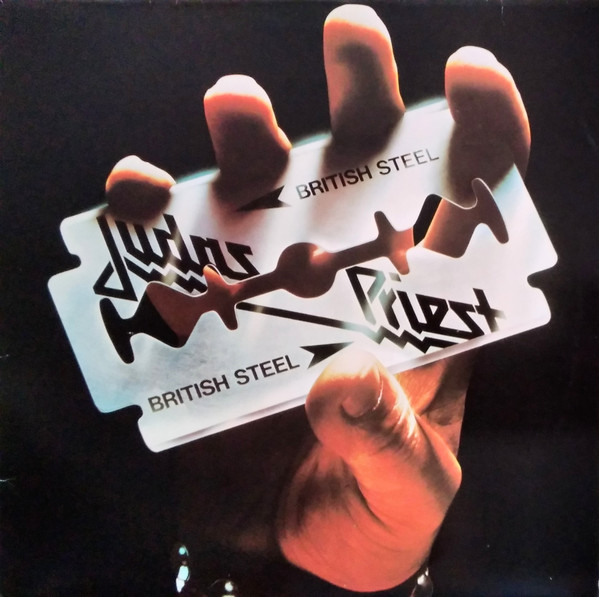
British Steel is a Metal album by Judas Priest, originally released in 1980. On Gatefold: 266 pressings tracked, owned by 72 collectors.
About
It’s hard to believe that 1980’s <i>British Steel</i> is Judas Priest’s <i>sixth</i> album. Though the band helped define heavy metal in the 1970s—aided in the effort by peers Black Sabbath—it wasn’t until <i>British Steel</i> that Judas Priest finally exploded into the rock mainstream—thanks in no small part to the popularity of the now-classic metal anthems “Breaking the Law” and “Living After Midnight.” Priest credits the immediacy of these songs to producer Tom Allom, who had engineered Sabbath’s first three albums. “Tom helped us cut away all the stuff that wasn’t relevant,” vocalist Rob Halford tells Apple Music. “That’s why there’s no excessive fluff, no wandering around. There’s a real craftsmanship to it. In many ways, <i>British Steel</i> has been like a template for a lot of other metal musicians to see how you get the job done efficiently.” “Rapid Fire,” which opens the original UK edition of the album, is the oft-overlooked track here. The machine-gun riffs of guitarists Glenn Tipton and K.K. Downing are in keeping with the title, as Halford invokes cannons and hammers—all while talking about “pounding the world like a battering ram.” Though the title of “Metal Gods” seems like a bit of well-deserved self-proclamation, the song was actually inspired by H.G. Wells’ <i>The War of the Worlds</i>: “I love the book, the film, and the British TV version of it—and the way it’s been reimagined by so many people,” says Halford. The clanking noises heard towards the end of the song were made by trays of cutlery taken from the drawers of Tittenhurst Park, home of former Beatle Ringo Starr, where <i>British Steel</i> was recorded. “It was Ringo’s house, so it was probably his cutlery,” Priest bassist Ian Hill says drily. “Next thing you know, Tom is picking this stuff up and dropping it in front of the mic. I remember him smashing milk bottles for ‘Breaking the Law’ as well.” Released as the album’s second single, “Breaking the Law” encapsulated the bleak socioeconomic climate of Britain at the time it was written. “It was a tough time in the UK in the middle and late 1970s,” says Halford. “There was a tremendous amount of social upheaval in the country. Nobody really liked what Margaret Thatcher was doing. The trash men were on strike, the steelworkers were on strike, the coal workers were on strike. Kids were coming out of school with no jobs to go to. We’d watch the news and there’d be fights going on between police on horseback riding through demonstrators in London, knocking people over—and Molotov cocktails being thrown at government buildings. So, the social angst and frustration is very prominent in ‘Breaking the Law.’” Elsewhere on <i>British Steel</i>, “United” is a Queen-esque football chant in the style of <i>Hell Bent for Leather</i>’s “Take On the World,” complete with handclaps and stadium stomps. “This song definitely has a stance of us against them: <i>We’ve got to be united and stick together</i>,” says Halford. “It’s a song of solidarity more than anything else. It was picked up by football clubs with the word ‘United’ in their name, like Blackburn United and Manchester United. They’d play it at the matches and fans would be screaming along.” The outsider lyrics of “Grinder” took on a new meaning when Halford came out of the closest in 1998, but the slamming power chords and monster beat are as sharp as they were back in 1980. And “The Rage” is the oddball track, with a reggae-like intro that sounds out of place on a metal record. “Out of all the songs on the album, this one is probably my favorite—mainly because of that funky beginning,” says Hill. “It just makes it a little bit different from the rest of the tracks on there. They said they wanted an intro, so I suggested a Latin beat and then I came up with that funky bit. The funniest thing is, I’m usually allergic to that kind of music. I’d come out with a rash. But it all stemmed from that off-beat thing—not playing on the beat.” <i>British Steel</i>’s lead single was “Living After Midnight.” Released a week before the album itself, the song announced the beginning of new era for Priest—and for heavy metal in general. “Glenn Tipton woke me up in the middle of the night playing the chord sequence that would become this song,” recalls Halford. “That’s where the name comes from. It’s a rock ’n’ roll song about a band coming into town and leaving you at dawn. When we play the song live, no matter where we are in the world, the room just lifts up and the fans go wild. It’s like we’re taking you on a time machine back to 1980, and you’re out partying with your friends.”
via Apple Music
The Clerk says
The Clerk knows this whole record — the pressing quirks, the credits, the take.
Tracklist
Side A
- A1Rapid Fire4:07
- A2Metal Gods3:58
- A3Breaking The Law2:34
- A4Grinder3:56
- A5United3:31
Side B
- B1You Don't Have To Be Old To Be Wise5:03
- B2Living After Midnight3:30
- B3The Rage4:43
- B4Steeler4:28
Sound DNA
- Metal
- Heavy Metal
- clean
- defiant
- urban
Notes from the original pressing. Later editions may differ.
Issued in a single pocket sleeve with a light gloss finish.
Some copies may come with a circular hype sticker indicating the lead single culled from the album.
Recording studio not credited.
Credits
The people behind it.
Performers
- CBS RecordsRECORDER
- Dave HollandDRUMS DRUMS, WRITTEN-BY
- Glenn TiptonCOMPOSED BY, LEAD GUITAR GUITAR GUITAR, WRITTEN-BY
- Ian HillBASS BASS GUITAR BASS GUITAR, WRITTEN-BY
- K. K. DowningCOMPOSED BY, LEAD GUITAR GUITAR GUITAR, WRITTEN-BY
- Rob HalfordCOMPOSED BY, LEAD VOCALS LEAD VOCALS LEAD VOCALS, WRITTEN-BY
- Scott TravisDRUMS
72 collectors on Gatefold own this · 266 pressings tracked on Gatefold
Start your shelf.
Track your pressings of British Steel, get the Clerk's take, and see what the record is worth — free.
Start your shelf →Free forever. Works with 10 records or 10,000.