
Album
Blue Monday
1983 · Electronic
57 collectors on Gatefold own this
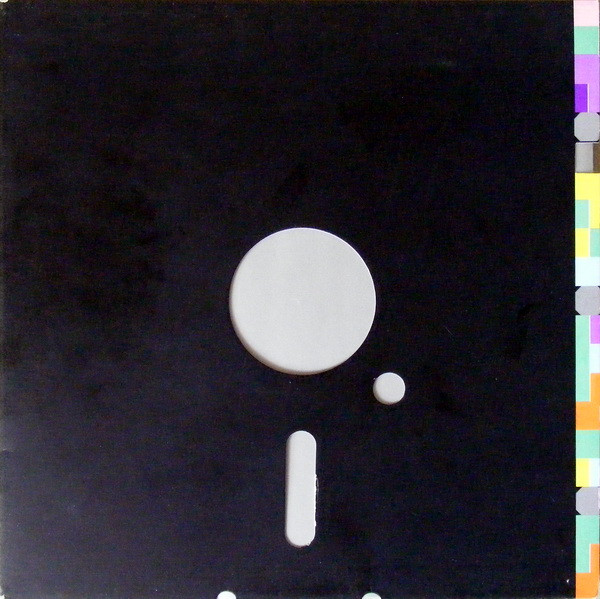
Blue Monday is an Electronic album by New Order, originally released in 1983. On Gatefold: 213 pressings tracked, owned by 57 collectors.
About
A between albums single by the Manchester indie outfit New Order. Released on the indie label Factory Records as a 12" single only, "Blue Monday" holds a number of honours - best selling 12" single of all time; one of the longest singles to ever chart in the UK (behind The Orb's "Blue Room", which clocks in at 39:58, a stunt done to protest the then ruling that singles had to be under 40 minutes to qualify for the charts) and one of the worst financial disasters for Factory Records. Due to the single's elaborate die cut sleeve, each single sold lost the label roughly 70p. At the time of release the label didn't expect to ship too many so didn't worry about it. The single eventually went on to sell in excess of 300,000 units. Subsequent reprints of the single included a modified sleeve that ensured the label actually made a bit of money. The song turned into New Order's signature track and has been remixed and reissued on a number of occassions, including 1988's Blue Monday 1988 done at the request of Quincy Jones, on who's Qwest label the band were signed to at the time in the US. The track has its origins in the the track "5 8 6" a slow, moody track from the band's sophomore release, "Power Corruption and Lies". Although the single shared a similar visual style with "Power Corruption and Lies," it wouldn't feature on the album until a reissue campaign many years later.
via Last.fm
The Clerk says
The Clerk knows this whole record — the pressing quirks, the credits, the take.
Tracklist
Side A
- ABlue Monday7:29
Side B
- BThe Beach7:19
Sound DNA
- Electronic
- Synth-Pop / New Wave
- synthetic
- detached
- club
New Order's fifth single. A milestone, both by musical and design standards.
Still considered to be the best-selling 12" of all time, selling over one million copies globally. However, since Factory wasn't part of the British Phonographic Industry (BPI) at the time of release, there are no reliable figures nor certifications or awards. Altogether, the 1983, 1988 and 1995 releases have been sold over 10 million times.
Initial UK editions were released on 07 March 1983 in a die-cut sleeve with cut-outs and a silver cardboard inner sleeve, designed by Peter Saville. The design was intended to mimic a 5.25"/130mm computer 'floppy disk' (introduced in 1976) with three corresponding holes cut in the front and back of the sleeve, two in the bottom edge and, in most versions, a notch in the front and back of the open edge, in place of the sixth 'character' from the top in the colour-coded 'text' design.
Outer sleeve variations:
1. Original: die-cut with cut-outs.
2. Initial adaptation: Plain printed without cut-outs with the cut-out areas printed black.
3. Final adaptation: Plain printed without cut-outs, also missing the silver/grey 8-sided shapes in the colour-coded 'text'.
Inner sleeve variations:
1. Silver cardboard
2. Black-printed card or paper of various weights. Glossy or matte and hazy black in combination with thumbcuts ranging from 3 to 10 cm.
3. White paper inner sleeves were used later to cut costs.
Most outer sleeves bear the colour-coded 'text', spelling "FAC 73 Blue Monday And The Beach New Order".
There is a common misconception that Factory lost money on the release due to the elaborate sleeve design. The original sleeve did in fact cost so much that Factory's profit lay under 1 British penny for each copy sold. But demand, production costs and timings meant that the sleeve became progressively simpler with each repressing, as explained above.
Different combinations of outer and inner sleeves were matched with the different pressing runs, so the 2nd outer sleeve adaptation as well as the white paper inner sleeves can be found with initial pressings of the record (A1/B1 runout matrices).
The original UK version was mastered and cut on 5 occasions:
- FAC-73-A-1 MT. STRAWBERRY OUT VOTED!
- FAC-73-B-1 MT. HO.EL+TEL! STRAWBERRY
(runoff space 0,8 cm // 1,6 cm)
This original edition misses the first 2 beats of the 16-bar intro are cut off due to a mastering error by the Strawberry engineer, who brought up the fader too late and missed the first drum beats.
"Out Voted!" refers to New Order taking a vote as to whether the mistake should stay, and the yes vote prevailed.
- FACT 73 A2.THE ROBOT. STRAWBERRY GG
- FACT 73 B2.THE ROBOT. STRAWBERRY GG
(runoff space 2,2 cm // 2,2 cm)
- FAC 73 A2 GG POUNDA TA1PE R-CUT
- FAC 73 B2 GG R-CUT
(runoff space 1,3 cm // 1,4 cm)
- FAC 73 A3 GG POUNDA TA1PE. WHERE'S MURDER?
- FAC 73 B3 GG I SAID WHERE'S MURDER?
(runoff space 1,6 cm // 1,6 cm)
- FAC-73-A1 ✱ TOWNHOUSE MAX.
- FAC-73-B1 ✱ MAX.
(runoff space 1,6 cm // 1,6 cm)
There also are many hybrid versions, e.g. A-1 + B2, A2 + B-1, A3 + B2, A-1 + B2 R-CUT, etc.
Known pressing plants:
MVS Record Pressing Ltd. (1983 - 1984 pressings): 32,5mm rings on flat labels.
MVS Record Pressing Ltd. (October 1983 - 1984 pressings): dipped labels.
CBS Aston Clinton (1983 - 1984 pressings): dipped labels - apparently white inner sleeves only!
Lyntone Recordings Ltd. (1983).
Linguaphone Institute Ltd. (1985 and 1986): 25mm rings.
Immediate Sound Services Ltd. (1987 and 1988): ✱ in runouts and/or 32,5mm rings on flat labels
Audio Services Ltd. (since 1989): ✱ in runouts and/or 32,5mm rings on flat labels
Peaked at #9 in the UK Single charts, and at #1 in the UK Indie Charts, where it stayed for a total of 186 weeks.
Blue Monday 1988:
New Order's 16th single, released on 07 May 1988.
Produced by Quincy Jones with the actual remix done by John Potoker.
After New Order signed to Qwest in the US, Quincy Jones saw an opportunity for their groundbreaking track to have a legitimate single release and a shot at radio airplay.
In the UK it was released as 7", 12", CD-Single and as CD-V, featuring an alternate 7" mix.
In North America, 'Touched By The Hand Of God' was featured as B-side.
The video of Blue Monday 1988 is known for the Weimaraner dog 'Fay Ray', owned by video director William Wegman. The video also features a Robert Breer flicker book, that was given away by Factory as 1988 Christmas present (Fac 235).
In July 1995 reissued with techno and trance remixes.
In October 2020 re-released as remastered edition with original artwork.
New Order used a sample from Kraftwerk's track 'Uranium' on 'Blue Monday'. By their own admission, other influences include Donna Summer's 'Our Love', Klein & MBO's 'Dirty Talk', 'You Make Me Feel (Mighty Real)' by Sylvester and the guitar sound on Ennio Morricone's 'Chapel Shootout' from the 'For A Few Dollars More' soundtrack, as well as their own 1982 track 'Video 5 8 6'. The title was appropriated from a Fats Domino song of the same name.
Credits
The people behind it.
Performers
- Bernard SumnerVOCALS, GUITAR
- Gillian GilbertSYNTH, GUITAR
- Peter HookVOCALS, BASS
- Stephen MorrisDRUMS
57 collectors on Gatefold own this · 213 pressings tracked on Gatefold
Start your shelf.
Track your pressings of Blue Monday, get the Clerk's take, and see what the record is worth — free.
Start your shelf →Free forever. Works with 10 records or 10,000.