
Other credits · Performance
Intermodulation
Intermodulation is credited on 3 releases across 1 albums tracked on Gatefold, active 1976–1980 — the collector-built map of who actually made the music.

3
Pressings credited
1
Albums
2
Decades active
1
In collections
Biography
Intermodulation (IM) or intermodulation distortion (IMD) is the amplitude modulation of signals containing two or more different frequencies, caused by nonlinearities or time variance in a system. The intermodulation between frequency components will form additional components at frequencies that are not just at harmonic frequencies (integer multiples) of either, like harmonic distortion, but also at the sum and difference frequencies of the original frequencies and at sums and differences of multiples of those frequencies. Intermodulation is caused by non-linear behaviour of the signal processing (physical equipment or even algorithms) being used. The theoretical outcome of these non-linearities can be calculated by generating a Volterra series of the characteristic, or more approximately by a Taylor series. Practically all audio equipment has some non-linearity, so it will exhibit some amount of IMD, which however may be low enough to be imperceptible by humans. Due to the characteristics of the human auditory system, the same percentage of IMD is perceived as more bothersome when compared to the same amount of harmonic distortion. Intermodulation is also usually undesirable in radio, as it creates unwanted spurious emissions, often in the form of sidebands. For radio transmissions this increases the occupied bandwidth, leading to adjacent channel interference, which can reduce audio clarity or increase spectrum usage. IMD is only distinct from harmonic distortion in that the stimulus signal is different. The same nonlinear system will produce both total harmonic distortion (with a solitary sine wave input) and IMD (with more complex tones). In music, for instance, IMD is intentionally applied to electric guitars using overdriven amplifiers or effects pedals to produce new tones at subharmonics of the tones being played on the instrument. See Power chord#Analysis. IMD is also distinct from intentional modulation (such as a frequency mixer in superheterodyne re
Bio from Wikipedia
Credited work
3 releases · 1 albums · active 1976–1980
- Other credits · 2
- Performance · 1
Studios: Studio Des Dames
Discography
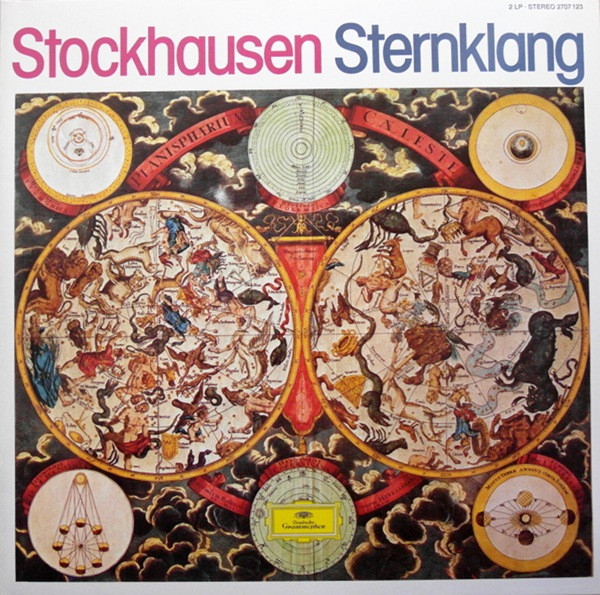
Records they worked on — most-collected first.
Frequent collaborators
- Stockhausen
Around the web
See who really made the music.
Gatefold maps every producer, engineer, and player across your shelf — the credits no one else surfaces.
Start your shelf →Free forever. Works with 10 records or 10,000.