
Artist
Wolf Alice
British indie/rock band
London, United Kingdom · Formed 2010
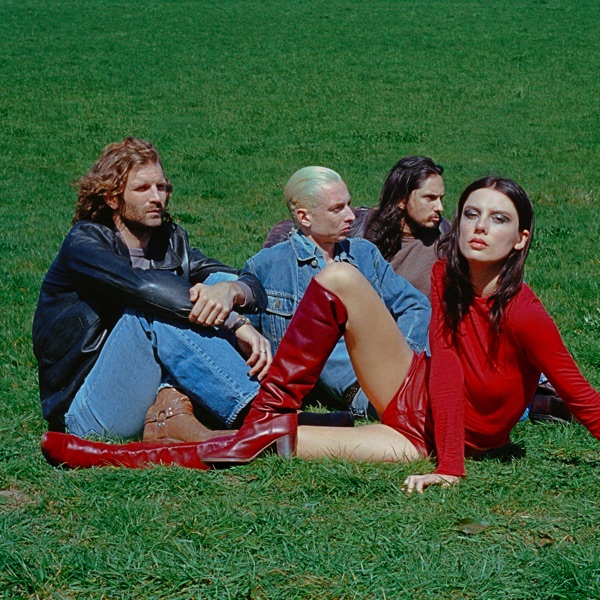
Wolf Alice is a music group from London, United Kingdom, active since 2010. Their discography on Gatefold includes 7 records.
7
Albums tracked
108
In collections
2010
Since
Biography
The first iteration of this band was just Ellie Rowsell and Joff Oddie playing acoustic open mics with a laptop for percussion before they realized that folk-pop is a dead end for a voice that can shred like hers. They cycled through a few rhythm sections—losing Sadie Cleary and George Barlett early on—before settling on Joel Amey and Theo Ellis, which finally gave them the muscle to actually move some air. By the time they hit the studio for the early EPs, they were dragging a decade of 90s guitar worship behind them and trying to figure out if they were a grunge band or a dream-pop outfit. They finally landed on a sound by leaning into the friction between Rowsell’s choir-girl delivery and the absolute filth of the guitar tones. Mike Crossey, who cut the early Arctic Monkeys stuff, helped them bottle that schizophrenia on the debut. They aren't trying to reinvent the wheel, they're just making the wheel spin faster by refusing to stick to one lane. One minute it’s a Cocteau Twins wash, the next it’s a bratty punk breakdown that sounds like it was recorded in a basement on a blown-out amp.
Bio from The Clerk
The Arc of Wolf Alice
The pivots — what forced Wolf Alice to reinvent.
The Dirty Hit Scramble
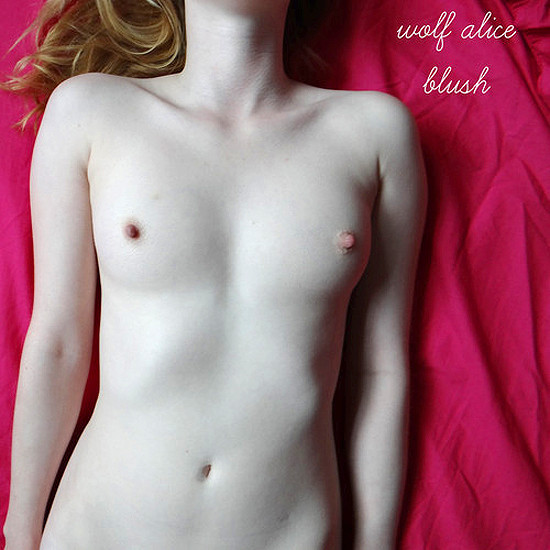
After signing to Dirty Hit, the band spent years in the EP trenches with producers like Catherine Marks and Austin Lyons. This era was defined by a restless search for identity where tracks like 'Fluffy' and 'She' fought for space against the more atmospheric 'Blush.' You can hear them testing the limits of their gear, trying to see how much fuzz a pop melody could actually handle before it collapsed. It was a chaotic proof-of-concept that proved Rowsell could pivot from a whisper to a scream without breaking a sweat.
The Hollywood Pivot
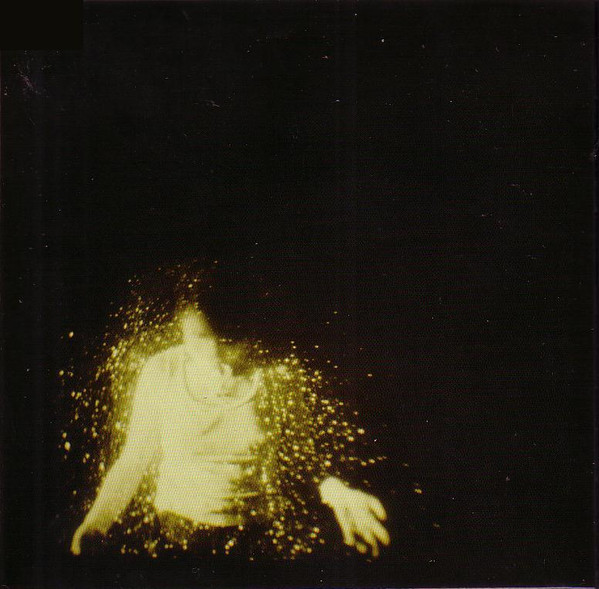
For Visions of a Life, they decamped to Los Angeles to work with Justin Meldal-Johnsen, the guy who played bass for Beck and produced M83. He pushed them away from the scrappy London indie sound and toward something way more cinematic and expansive. The result was a record that jumped from eight-minute prog-rock odysseys to two-minute hardcore thrashers. It won them the Mercury Prize because it was the first time they sounded like they weren't afraid of their own ambitions.
The Blue Weekend Polish
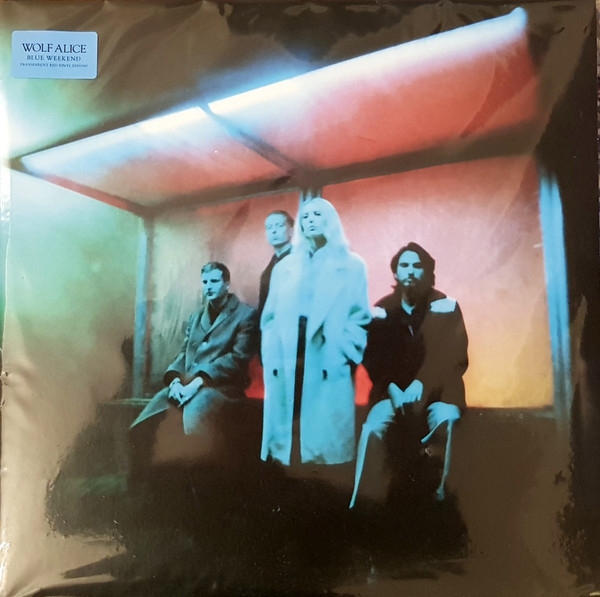
They retreated to a converted church in Somerset with Markus Dravs, a guy known for the massive, polished sounds of Arcade Fire and Björk. This shift stripped away the indie-rock clutter in favor of meticulously layered vocal harmonies and high-fidelity textures. The grit didn't disappear, but it was framed by a level of professional sheen that made the quiet moments feel heavier than the distorted ones. It’s the sound of a band that stopped trying to prove they were loud and started proving they could write a standard.
Influences
- The Breeders — Ellie Rowsell has cited Last Splash as a fundamental blueprint for her songwriting. You hear it in the way 'Yuk Foo' uses that serrated, Kim Deal-inspired vocal attack over a driving, simplistic bassline. It’s that specific 90s intersection of catchiness and absolute aggression.
- Cocteau Twins — The band frequently points to Elizabeth Fraser’s ethereal vocal layering as the North Star for their more atmospheric tracks. This influence is all over 'Heavenward' and 'Blush,' where they use heavy reverb and shimmering guitar textures to create a wash of sound. They took the dream-pop DNA and injected it into a modern rock framework.
- Pixies — The band’s dynamic range is a direct descendant of the loud-quiet-loud formula Black Francis perfected. Joff Oddie’s guitar work often mimics Joey Santiago’s style of using jagged, dissonant stabs to interrupt melodic verses. It’s the reason their songs feel like they might explode at any second.
- Queens of the Stone Age — Joel Amey has noted Josh Homme’s production style and the band's 'robot rock' grooves as a major influence on their heavier riffs. You can hear that desert-rock chug in the mid-section of 'Visions of a Life.' It’s the muscular, rhythmic foundation that keeps their more floaty parts grounded.
- Patrick Wolf — The band actually took their name from a short story by Angela Carter, but Rowsell has specifically mentioned seeing Patrick Wolf live as a catalyst for her own performance style. He showed them that you could be theatrical and folk-influenced without losing your edge. That DNA is buried in their early acoustic-meets-digital experiments.
Discography
Their records — most-collected first.




Related artists
Around the web
Follow every record they touch.
Start your shelf and Gatefold tracks Wolf Alice's new pressings, tour dates, and the whole discography — automatically.
Start your shelf →Free forever. Works with 10 records or 10,000.