
Artist
Wishbone Ash
Torquay, United Kingdom · Formed 1969
Wishbone Ash is a music group from Torquay, United Kingdom, active since 1969. Their discography on Gatefold includes 21 records.

21
Albums tracked
98
In collections
1969
Since
Biography
Derek Lawrence didn't want a single guitar hero when he signed this band to MCA. He wanted two. Ted Turner and Andy Powell didn't invent dual-lead harmony, but they turned it into a religion on their Gibson Flying V and Les Paul. They ran those guitars through Orange Matamp stacks and created a massive, fluid wall of sound that bridged the gap between British folk-rock and heavy blues. Then the late seventies hit and the wheels came off. They hired Tom Dowd for 'There’s the Rub' in Miami, which worked because Dowd could mix anything. But then they moved to Connecticut, lost Ted Turner, and started chasing American FM radio money. 'Locked In' was a total disaster of soft-rock bloat that almost killed their credibility. They spent the next four decades swapping members and trying to find that original spark, but those first four records are still absolute gospel for anyone who cares about the architecture of twin-guitar harmonies.
Bio from The Clerk
The Arc of Wishbone Ash
The pivots — what forced Wishbone Ash to reinvent.
The Dual-Flyer Era
Producer Derek Lawrence got them into De Lane Lea Studios in London to cut their self-titled debut in 1970. Ted Turner and Andy Powell built a locked-in, contrapuntal guitar style where neither was the rhythm player and neither was the star. You hear it peak on 'Argus' in 1972, where Martin Turner's melodic basslines hold the bottom end so the guitars can trade folk-inspired lines. It was heavy, medieval, and completely avoided the standard pentatonic blues cliches of their peers.
The American Soft-Rock Pivot
Ted Turner quit in 1974, replaced by Laurie Wisefield. The band relocated to the United States for tax reasons and hired producer Tom Dowd to clean up their sound for American FM radio. The resulting albums, especially 'Locked In' with its heavy use of keyboards, stripped away the English folk-metal mystique in favor of slick, mid-tempo soft rock. The fans hated it, the British music press turned on them, and the band spent years trying to claw back their heavy reputation.
The Instrumental Renaissance
By 1987, the band was in creative limbo until Miles Copeland signed them to his No Speak label on one strict condition: no vocals. They reunited the original four-piece lineup of Powell, Upton, and both Turners to record 'Nouveau Calls' in 1987. Stripping away the pressure of pop choruses forced them to focus entirely on their original strength of twin-guitar counterpoint. It was their most focused record in a decade, even if the late-eighties digital production was cold.
Influences
- The Yardbirds — Andy Powell repeatedly cited Jeff Beck and Jimmy Page's brief dual-lead tenure in the 1966 lineup as the blueprint for their entire approach. You hear that frantic, synchronized energy on the jam sections of 'Handy' from their 1970 debut. They took the Yardbirds' frantic 'rave-up' style and slowed it down into structured harmonies.
- Fairport Convention — Before they were a hard rock band, Wishbone Ash was obsessed with traditional English folk music. They watched Fairport Convention blend electric guitars with traditional British melodies on 'Liege & Lief' in 1969. That specific modal folk phrasing is exactly what keeps 'Argus' from sounding like a standard American blues-rock record.
- Albert King — Ted Turner's heavy string-bending style was directly copped from Albert King's Stax recordings. You can hear this influence on the track 'Errors of My Way,' where Turner uses King's signature wide, vocal-like bends to contrast with Powell's faster, jazzier runs. He didn't just play the blues; he brought King's phrasing into an English prog setting.
- Miles Davis — Both guitarists have noted they listened to 'In a Silent Way' constantly during the writing sessions for 'Pilgrimage.' That modal jazz influence shows up in how they build tension on 'The Pilgrim,' using long, modal jams over a static bassline rather than standard verse-chorus changes. It gave their rock songs room to breathe.
- The Who — In 1969, Wishbone Ash opened for The Who at Dunstable Civic Hall, where Pete Townshend was so impressed by their soundcheck that he personally recommended them to MCA producer Derek Lawrence. You hear Townshend's massive, ringing chordal style in Andy Powell's heavy rhythm playing on 'Phoenix.' They took Townshend's power-chord weight and layered harmonies on top of it.
Discography
Their records — most-collected first.
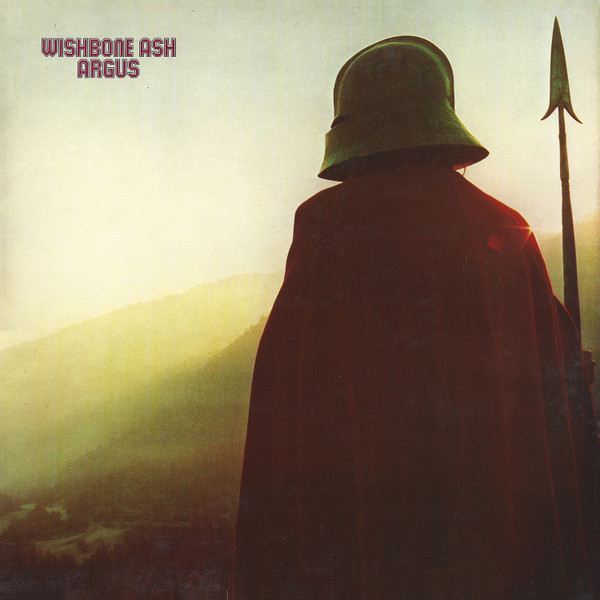
Argus
1972

There's The Rub
1974
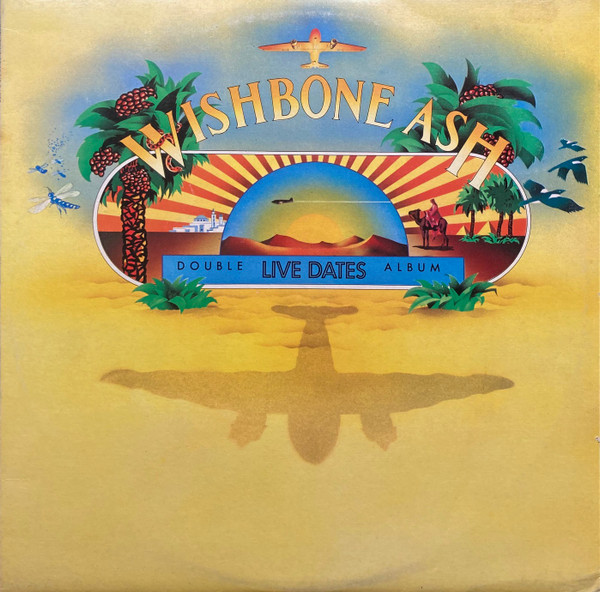
Live Dates
1973

Wishbone Four
1973

Wishbone Ash
1970

Locked In
1976
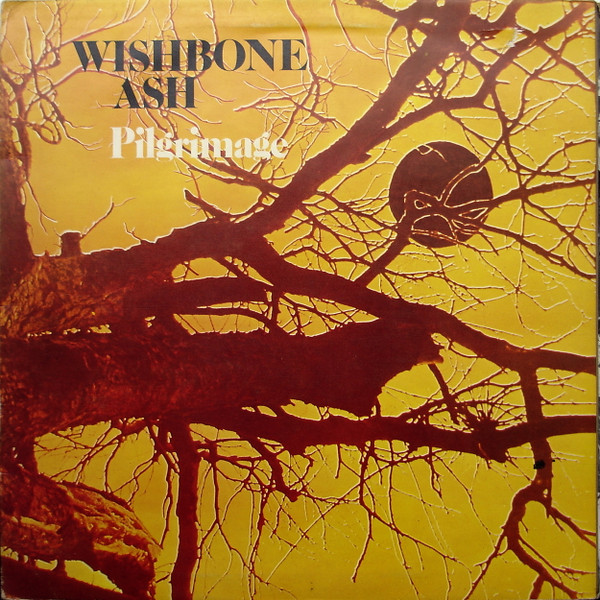
Pilgrimage
1971

Twin Barrels Burning
1982

No Smoke Without Fire
1978
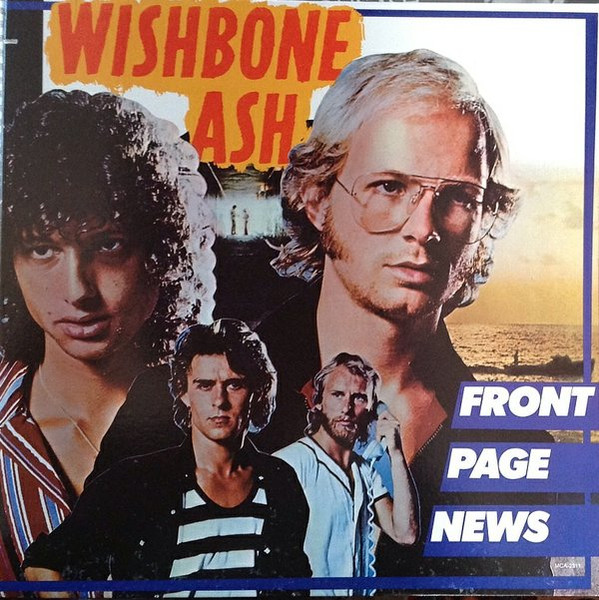
Front Page News
1977

Just Testing
1980

Best Of Wishbone Ash
1975

Portsmouth 1980
2021
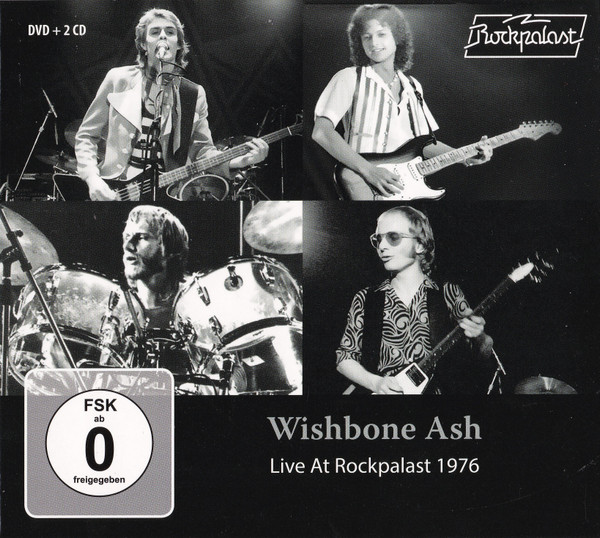
Live At Rockpalast 1976
2019

Live At Glasgow Apollo 77
2019
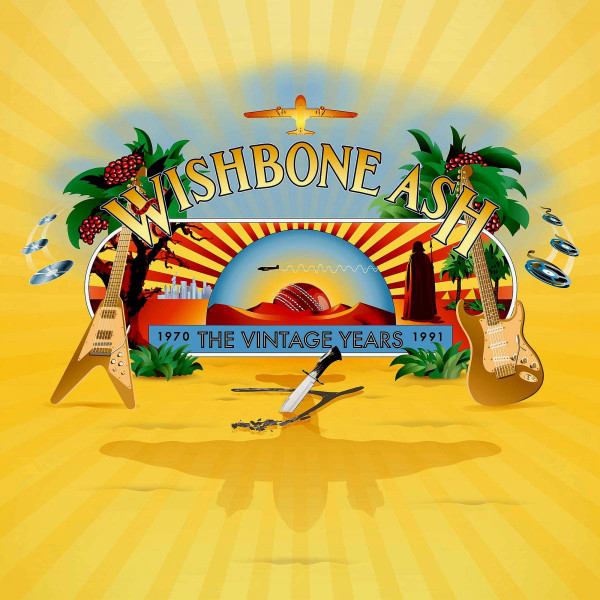
Wishbone Ash The Vintage Years 1970 - 1991
2018

Elegant Stealth
2011

Live In Hamburg
2007

Bare Bones
1999

Illuminations
1996

Raw To The Bone
1985
Related artists
Around the web
Follow every record they touch.
Start your shelf and Gatefold tracks Wishbone Ash's new pressings, tour dates, and the whole discography — automatically.
Start your shelf →Free forever. Works with 10 records or 10,000.