
Artist
White Zombie
New York City, United States · 1985 – 1998
White Zombie is a music group from New York City, United States, active 1985–1998. Their discography on Gatefold includes 12 records.
12
Albums tracked
123
In collections
1985
Since
Biography
Before they were selling out arenas and scoring Beavis and Butt-Head cameos, White Zombie was an unlistenable Lower East Side noise-rock art project living on CBGB floor grime and cheap four-track tape. Rob Zombie and Sean Yseult founded the thing on comic books, B-horror drive-in trailers, and sheer visual obsession, but they couldn't play their instruments for shit. Bill Laswell tried to corral that chaos in 1989 on Make Them Die Slowly and nearly killed their momentum by stripping out the scuzz. It wasn't until Jay Yuenger walked into the room with a stack of heavy metal riffs and Ivan de Prume locked down the beat that the band stopped sounding like a Sonic Youth rehearsal gone wrong. Then came Andy Wallace behind the board for La Sexorcisto in '92. Suddenly the cheap grindhouse aesthetic collided with drop-tuned groove metal and hip-hop sampling sensibility. By the time Astro-Creep rolled around in 1995 with Terry Date producing, John Tempesta behind the kit, and Charlie Clouser running industrial synth sequences, the transformation was total. They went from art-school dropouts scraping mold off basement amps to a precision-engineered industrial-metal juggernaut that burned itself out the second Rob realized he didn't need the band to sell the brand.
Bio from The Clerk
The Arc of White Zombie
The pivots — what forced White Zombie to reinvent.
The Lower East Side Noise Sludge
Between '85 and '87, Rob and Sean dragged a revolving door of guitarists through dingy NYC clubs to cut raw, scuzzy noise-rock like Soul-Crusher. Kurt Cobain famously plugged Psycho-Head Blowout, but the band was musically broke and barely hanging on. They sounded less like metal and more like Flipper fighting a broken television set tuned to late-night monster movies.
The Thrash Transition and the Laswell Disaster
Signing to Caroline Records for 1989's Make Them Die Slowly was supposed to be the breakthrough, with producer Bill Laswell bringing big-budget clout to the room. Instead, Laswell drained all the greasy atmosphere, forcing them into a stiff, dry thrash-metal box that nobody in the band was happy with. The record flopped hard, but it forced Rob and Sean to rethink their attack, ultimately recruiting guitarist Jay Yuenger to inject real groove into their riffs.
The Major Label Groove-Metal Explosion
Geffen signed them, paired them with producer Andy Wallace, and let them loose on 1992's La Sexorcisto: Devil Music, Vol. 1. Wallace gave them the cleanest low-end punch of their lives, perfectly framing Yuenger's funk-inflected metal riffs around massive B-movie dialogue drops. MTV latched onto 'Thunder Kiss '65,' turning a touring van nightmare into two straight years of non-stop arena grinding.
The Industrial Cyber-Grind and Implosion
For 1995's Astro-Creep: 2000, they brought in Pantera producer Terry Date, recruited former Exodus drummer John Tempesta, and had Charlie Clouser lace everything with industrial synthesizers. The resulting record was their heaviest and most mechanical, full of double-kick fury and cybernetic grooves that went multi-platinum. The internal friction proved fatal in the studio, and after a remix record, Rob walked away to launch his solo career with the exact same blueprint.
Influences
- The Cramps — Lux Interior and Poison Ivy literally mapped out the garage-rock-meets-creature-feature aesthetic that Rob Zombie ripped off wholesale. You can hear their trash-cinema sleaze vibrating under every single early EP and lyric sheet. Without The Cramps treating B-movies like high art, White Zombie doesn't exist.
- Black Sabbath — The band cut a direct, sludge-heavy cover of 'Children of the Grave' on the 1994 Nativity in Black tribute record. Tony Iommi's drop-tuned tritone stomps are the foundational spine for Jay Yuenger's riff architecture across their entire 90s output. It's the primary engine driving their groove.
- KISS — White Zombie covered 'God of Thunder' on a 1989 EP, wearing their arena-spectacle fandom right on their sleeves. Gene Simmons and company taught Rob the vital lesson of packaging rock music as a larger-than-life comic book monster product. That theatrical DNA dictated their entire visual merchandising strategy.
- The Stooges — Iggy Pop's unhinged Detroit proto-punk was the guiding star for their late-80s Lower East Side club shows. The blown-out fuzz and raw gutter sneer all over Psycho-Head Blowout and Soul-Crusher pull directly from Ron Asheton's raw amp assault. It gave them permission to make a filthy racket before they knew how to play.
- Ministry — Al Jourgensen's rapid pivot to machine-driven industrial thrash on The Land of Rape and Honey became the production template for White Zombie's final era. You hear it clear as day when Terry Date mixed machine loops into John Tempesta's acoustic drum hits on Astro-Creep. Ministry showed them how to turn industrial loops into pure arena power.
Discography
Their records — most-collected first.
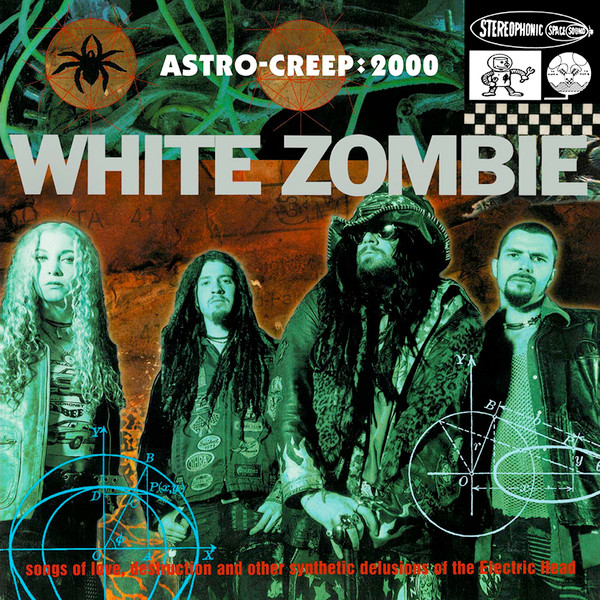
Astro-Creep: 2000 (Songs Of Love, Destruction And Other Synthetic Delusions Of The Electric Head)
1995
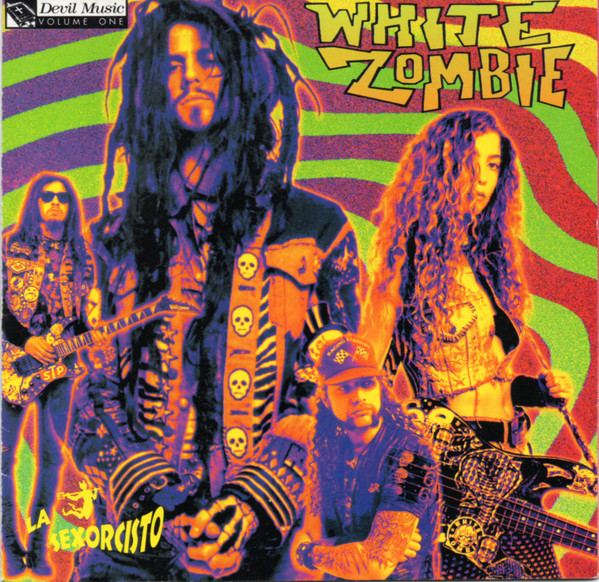
La Sexorcisto: Devil Music Vol. 1
1992

Supersexy Swingin' Sounds
1996
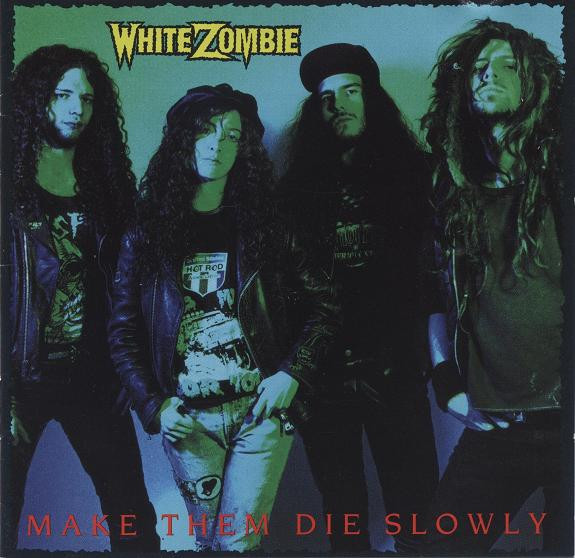
Make Them Die Slowly
1989

It Came From N.Y.C.
2016

Nightcrawlers: The KMFDM Remixes
1992
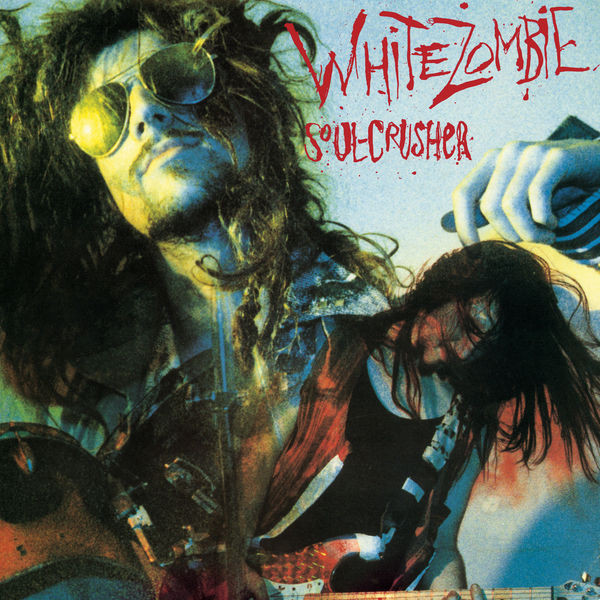
Soul-Crusher
1987

Psychoholic Halloween: Las Vegas Nevada 10/31/95 FM
2023
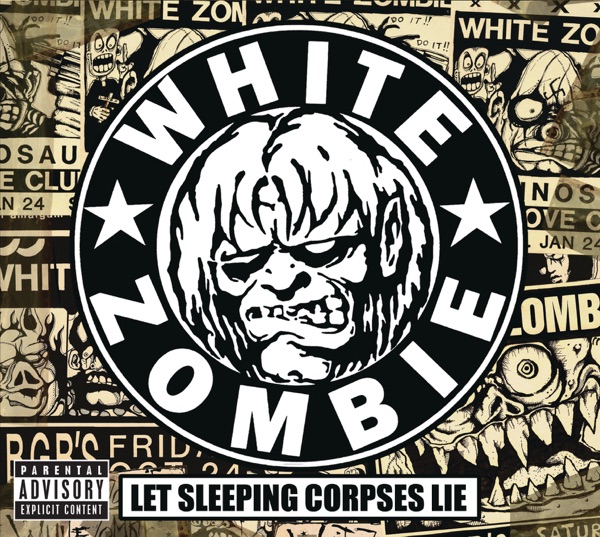
Let Sleeping Corpses Lie
2008

More Human Than Human
1995
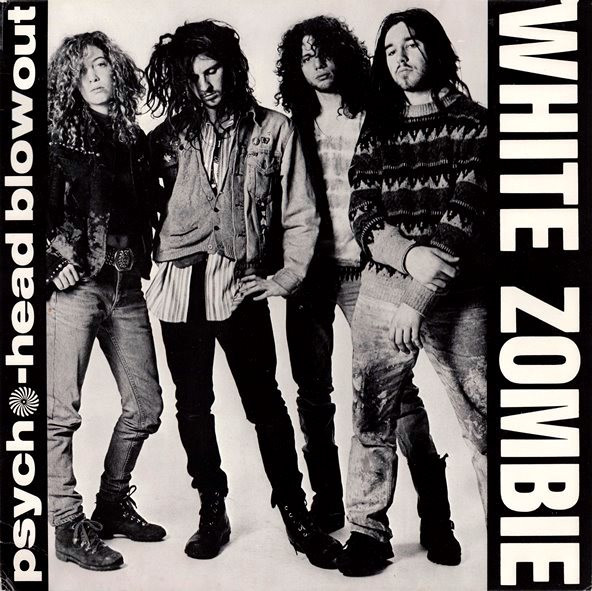
Psycho-Head Blowout
1987
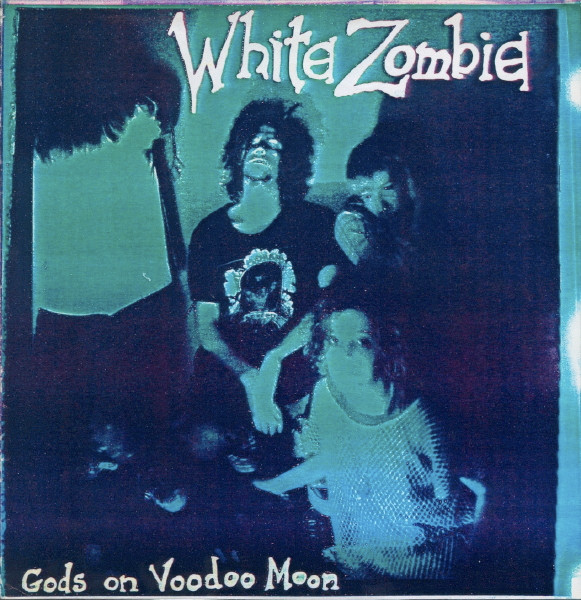
Gods On Voodoo Moon
1985
Related artists
Around the web
Follow every record they touch.
Start your shelf and Gatefold tracks White Zombie's new pressings, tour dates, and the whole discography — automatically.
Start your shelf →Free forever. Works with 10 records or 10,000.