
Artist
Ween
US alternative rock band
New Hope, United States · 1984 – 2024
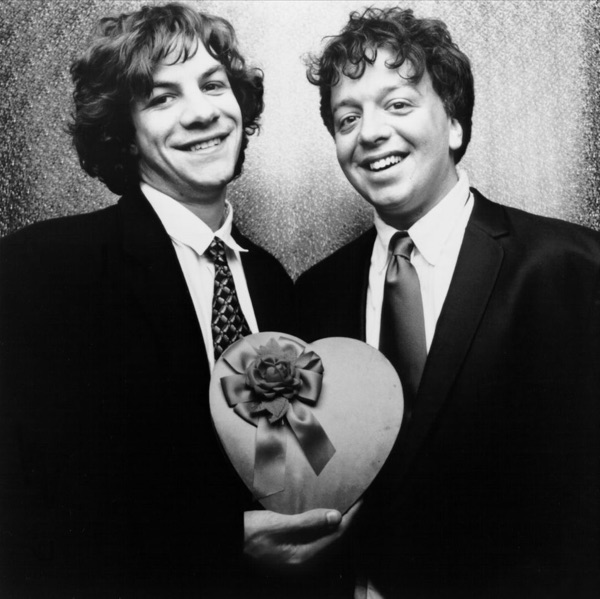
Ween is a music group from New Hope, United States, active 1984–2024. Their discography on Gatefold includes 24 records.
24
Albums tracked
434
In collections
1984
Since
Biography
The Pod was recorded on a Tascam 4-track cassette recorder while Gene and Dean were suffering from a massive bout of mononucleosis in a fly-infested farmhouse. That's the baseline for this band. They weren't ironic hipsters; they were two guys from New Hope, Pennsylvania, obsessed with the Boognish and a Pitchshifter. The early records are thick with Scotch 3M tape hiss and the sound of guys who took the Four-Track Revolution further than anyone else dared. They used the machine as a third member to warp their voices and hide the fact that they were actually terrifyingly good at their instruments. By the time they hit the mid-90s, the joke had turned into something dangerous. They signed to Elektra and suddenly had the budget to hire a full Nashville session band or track at a high-end studio like Shorefire. The brown sound didn't go away—it just got hi-fi. They could play circles around any grunge band on the radio, but they'd rather use that talent to write a yacht-rock parody or a sea shanty. It’s a career built on the refusal to ever be the smartest guys in the room, even when they clearly were.
Bio from The Clerk
The Arc of Ween
The pivots — what forced Ween to reinvent.
The Pod and the 4-Track Gospel
Between 1990 and 1992, the band operated almost exclusively out of 'The Pod,' a literal farmhouse where they pushed a Tascam 4-track to its breaking point. This era is defined by the heavy use of the Alesis HR-16 drum machine and distorted vocals that make the whole thing sound like it was recorded underwater. Pure Guava took this basement-dwelling ethos to a major label, proving that the weirdness could survive the transition from Shimmy-Disc to Elektra. You hear it in the pitch-shifted madness of 'Push th’ Little Daisies,' which became an accidental hit while the duo was still basically living in a swamp of their own making.
The Studio Professionalism Pivot
Chocolate and Cheese marked the moment they finally stepped into a professional studio with producer Andrew Weiss to make a record that actually sounded expensive. They ditched the drum machine for Claude Coleman Jr., turning Ween into a muscular, versatile unit that could pivot from Philly soul to spaghetti western scores in a single breath. This wasn't a sellout move; it was a realization that their songwriting was strong enough to survive clarity. The fidelity increased, but the brown energy remained tucked inside the flawlessly executed genre exercises.
The Nashville Session
In 1996, the band flew to Nashville to record 12 Golden Country Greats with legendary session players like Charlie McCoy and Buddy Spicher. They didn't tell the musicians it was a joke because it wasn't one—they wanted the authentic, honey-soaked tone of a classic outlaw country record. Ben Vaughn helped coordinate the sessions, ensuring that the Jordanaires provided those sugary backing vocals against Gene's twisted lyrics. The result is a surreal collision where the playing is 100% straight and the sentiment is 100% Ween.
The Mollusk and the Prog Peak
The Mollusk took them to a beach house in New Jersey where they became obsessed with nautical themes and high-concept prog-rock arrangements. They leaned heavily into the Mellotron and aquatic effects, creating a cohesive, atmospheric world that remains their most beloved work. This era saw them move away from the frantic genre-hopping of previous years in favor of a lush, psychedelic consistency. It is the definitive proof that behind the gags, they were capable of building a world as immersive as anything Pink Floyd ever touched.
Influences
- Prince — Gene and Dean have repeatedly cited Prince as their ultimate hero, even recording the tribute 'L.M.L.Y.P.' which lifts the riff from 'Alphabet St.' and the vibe from 'Shockadelica.' You hear it in the gender-bending vocal pitch-shifts and the sheer obsession with funk minimalism. It’s the blueprint for their 'one man and a machine' approach to the early 4-track era.
- The Beatles — The band’s White Pepper album was a direct, self-conscious nod to the songwriting craftsmanship of the Fab Four, particularly the Revolver era. 'Even If You Don't' is basically a lost McCartney track if he had a much darker sense of humor. They studied the way the Beatles used the studio as an instrument to mask pop structures with experimental noise.
- Pink Floyd — The spacey, drug-damaged textures of 'The Mollusk' and 'Quebec' are a direct result of their deep dive into the Syd Barrett and David Gilmour eras. Dean Ween’s guitar solos, especially on 'A Tear for Eddie,' utilize that slow-burn, blues-inflected psych tone that Gilmour perfected. They took the Floyd's grandiosity and brought it down into the dirt.
- The Residents — The early 4-track records like God Ween Satan owe their entire aesthetic of anonymous, masked weirdness and high-pitched vocal manipulation to these San Francisco avant-gardists. Both bands share a commitment to the 'theory of obscurity' and a refusal to let the audience in on the joke. It's the root of the 'brown' philosophy—embracing the ugly and the off-kilter.
- Butthole Surfers — The band toured with the Surfers in the early days and were mentored by the Texas psych-punks during their formative years. You can hear the influence in the chaotic, nightmare-fuel tracks like 'Mutilated Lips' where the production becomes a psychedelic assault. Gibby Haynes' influence is all over their willingness to use gross-out humor as a shield for genuine musical terror.
Discography
Their records — most-collected first.
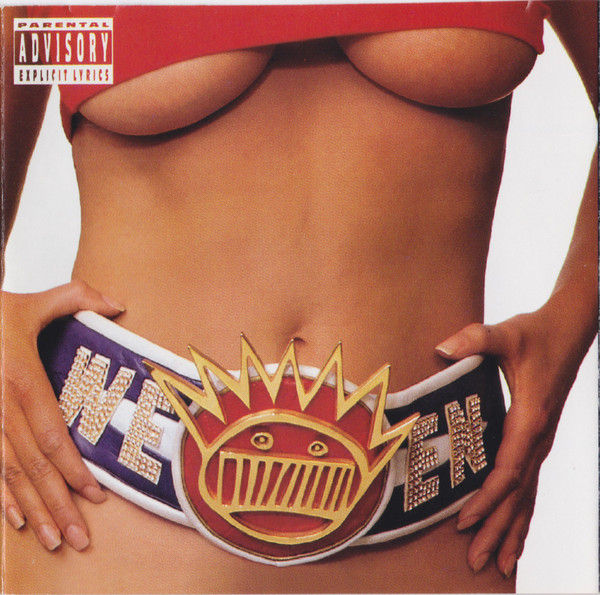
Chocolate And Cheese
1994

Quebec
2003

White Pepper
2000
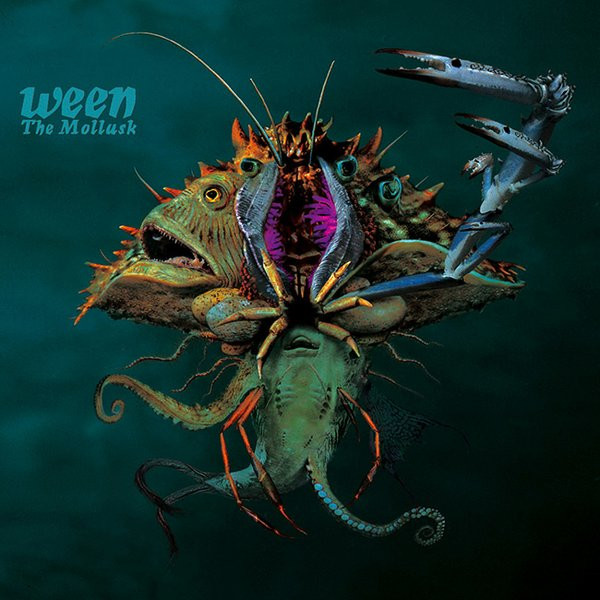
The Mollusk
1997
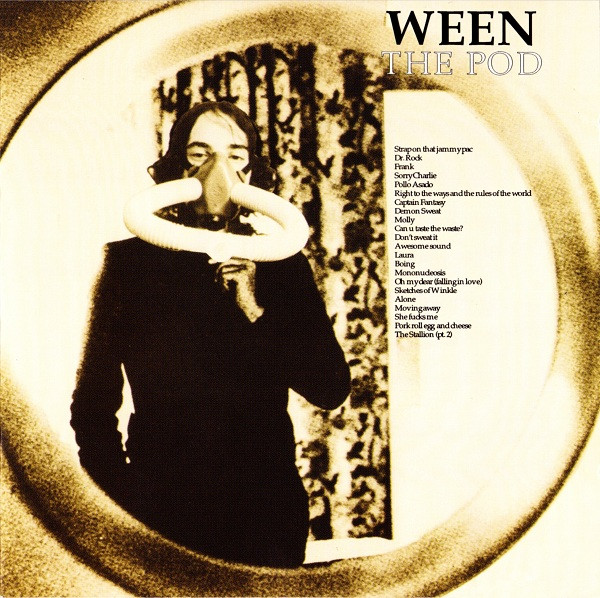
The Pod
1991

12 Golden Country Greats
1996

Shinola Vol. 1
2005
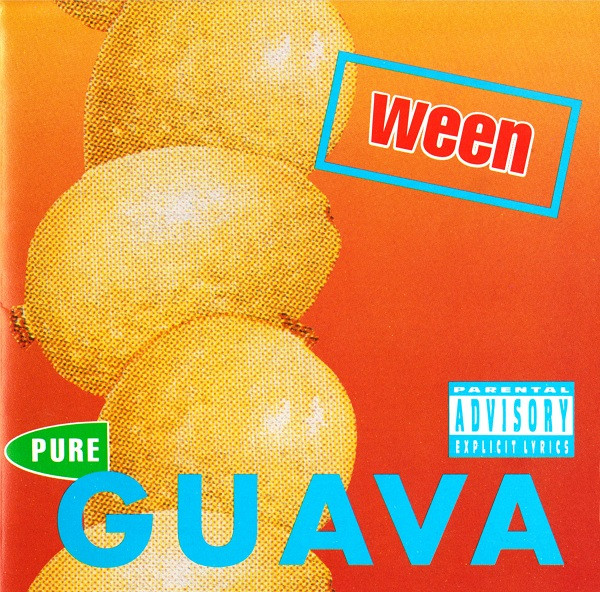
Pure Guava
1992

God Ween Satan - The Oneness
1990

Paintin' The Town Brown (Ween Live '90 - '98)
1999

At The Cat's Cradle, 1992
2008
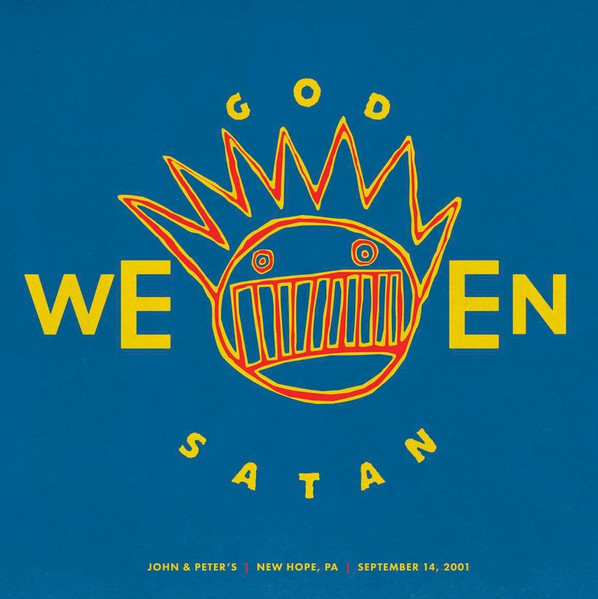
God Ween Satan: Live
2016

Europe "90"
2026

La Cucaracha
2007

The Friends EP
2007
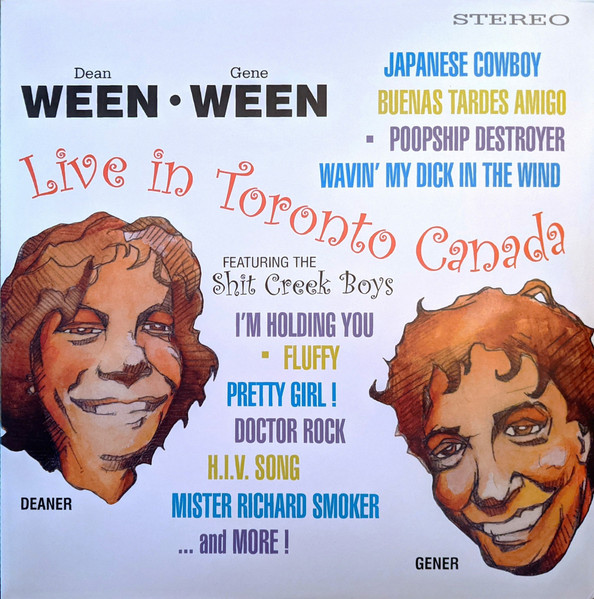
Live In Toronto Canada Featuring The Shit Creek Boys
2001

Live In Chicago
2004

All Request Live
2003

You Were The Fool / Piss Up A Rope
1996

Live At Stubb's, 7/2000
2013

Gabrielle
2006

Stay Forever
2000

Prime 5
1988
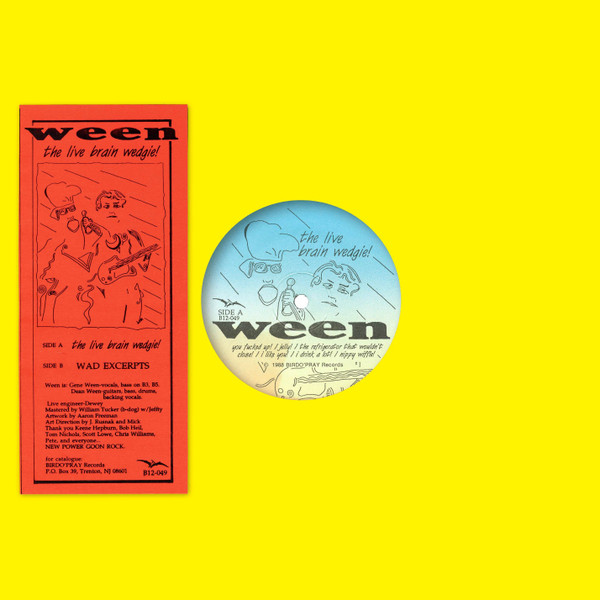
The Live Brain Wedgie! / Wad Excerpts
1988
Related artists
Members
Frequent collaborators
Around the web
Follow every record they touch.
Start your shelf and Gatefold tracks Ween's new pressings, tour dates, and the whole discography — automatically.
Start your shelf →Free forever. Works with 10 records or 10,000.