
Artist
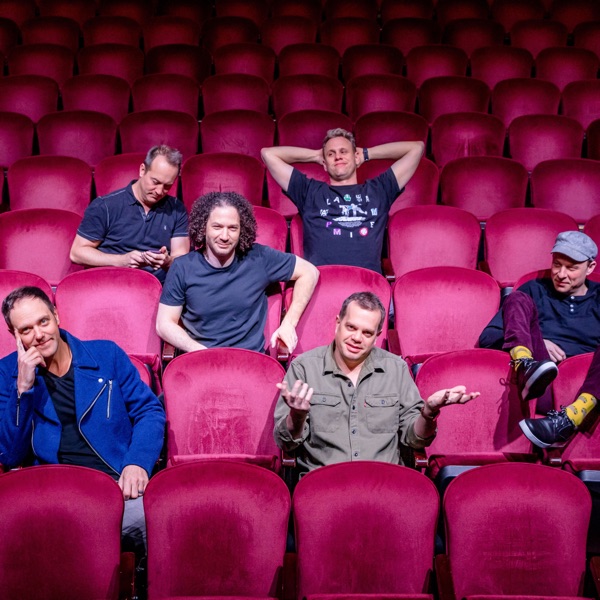
Umphrey’s McGee
South Bend, United States · Formed 1997
Umphrey’s McGee is a music group from South Bend, United States, active since 1997. Their discography on Gatefold includes 23 records.
23
Albums tracked
28
In collections
1997
Since
Biography
Umphrey’s started as a Notre Dame basement project with Mike Mirro on the kit, but everything changed when Jake Cinninger ditched Ali Baba’s Tahini and brought his shred-heavy, Midwestern metal sensibilities to the fold. They spent the early 2000s in a white van, out-working every other jam band by treating their sets like a math project. It wasn’t about drifting aimlessly; it was about the ‘Jimmy Stewart’—a hand-signaled improvisation system that turned live jams into structured, real-time compositions. By the time they hit Anchor Drops in '04, the polish started to show, and they traded the loose hippie vibe for a tighter, more aggressive technicality that pissed off the purists but won over the prog nerds. They haven't missed a tour since the Clinton administration, and while some of the mid-2010s studio output felt a bit clean, their live rig remains a beast of dual-guitar precision. They’re the only band on the planet that can pivot from a Steely Dan cover to a Slayer-inspired riff without making it look like a total gimmick.
Bio from The Clerk
The Arc of Umphrey’s McGee
The pivots — what forced Umphrey’s McGee to reinvent.
The Cinninger Injection
When Jake Cinninger joined in 2000, the band pivoted from a standard college-town groove outfit into a twin-guitar powerhouse. This era peaked with Local Band Does O.K., where the interplay between Cinninger and Brendan Bayliss started mimicking the dense harmonized leads of 70s prog and metal. You can hear the shift on record through the increased complexity of the arrangements and a move away from the light-heartedness of the earliest tapes. It forced the rest of the band to level up their technical proficiency to keep pace with a guy who could play circles around most of the circuit.
The Myers Engine
Mike Mirro leaving for med school could have killed them, but pulling Kris Myers from the Chicago jazz-fusion scene in 2003 provided a massive rhythmic upgrade. Myers brought a heavier, double-kick-drum intensity that allowed the band to lean into the aggressive prog-metal textures found on Anchor Drops. The production on that record reflects the change—it’s crisp, clinical, and completely devoid of the muddy room sound that defined their 90s origins. This was the moment they stopped being a 'jam band' in the traditional sense and became a high-performance machine.
The Abbey Road Sprint
In 2014, the band booked a single day at Abbey Road Studios and tracked an entire album in roughly twelve hours, a move that stripped away the over-thinking that had slowed down their previous few studio efforts. Working in a room with that kind of history forced a raw, live energy back into the recorded takes that had been missing since the mid-2000s. The resulting London Session proved they didn't need months of layering to sound massive. It recalibrated their studio approach, proving that their live chemistry was their strongest asset even when the tape was rolling.
Influences
- Frank Zappa — The band’s entire hand-signal improvisation system is a direct descendant of Zappa’s conducting style with the Mothers. You hear it in the sudden, jagged transitions and the willingness to pivot from high-brow fusion to bathroom humor in a single bar. Their cover of 'City of Tiny Lites' is a staple that proves the lineage.
- King Crimson — Jake Cinninger has cited Robert Fripp as a primary influence on his discipline and tone. The interlocking, cyclical guitar parts on tracks like 'Mantis' are a dead ringer for the Discipline-era Crimson lineup. They even brought Adrian Belew into the studio to guest on the Safety in Numbers sessions.
- The Police — Ryan Stasik’s bass playing often mirrors Sting’s use of space and reggae-inflected syncopation to keep the heavier prog elements from becoming too dense. Brendan Bayliss has frequently noted Stewart Copeland's influence on the band's rhythmic tight-rope walking. This comes through loudest on their clean, delay-heavy bridge sections.
- Metallica — The band isn't shy about their metal roots, having covered '...And Justice for All' in its entirety during live sets. The precise, palm-muted chugging in their heavier compositions like 'Wizard Burial Ground' is pure Hetfield worship. It’s what separates them from the noodling jam-band pack.
- Steely Dan — The obsession with session-grade perfection and sophisticated chord voicings comes straight from the Fagen and Becker playbook. They spent years covering 'Reelin' in the Years' with note-for-note accuracy on the solos. You hear that slick, cynical jazz-pop DNA whenever Joel Cummins takes a Rhodes solo.
Discography
Their records — most-collected first.

Mantis
2009

Zonkey
2016

Safety In Numbers
2006

Anchor Drops
2004

Hall of Fame: Class of 2014
2015

The London Session
2015
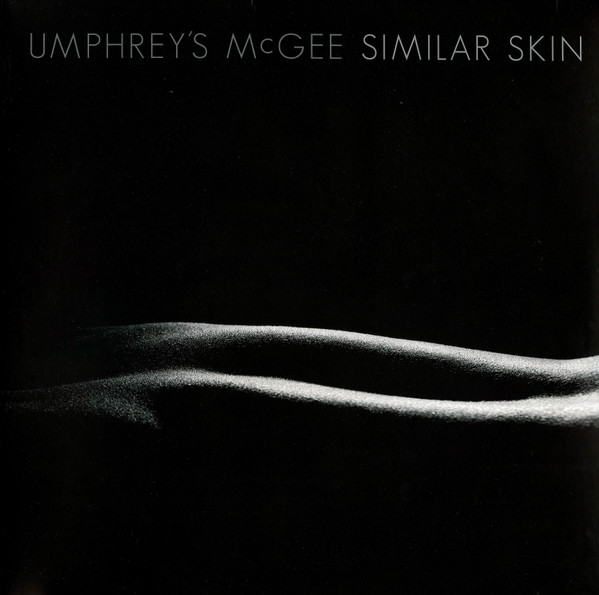
Similar Skin
2014

Blueprints
2025

Asking For A Friend
2022
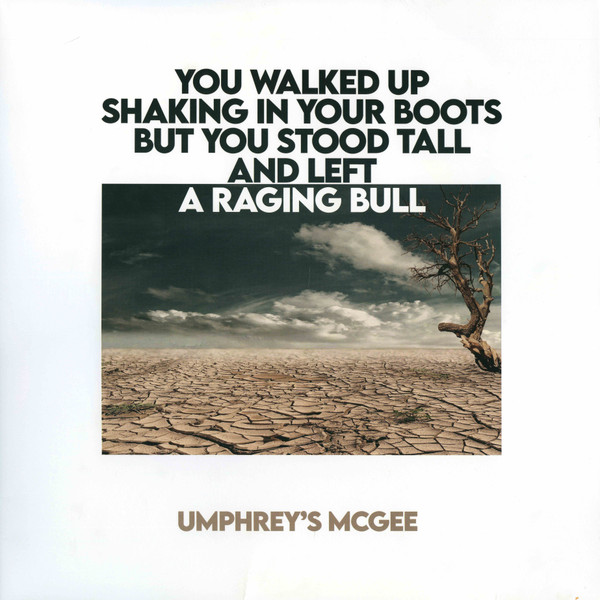
You Walked Up Shaking In Your Boots But You Stood Tall And Left A Raging Bull
2021

It's You
2018

It's Not Us
2018

Hall Of Fame: Class Of 2011
2012

Death By Stereo
2011

Hall Of Fame: Class Of 2010
2011

Hall Of Fame: Class Of 2024
2026

Hall Of Fame: Class Of 2023
2024

Hall Of Fame: Class Of 2022
2024

Hall Of Fame: Class Of 2021
2023

Reskinned
2014

Hall of Fame: Class Of 2012
2013

The Bottom Half
2007

Songs For Older Women
1999
Related artists
Around the web
Follow every record they touch.
Start your shelf and Gatefold tracks Umphrey’s McGee's new pressings, tour dates, and the whole discography — automatically.
Start your shelf →Free forever. Works with 10 records or 10,000.