
Artist
The Tony Williams Lifetime
New York, United States · 1969 – 1974
The Tony Williams Lifetime is a music group from New York, United States, active 1969–1974. Their discography on Gatefold includes 9 records.

9
Albums tracked
26
In collections
1969
Since
Biography
Tony Williams walked out of Miles Davis’s band at twenty-three and decided to blow the roof off the jazz world with a distorted organ and a Marshall stack. The first Lifetime sessions for Emergency! were a technical disaster because the levels were pinned so high the tape couldn't handle the signal, resulting in that blown-out, grainy filth that people spend thousands trying to replicate today. It wasn't about finesse. It was about Tony hitting the drums so fucking hard he forced John McLaughlin and Larry Young to play like their lives depended on it. By the time they got to the Ego and The Old Bum’s Rush era, the wheels were coming off. Tony started singing, which was a mistake, and the lineup rotated so fast it lost that initial telepathic violence. You can hear the struggle on those later Polydor cuts where the label was clearly pushing for something more manageable. But that first lineup? That was three guys inventing a new language in a cloud of tube smoke and feedback before the term fusion became a dirty word used to sell elevator music.
Bio from The Clerk
The Arc of The Tony Williams Lifetime
The pivots — what forced The Tony Williams Lifetime to reinvent.
The Emergency! Power Trio
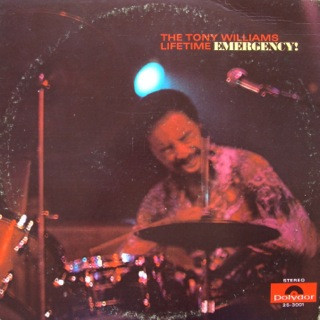
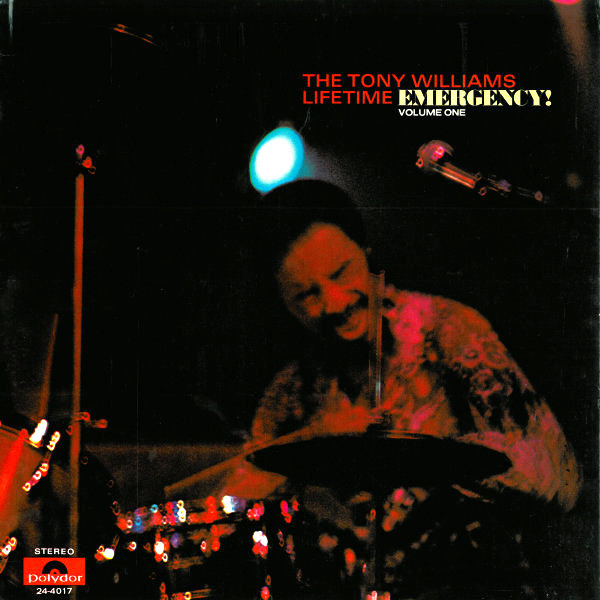
Tony recruited John McLaughlin and Larry Young to create a sound that had more in common with Hendrix than bebop. They tracked the debut in a single weekend at Allegro Sound Studios with almost no separation between the instruments, leading to the infamous bleed and distortion that defines the record. It sounds like a basement tape because it essentially was one, capturing a raw, psychedelic aggression that jazz purists absolutely hated.
The Jack Bruce Quartet
Adding Jack Bruce on bass for (Turn It Over) was a move to bring in the heavy rock audience, but the sessions remained incredibly dark and dense. Tony pushed the band toward a minimalist, almost menacing rhythmic structure while Tom Dowd helped clean up the production just enough to hear the complexity. This era bridged the gap between pure improvisation and the looming shadow of arena rock, though the tension between the members made it short-lived.
The Ego Pivot
After the core trio splintered, Tony took total control and moved the band toward more experimental, avant-garde textures that included strings and his own vocals. The lineup expanded to include percussionists like Don Alias, shifting the focus away from the high-velocity guitar shredding and toward a more atmospheric, sprawling sound. It was the moment Lifetime stopped being a rock band and started becoming a vehicle for Tony’s increasingly eccentric compositional whims.
Influences
- The Jimi Hendrix Experience — Tony explicitly told John McLaughlin to play like Hendrix during the early rehearsals to bridge the gap between jazz and psych-rock. You hear it in the saturated, wah-heavy feedback on 'Spectrum' and the sheer volume of the early live sets. It was a conscious attempt to hijack rock energy for a jazz context.
- Miles Davis — Tony joined Miles at seventeen and learned the art of 'controlled freedom' during the Second Great Quintet era. The rhythmic elasticity on Nefertiti is the direct DNA for how he leads the band in Lifetime. Miles wasn't just a boss; he was the one who told Tony to go start his own thing.
- Art Blakey — Tony studied Blakey’s aggressive limb independence and the way he led from the back of the stage. You hear the Blakey influence in Tony’s thunderous press rolls and the way he dictates the dynamic shifts of the entire ensemble. He took the hard-bop foundation and just turned the volume up to eleven.
- John Coltrane — The harmonic density of Lifetime’s improvisations was modeled after Coltrane's late-period sheets of sound. Larry Young’s organ work on the early records is essentially an attempt to translate Coltrane’s modal intensity to a keyboard. It’s that feeling of constant, spiritual forward-motion.
- Max Roach — Roach was the first to treat the entire drum kit as a melodic instrument, a concept Tony perfected. The tuned quality of Tony's tom-toms on Emergency! is a direct nod to Roach's technical innovations. He took Max's precision and added a level of physical violence that didn't exist in the fifties.
Discography
Their records — most-collected first.




Related artists
Around the web
Follow every record they touch.
Start your shelf and Gatefold tracks The Tony Williams Lifetime's new pressings, tour dates, and the whole discography — automatically.
Start your shelf →Free forever. Works with 10 records or 10,000.