
Artist
Tiger Army
Berkeley, United States · Formed 1995
Tiger Army is a music group from Berkeley, United States, active since 1995. Their discography on Gatefold includes 8 records.
8
Albums tracked
31
In collections
1995
Since
Biography
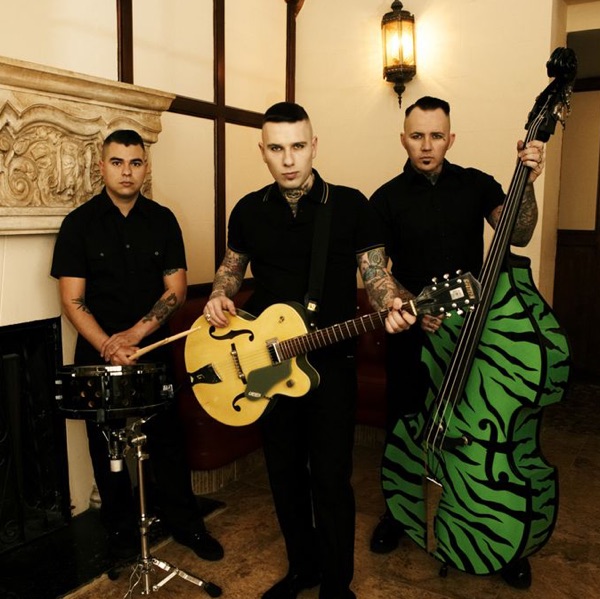
Nick 13 started Tiger Army with little more than a Gretsch hollowbody, a stand-up bass, and a determination to drag West Coast psychobilly out of the shadow of cartoonish novelty gimmicks. Recording the self-titled debut at Art of Ears with Andy Ernst, they relied on sheer kinetic energy because the early lineup was a revolving door. Former AFI bassist Geoff Kresge and Roback kept the rhythm section frantic. The result was raw, stripped-down, and heavy on the classic 1950s rockabilly swing, but kicked forward with 1980s hardcore velocity. It did not sound like the polished pop-punk dominating California in '99. By the time they signed to Hellcat and started tracking II: Power of Moonlite, the sound expanded into something darker and more melodic. They stopped relying solely on the standard horror-punk tropes to let actual songwriting take over. Bringing in backing vocals from Davey Havok and slide guitar from Greg Leisz proved Nick 13 was looking way past the standard psychobilly box. It was a tightrope walk between classic Sun Records reverb and darkwave melancholy. Not every record store purist loved the shift toward the mainstream spotlight on Hellcat, but those first three albums laid down a flawless blueprint for the American psychobilly revival.
Bio from The Clerk
The Arc of Tiger Army
The pivots — what forced Tiger Army to reinvent.
The Hellcat Trilogy
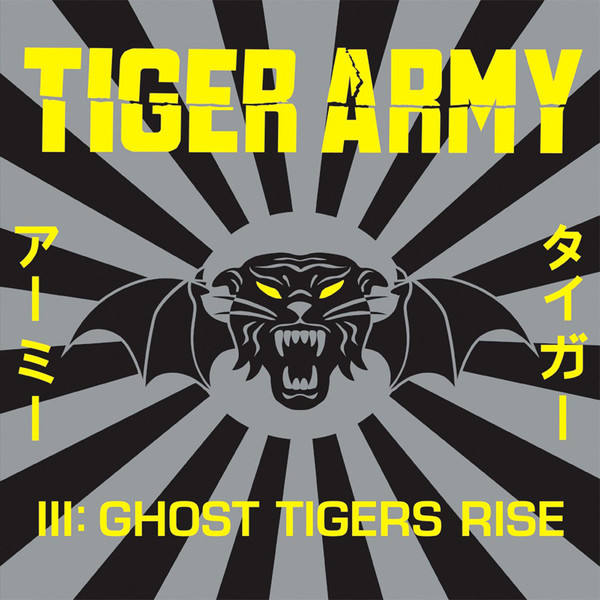
Between 1999 and 2004, the band defined their signature sound through three albums on Tim Armstrong’s Hellcat Records. Recording with producers like Jerry Finn and Andy Ernst, they refined raw punk energy into a highly stylized, melodic force. The addition of Fred Hell on drums brought a steadier, hard-hitting rock beat that balanced Geoff Kresge's aggressive upright slap-bass. You hear this era's peak on III: Ghost Tigers Rise, where the frantic punk tempos slow down to make room for country-tinged steel guitar and moody, atmospheric arrangements.
The Jerry Finn Pop-Punk Polish
In 2007, the band teamed up with powerhouse producer Jerry Finn for Music From Regions Beyond, pushing their sound into the most polished, commercial territory of their career. Finn brought his signature radio-ready pop-punk sheen to the tracking sessions, utilizing synthesizers and pristine vocal layering that alienated some of the band's gritty street-punk fanbase. Songs like 'Forever Fades Away' showed a massive jump in production values, trading the raw club energy for big, echoing choruses designed for festival stages. It was their slickest record, but it marked the end of their classic run before a long studio hiatus.
The Mid-Century Roots Reset
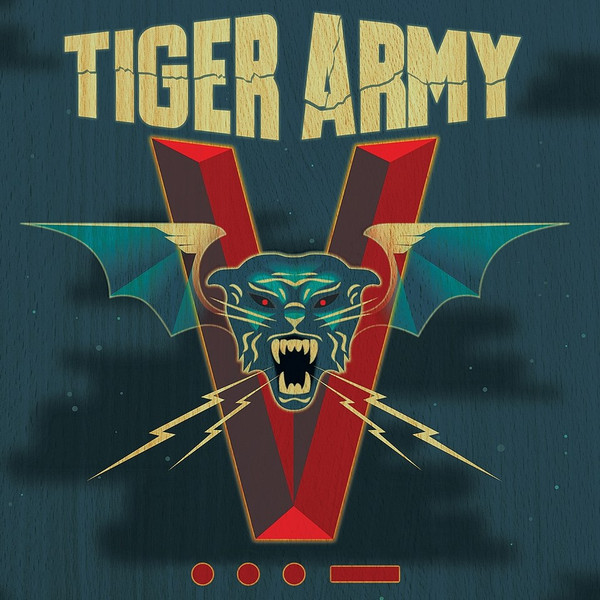
After nearly a decade without a new album, Nick 13 returned in 2016 with V•••–, completely stripping away the late-2000s radio gloss in favor of authentic pre-1960s recording techniques. Working with producer Ted Hutt, they tracked to analog tape and leaned heavily into early rock 'n' roll, doo-wop, and dark country. The slap-bass became warm and woody rather than metallic, and the guitars favored clean, warbling tremolo over high-gain distortion. This shift carried directly into 2019's Retrofuture, cementing their transition from a punk band playing rockabilly into a vintage rock 'n' roll band with a punk ethos.
Influences
- The Cramps — Tiger Army covered 'Under the Wires' on their Dark Paradise EP, paying direct tribute to the band that practically invented psychobilly. You hear it in Nick 13's reverb-drenched guitar tone and his use of B-movie horror aesthetics. The Cramps showed them how to weaponize vintage rock 'n' roll sleaze for a punk audience.
- Misfits — Nick 13 has repeatedly cited Glenn Danzig's vocal delivery and songwriting as a primary influence, which led to Davey Havok of AFI contributing backing vocals on several Tiger Army tracks. You hear this in the prominent, melodic 'whooa-oh' vocal hooks scattered across their entire discography. It is the direct bridge between 1950s crooning and aggressive punk rock.
- The Gun Club — Tiger Army recorded a cover of 'In the Death Car' on their early compilation appearances, signaling a deep debt to Jeffrey Lee Pierce's gothic blues-punk. The influence is unmistakable in the haunting, southwestern gothic atmosphere of III: Ghost Tigers Rise. They took Pierce's desolate, slide-guitar-driven desert punk and gave it a cleaner, more rhythmic backbone.
- Johnny Cash — Nick 13 wrote and recorded a tribute song titled 'Outlaw Heart' and later released a solo country album that fully embraced Cash's boom-chicka-boom rhythm. The stark, acoustic storytelling and dark outlaw imagery of Cash run deep through Tiger Army's slower ballads. It kept their songwriting anchored in traditional American roots music instead of just fast punk.
- Social Distortion — The band toured extensively with Social Distortion in their early years, and Mike Ness's signature blend of orange-county punk and country-rock heavily impacted Nick 13's approach. You hear it in the hard-edged, blue-collar storytelling and the specific way country-style guitar solos are played with a punk attitude. Ness showed them how to grow old in the punk scene without losing their edge.
Discography
Their records — most-collected first.




Related artists
Around the web
Follow every record they touch.
Start your shelf and Gatefold tracks Tiger Army's new pressings, tour dates, and the whole discography — automatically.
Start your shelf →Free forever. Works with 10 records or 10,000.