
Artist
The Wild Swans
post‐punk band from Liverpool, UK
Liverpool, United Kingdom · Formed 1980
The Wild Swans is a music group from Liverpool, United Kingdom, active since 1980. Their discography on Gatefold includes 5 records.

5
Albums tracked
3
In collections
1980
Since
Biography
Paul Simpson walked out of The Teardrop Explodes because he couldn't stand being a passenger in Julian Cope’s psych-pop circus. He teamed up with Jeremy Kelly and Ged Quinn to strip the Liverpool scene down to its coldest, most romantic bones. They didn't have a massive budget, but they had the Arp Solina string synth and a sense of doomed grandiosity that made the 'Revolutionary Spirit' single feel like a manifesto. It’s the greatest debut single to ever sink a band; they spent the next thirty years trying to outrun that one perfect seven-inch. They spent most of the eighties in a state of suspended animation, paralyzed by their own lofty standards and a rotating door of rhythm sections. When they finally coughed up an actual LP for Sire, the production was too slick for the basement-tape purists but too literate for the charts. It’s a frustrating catalog because the talent is blindingly obvious, yet they always seemed to be tripping over the furniture of the music industry. They were too pop for the goths and too weird for the Phil Collins crowd, leaving them stuck in that beautiful, lonely mid-Atlantic gap.
Bio from The Clerk
The Arc of The Wild Swans
The pivots — what forced The Wild Swans to reinvent.
The Post-Teardrop Manifesto
After Simpson bailed on the Teardrops, the goal was austerity over excess. Recording 'Revolutionary Spirit' for Zoo Records meant working with limited tracks and zero safety net, resulting in a sound that felt like crystal glass about to shatter. It defined the 'Liverpool sound' as something more intellectual and fragile than the baggy scenes happening elsewhere. You hear it in the way the guitars don't crunch—they chime like bells in a cathedral.
The Sire Polishing Machine
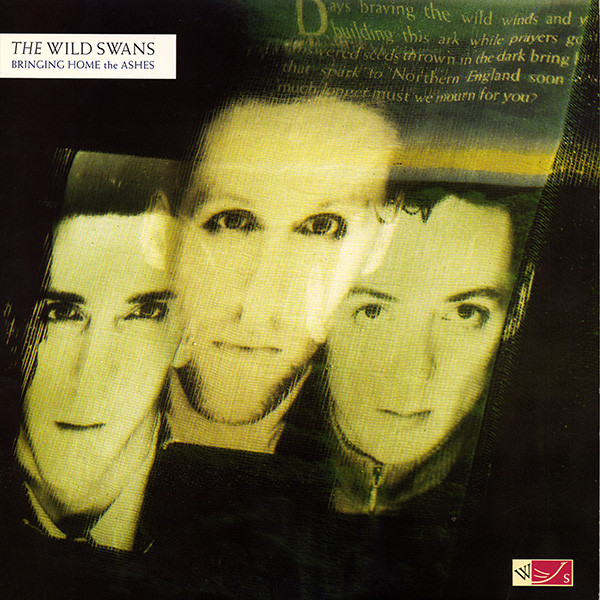
By 1988, the band finally landed on a major label with 'Bringing Home the Ashes,' but the raw, wintry atmosphere was traded for expensive studio gloss. Bill Drescher, who had just finished working with The Bangles, was behind the board and pushed the band toward a radio-ready sheen that almost buried Simpson’s vocals. The songs are brilliant, but the grit is gone, replaced by a professional competence that felt at odds with their shambolic origins. It’s the sound of a band being groomed for a stadium tour that was never going to happen.
The Ian Broudie Reinvention
For the 'Space Flower' sessions, the band leaned into the burgeoning Madchester buzz by bringing in Lightning Seeds mastermind Ian Broudie to produce. The record moved away from the icy New Wave aesthetic and toward a more psychedelic, beat-driven pop sensibility. It was a blatant attempt to stay relevant as the nineties loomed, but the core melancholy of the band remained intact beneath the jangly layers. It remains their most polarizing moment—some call it a sellout, others see it as the only time they actually relaxed.
Influences
- The Velvet Underground — Simpson has frequently cited their 1969 self-titled record as the blueprint for his 'less is more' vocal approach. You hear it in the deadpan delivery on 'Revolutionary Spirit.' It’s that specific brand of street-level European art-rock that gave the Swans their intellectual edge.
- Joy Division — The band toured with them early on and Simpson was deeply impacted by the stark, spatial production of Martin Hannett. The hollowed-out drum sounds on their early demos are a direct attempt to replicate the claustrophobia of 'Unknown Pleasures.' It grounded their Liverpool pop sensibilities in something much darker.
- Kraftwerk — The use of the Arp Solina and the band’s fascination with clean, motorized rhythms came from a obsession with 'Trans-Europe Express.' They wanted to capture that cold, continental travelogue feeling in a guitar band format. It’s the reason their ballads feel so mechanical and precise.
- The Doors — Ged Quinn’s keyboard work often mirrored Ray Manzarek’s baroque organ flourishes, especially in the way they anchored the melodies. Simpson’s lyrics also leaned into the same kind of doomed, poetic imagery that Jim Morrison favored. Holy shit, the drama on 'The Chocolate Soldier' is pure Lizard King worship.
- Echo & the Bunnymen — As peers and label-mates on Zoo Records, the Bunnymen’s 'Crocodiles' set the bar for the atmospheric post-punk the Wild Swans would refine. They shared the same gloomy Liverpool rehearsal spaces and the same obsession with 1960s psych-pop. It was a friendly arms race to see who could sound the most tortured while still writing a hook.
Discography
Their records — most-collected first.



Related artists
Around the web
Follow every record they touch.
Start your shelf and Gatefold tracks The Wild Swans's new pressings, tour dates, and the whole discography — automatically.
Start your shelf →Free forever. Works with 10 records or 10,000.