
Artist
The Rationals
band from Ann Arbor, MI, on A² records
Ann Arbor, United States · 1964 – 1970
The Rationals is a music group from Ann Arbor, United States, active 1964–1970. Their discography on Gatefold includes 1 record.

1
Albums tracked
2
In collections
1964
Since
Biography
The Rationals were too soulful for the garage rock kids and too white for the R&B charts, a reality that broke them before they ever really started. They were cutting Otis Redding covers in Ann Arbor while the rest of the country was still figuring out how to tune a fuzz box. Scott Morgan’s voice didn't sound like some suburban kid imitating the South; it sounded like a man who’d spent his life studyin' the phrasing of the Stax roster. Dan Honaker and Bill Figg played with a locked-in, heavy swing that made their peers in the local scene look like amateurs. They got buried by the same Detroit ecosystem that should have launched them. Being on A² Records meant they were kings of Michigan but invisible everywhere else. By the time they finally got a self-titled LP out on Crewe in 1970, the momentum was dead and the band was fractured. They were the bridge from the British Invasion sound to the heavy Detroit freak-out of the MC5, but they never got the toll money. Most people only know the name because of Scott Morgan’s later run with Sonic's Rendezvous Band, which is a damn shame because this band was the original engine.
Bio from The Clerk
The Arc of The Rationals
The pivots — what forced The Rationals to reinvent.
The A² Garage Soul Years
From 1965 to 1967, the band operated out of Ann Arbor as a precision-tooled soul machine under the guidance of manager/producer Hugh 'Jeep' Holland. They weren't playing sloppy three-chord garage; they were studying the dynamics of James Brown and the tempo of Motown. This era peaked with their cover of 'Respect,' which actually beat Aretha Franklin’s version to the local airwaves and proved they could out-groove anyone in the Midwest. You hear the discipline in the rhythm section—tight, snapping snares and a bassline that actually walked instead of just thumping.
The Crewe Records Collapse
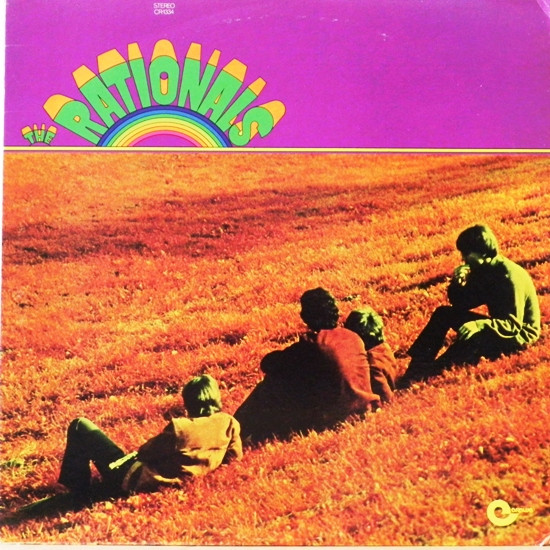
The jump to Bob Crewe’s label for their 1969/1970 sessions should have been the breakthrough, but the production lacked the grit of their early singles. The self-titled LP tried to pivot into the heavy psych-rock lane to compete with the rising Detroit 'high energy' scene, but the polished studio gloss fought against the band's natural R&B instincts. Internal friction over direction and the lack of a national hit despite the heavy touring schedule led to a fast burnout. The record remains a fascinating document of a band trying to get heavy while their soul roots were still pulling them back to the dance floor.
Influences
- Otis Redding — The band famously covered 'Respect' in 1966 after hearing Redding's original version. Scott Morgan’s vocal delivery is modeled directly on Otis’s use of staccato grunts and emotional swells. It’s the blueprint for everything they did at A² Records.
- James Brown — The Rationals were obsessed with the tight, disciplined arrangements of the Famous Flames. You hear it in the interlocking guitar parts of 'Leavin' Here' and their refusal to let the rhythm section drift. They valued the 'one' just as much as the Godfather did.
- The Beatles — Like every kid in 1964, they started as a beat group covering the Fab Four's early catalog. The vocal harmonies on their earliest singles like 'Gave My Love' show a direct lineage to the Merseybeat sound before they fully pivoted to soul. It gave them the pop structure they never quite abandoned.
- Marvin Gaye — Being based in Ann Arbor meant Motown was the local curriculum. Morgan has cited Gaye as a primary influence on his smoother, more melodic vocal runs. You can hear that 'Stubborn Kind of Fellow' swagger in the band's mid-60s mid-tempo tracks.
- Chuck Berry — The foundation of their guitar interplay was built on Berry’s double-stop riffs and driving shuffle. They covered 'Guitar Man' and used that specific Berry-style propulsion to bridge the gap between blues-rock and the emerging Detroit proto-punk sound. It’s the DNA of the Michigan rock scene.
Discography
Their records — most-collected first.
Related artists
Members
Around the web
Follow every record they touch.
Start your shelf and Gatefold tracks The Rationals's new pressings, tour dates, and the whole discography — automatically.
Start your shelf →Free forever. Works with 10 records or 10,000.