
Artist
The Free Design
United States · 1967 – 1972
The Free Design is a music group from United States, active 1967–1972. Their discography on Gatefold includes 11 records.

11
Albums tracked
5
In collections
1967
Since
Biography
Project 3 Studios in New York was a high-tech playground for Enoch Light, a stereophonic obsessed bandleader who wanted to show off the extreme separation of two-channel audio. He signed the Dedrick siblings because their flawless, mathematically precise vocal stacks were perfect for his stereo panning experiments. Chris Dedrick, a classically trained composition student, took this corporate audiophile assignment and turned it into some of the most complex, micro-tonal vocal pop ever recorded. They looked like straight-laced church kids while the rest of the world was turning on and tuning out, which made them easy to dismiss as commercial jingle fodder. The industry wanted them to be a squeaky-clean version of The Mamas & the Papas. Instead, Chris wrote dizzying, counterpoint-heavy arrangements that were nearly impossible to sing, pushing their voices into strange, unresolved chords that felt more like French impressionism than radio hits. They sang about kites and bubbles while the Vietnam War raged on, a contrast that made their pristine sunshine pop feel surreal, almost eerie, to anyone actually paying attention.
Bio from The Clerk
The Arc of The Free Design
The pivots — what forced The Free Design to reinvent.
The Stereophonic Launch
Enoch Light pushed the group into the studio in 1967 to show off his new command of multi-track stereo pan pots, resulting in their debut album Kites Are Fun. Chris Dedrick laid down incredibly dense, four-part family harmonies that ran parallel to shifting time signatures and sudden tempo changes. You can hear the physical layout of the studio in the stereo field, with the siblings panned hard left and right to frame the brass and woodwinds. It was a commercial success that set up a grueling, unsustainable pace for their writing sessions.
The Psych-Folk Shift
By 1969, the squeaky-clean image was cracking under the weight of the late-sixties cultural shift, leading to the darker, more experimental tones of Heaven/Earth. Chris Dedrick began utilizing fuzz bass, recorders, and unconventional chord voicings to steer away from the straightforward bubblegum tag. The arrangements on tracks like '2002 A Space Odyssey' became incredibly dense, almost overwhelming the vocal tracks with sudden orchestrations and jazzy shifts. It was a pivot away from AM radio friendly hooks toward a highly insular, progressive studio sound that confused their remaining label heads.
Children's Songs and the End
In 1970, under pressure to find a market, the band pivoted to recording Sing for Very Important People, an album marketed directly to children. The shift was more than a gimmick, as Chris used the kid-friendly themes to hide some of his most complex, jazz-influenced modal chord progressions. The group moved to the LHI label for their final 1972 stand, There Is a Song, where the production thinned out into soft-rock territory as the family ran out of steam. The siblings disbanded shortly after, exhausted by the industry's inability to market their hyper-literate brand of sunshine pop.
Influences
- The Association — The Dedricks frequently pointed to this group's intricate, multi-part vocal arrangements as their direct blueprint. You can hear this in the way Chris Dedrick stacked four-part harmonies on 'Kites Are Fun' to mimic the massive, wall-of-vocals approach of hits like 'Along Comes Mary'.
- The Hi-Lo's — The intricate jazz-pop vocal group of the 1950s was a massive influence on Chris Dedrick's formal arrangements. Their signature close-harmony style and chromatic vocal runs are stamped all over the dizzying vocal lines of 'I Found Love'.
- The Beach Boys — Brian Wilson's modular writing style on Pet Sounds served as a direct inspiration for the Dedrick siblings' studio experiments. The use of unconventional instruments like harpsichords and sleigh bells alongside complex vocal counterpoint on 'Proper Ornaments' directly mirrors Wilson's late-sixties studio production techniques.
- Johann Sebastian Bach — Chris Dedrick's classical training at the Manhattan School of Music was heavily rooted in baroque counterpoint. You can hear this rigorous, mathematical voice-leading on 'Daniel Balloon,' where the vocal lines weave in and out of each other like a formal fugue.
- The Four Freshmen — This group's pioneering use of open-harmonic vocal arrangements directly shaped how the Dedrick siblings spaced out their notes. The distinct, lush vocal jazz chords on 'Umbrellas' utilize the exact same open-voiced fifths and ninths that the Freshmen popularized in the fifties.
Discography
Their records — most-collected first.
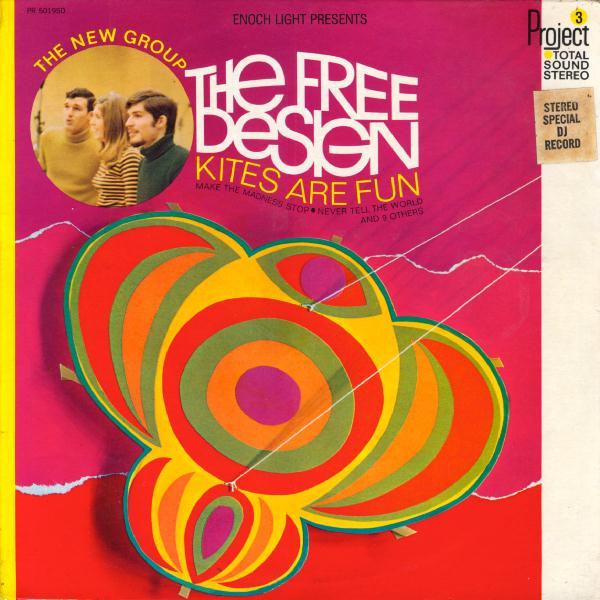
Kites Are Fun
1968
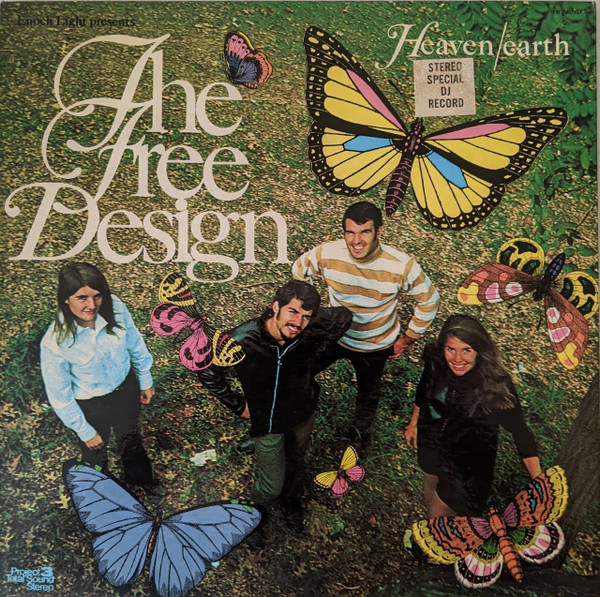
Heaven / Earth
1969

Butterflies Are Free - The Original Recordings 1967-72
2020

The Now Sound Redesigned
2005

The Best Of Free Design
2001

Cosmic Peekaboo
2001

Kites Are Fun: The Best Of The Free Design
1998

Umbrellas
1998
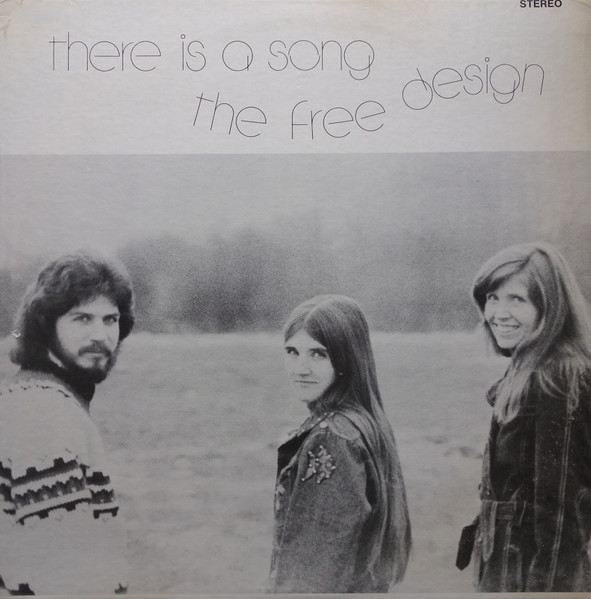
There Is A Song
1972
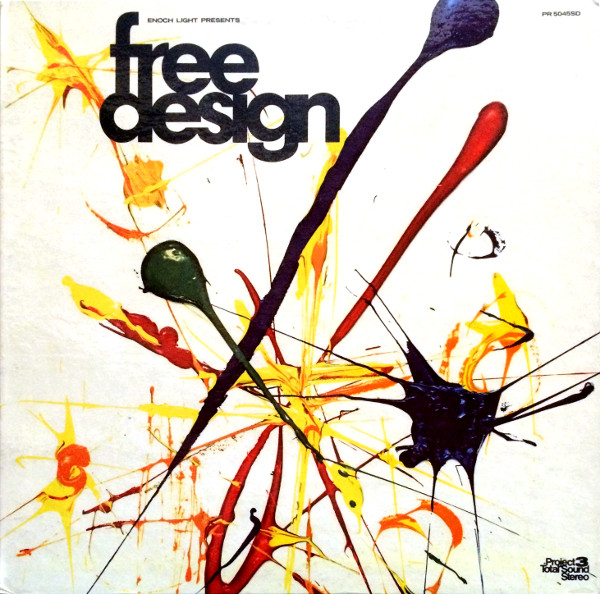
Stars / Time / Bubbles / Love
1970
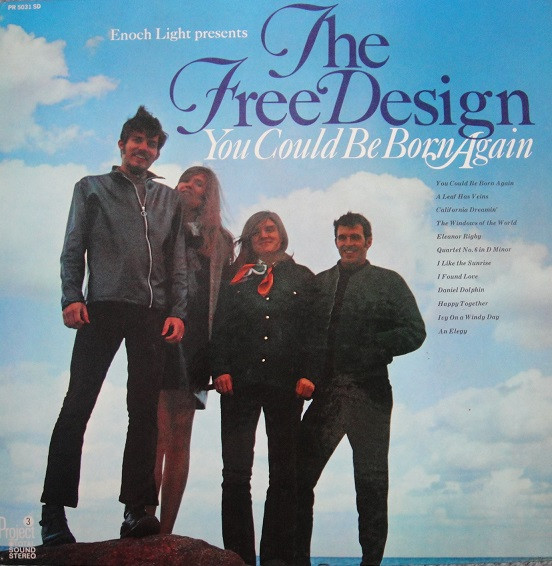
You Could Be Born Again
1968
Related artists
Around the web
Follow every record they touch.
Start your shelf and Gatefold tracks The Free Design's new pressings, tour dates, and the whole discography — automatically.
Start your shelf →Free forever. Works with 10 records or 10,000.