
Artist
Blue Öyster Cult
US rock band
New York City, United States · Formed 1967
Blue Öyster Cult is a music group from New York City, United States, active since 1967. Their discography on Gatefold includes 24 records.

48
Albums tracked
376
In collections
1967
Since
Biography
Sandy Pearlman and Murray Krugman built this outfit to be America's heavy answer to Black Sabbath, but with Ivy League lyric sheets instead of Birmingham smog. The early black-and-white records sounded like they were tracked inside an aluminum shed on Long Island with cheap amps pushed until the cones rattled. Eric Bloom delivered dystopian cold-war threats while Donald 'Buck Dharma' Roeser casually dropped some of the most fluid, melodic guitar solos cut to tape. They were rock critics' darlings who wrote songs about Canadian Mounties, occult conspiracy theories, and vampires, playing biker bars where that kind of artsy shit usually got your teeth kicked in. Then the hits happened, and the balancing act got fucking weird. Suddenly they had David Lucas tapping out the rhythm on a cowbell at Columbia's 30th Street Studio for '(Don't Fear) The Reaper', crossing over into arena-sized pop hooks without losing their sinister streak. The late seventies and early eighties were a tug-of-war between Pearlman's sprawling sci-fi lore and the label's desperate scramble for another radio monster. They survived personnel implosions, slick eighties studio sheen, and label apathy because Buck Dharma never ran out of ideas on a fretboard.
Bio from The Clerk
The Arc of Blue Öyster Cult
The pivots — what forced Blue Öyster Cult to reinvent.
The Black-and-White Trilogy
Signed to Columbia by Clive Davis, the band stripped away their psychedelic Soft White Underbelly roots for lean, sinister heavy rock. Working with Pearlman and Krugman behind the board, the self-titled debut, Tyranny and Mutation, and Secret Treaties laid down a menacing blueprint driven by Buck Dharma's razor-sharp guitar and Albert Bouchard's manic drumming. The arrangements were claustrophobic and fast, pairing pummeling proto-metal riffs with brainy, obscure lyrical sketches written by Pearlman and rock critic Richard Meltzer. It established them as New York's thinking man's street-level assault.
The Arena Pop-Metal Breakthrough
Bringing in engineer-producer David Lucas alongside Pearlman and Krugman for 1976's Agents of Fortune, the band leaned into radio polish and lush harmonies without dropping their occult edge. Buck Dharma stepped to the mic for '(Don't Fear) The Reaper', creating an unavoidable FM anthem that sent the record multi-platinum. Follow-up records Spectres and Mirrors embraced slick synthesizers, pop hooks, and arena excess, pushing them into headlining status even as purists bitched about them softening up. They proved an American hard rock group could sound massive on the radio without sounding stupid.
The Martin Birch Renaissance
Seeking a harder European edge after the polarizing sheen of Mirrors, the band hired British producer Martin Birch for 1980's Cultösaurus Erectus and 1981's Fire of Unknown Origin. Birch dialed up a heavy, muscular rhythm sound and punchy guitar tones, resulting in late-career staples like 'Burnin' for You'. The revival proved volatile, though, as founding drummer Albert Bouchard was fired in the middle of the supporting tour, replaced behind the kit by Rick Downey. It was their last unified creative peak before internal fractures tore the classic lineup apart.
The Fairbairn Gloss and Imaginos Chaos
The mid-eighties devolved into severe creative exhaustion and studio dysfunction. Bruce Fairbairn slicked up 1983's The Revölution by Night with eighties gated reverb, followed by Allen Lanier walking out during the sessions for Club Ninja. The original group collapsed completely until Columbia salvaged Pearlman and Albert Bouchard's long-dormant concept record Imaginos in 1988, stitching together tracks using session heavies and former members under the band moniker. The fractured release bombed commercially and ended their sixteen-year run with Columbia.
The Indie Hard-Rock Preservation
Reduced to road warriors led by the core duo of Bloom and Roeser, the band signed with indie label CMC International for 1998's Heaven Forbid and 2001's Curse of the Hidden Mirror. Working with horror-fantasy author John Shirley on lyrics, they ditched synthesized eighties experiments to return to stripped-down, guitar-driven heavy rock. A newly stabilized rhythm section kept them relentlessly active as an untouchable live unit for two straight decades without major-label oversight. They closed the loop on their own terms, finally delivering The Symbol Remains in 2020 and archival gems on 2024's Ghost Stories.
Influences
- The Byrds — Buck Dharma openly credited Roger McGuinn's bright, modal 12-string guitar runs as the blueprint for his distinct melodic approach. You can hear that jangling, arpeggiated phrasing driving right under the heavy distortion on tracks like '(Don't Fear) The Reaper'. They turned West Coast folk-rock picking into a heavy metal weapon.
- The Doors — Allen Lanier's eerie Vox Continental and combo organ lines drew straight from Ray Manzarek's gothic carnival atmosphere. The chilling, moody intro to 'Transmaniacon MC' cribs directly from the psychedelic keyboard textures of early Doors cuts. It gave their street-level riffing an eerie, theatrical dread.
- Alice Cooper — Before the self-titled debut arrived, the band took direct cues from the early Alice Cooper group's marriage of theatrical absurdity and hard rock dissonance. Bloom's leather-clad, sneering frontman delivery channels the sinister swagger of 'I'm Eighteen' across records like Tyranny and Mutation. It gave them the nerve to turn occult B-movie tropes into stadium rock.
- The Who — Albert Bouchard built his entire frantic, fill-heavy drumming style around Keith Moon's explosive momentum, while Buck Dharma studied Pete Townshend's power chording. You hear that explosive kinetic chaos ripping across 'Cities on Flame with Rock and Roll'. They stole British invasion bombast and filtered it through dirty Long Island bar rooms.
- Black Sabbath — Manager Sandy Pearlman explicitly framed early Blue Öyster Cult as Columbia's domestic counterstrike to the doom-laden power chords coming out of Birmingham. Tony Iommi's tritone-heavy riffs are baked into the core DNA of tracks like 'Hot Rails to Hell' and 'Godzilla'. They took the sludge and sharpened it into something clinical and cold.
Discography
Their records — most-collected first.
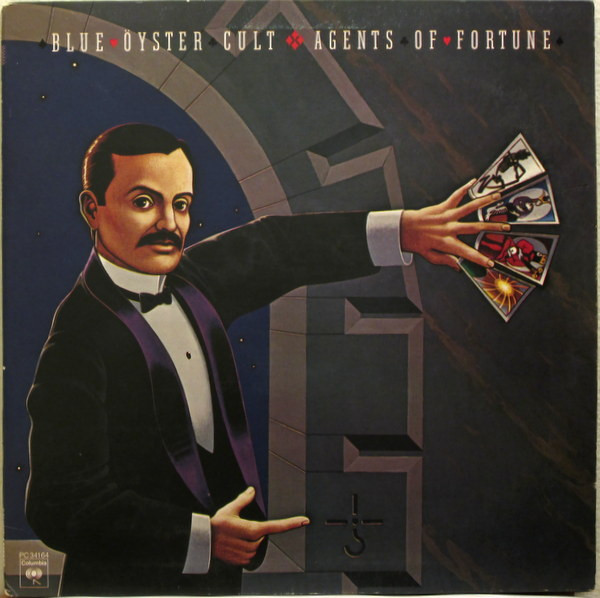
Agents Of Fortune
1976

Blue Öyster Cult
1972
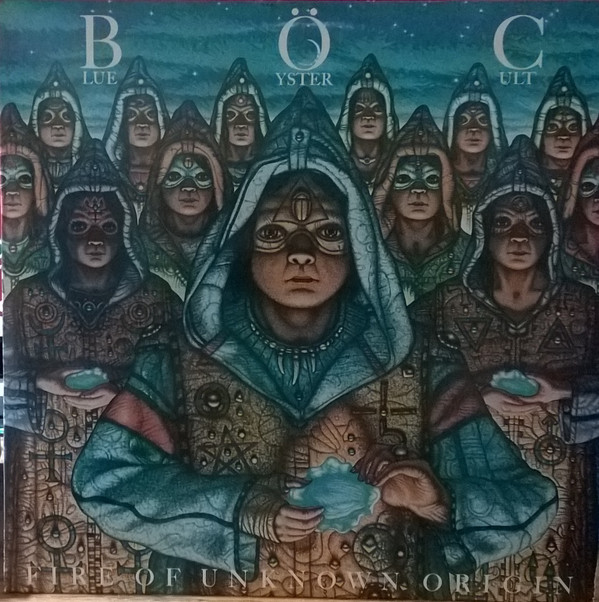
Fire Of Unknown Origin
1981

Some Enchanted Evening
1978
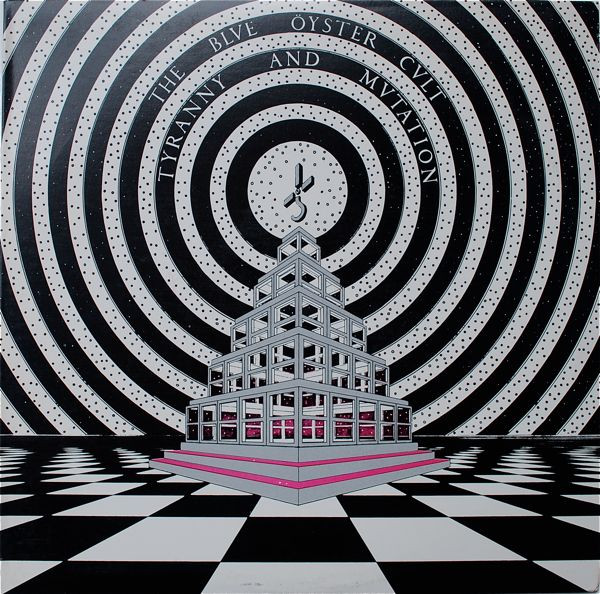
Tyranny And Mutation
1973
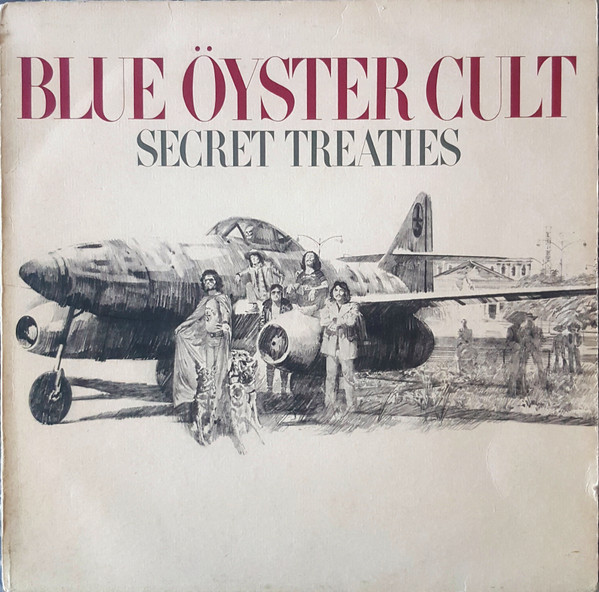
Secret Treaties
1974
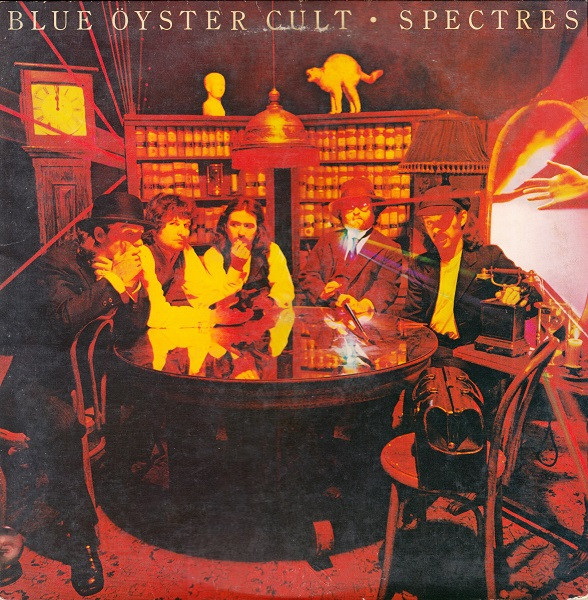
Spectres
1977
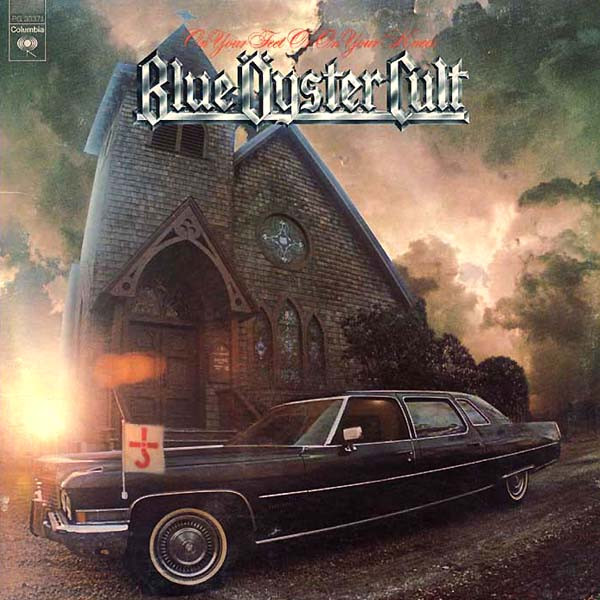
On Your Feet Or On Your Knees
1975
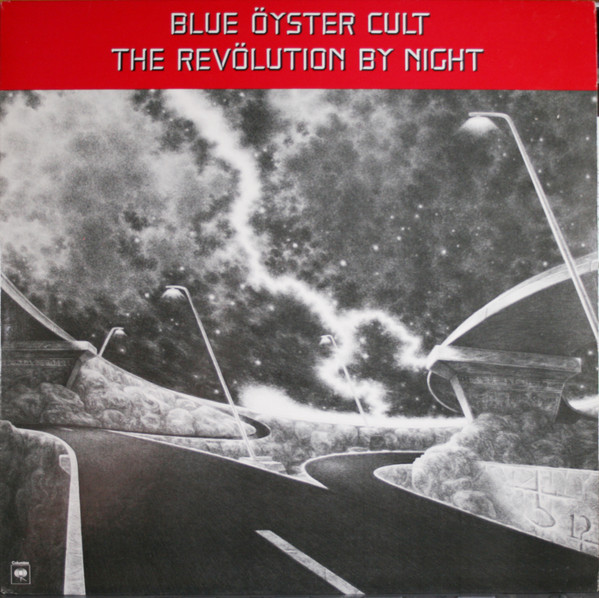
The Revölution By Night
1983
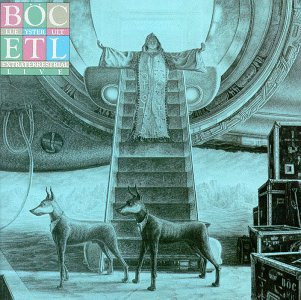
Extraterrestrial Live
1982
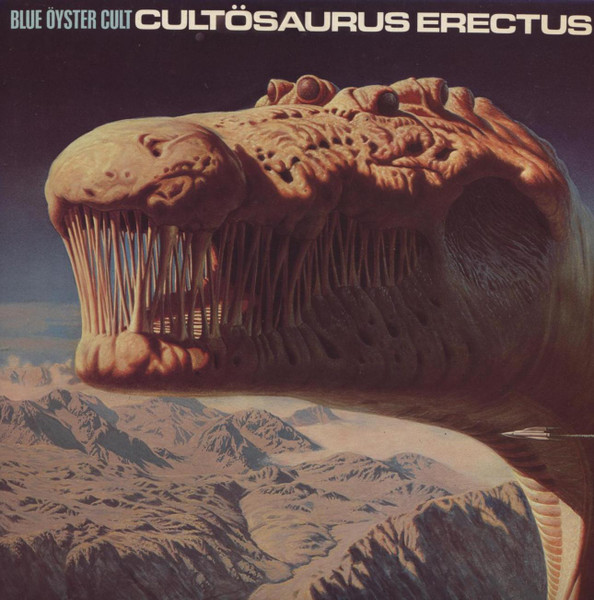
Cultösaurus Erectus
1980
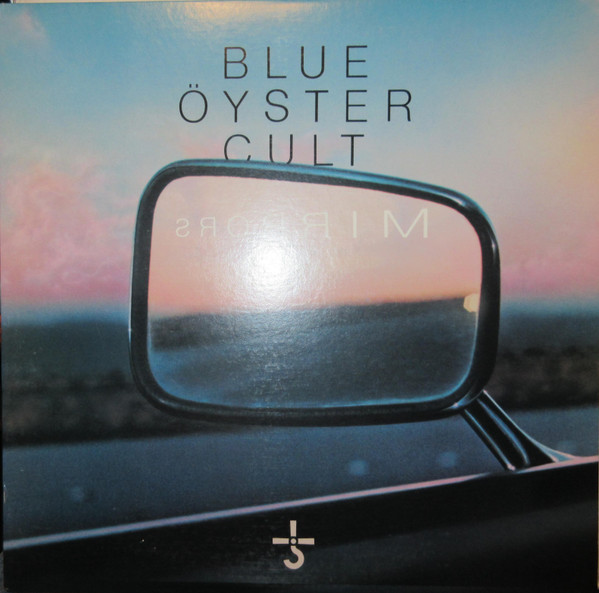
Mirrors
1979

Club Ninja
1986
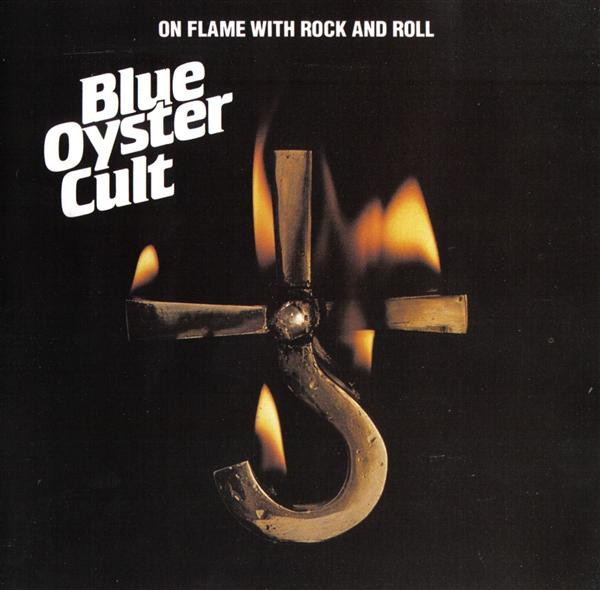
On Flame With Rock And Roll
1990
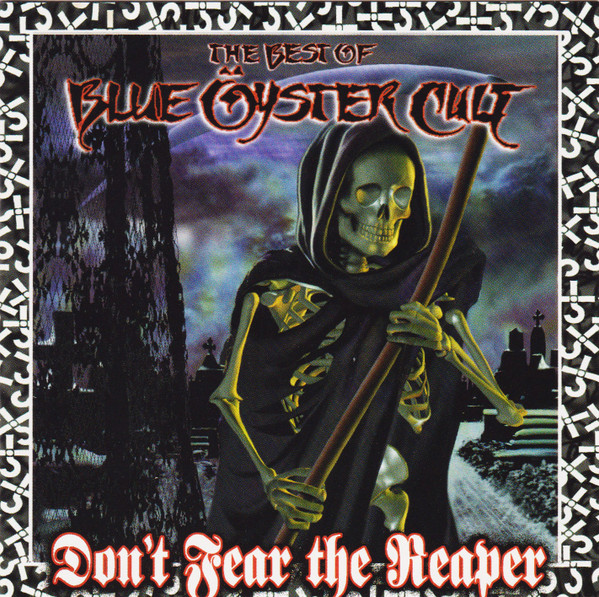
Don't Fear The Reaper: The Best Of Blue Öyster Cult
2000
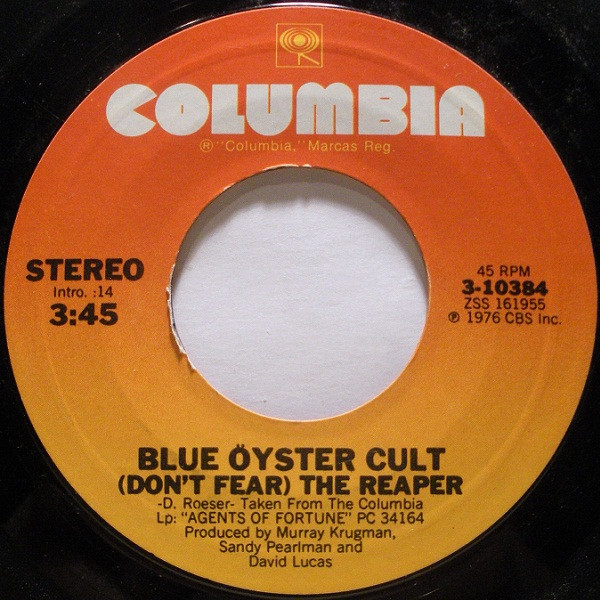
(Don't Fear) The Reaper
1976

The Symbol Remains
2020
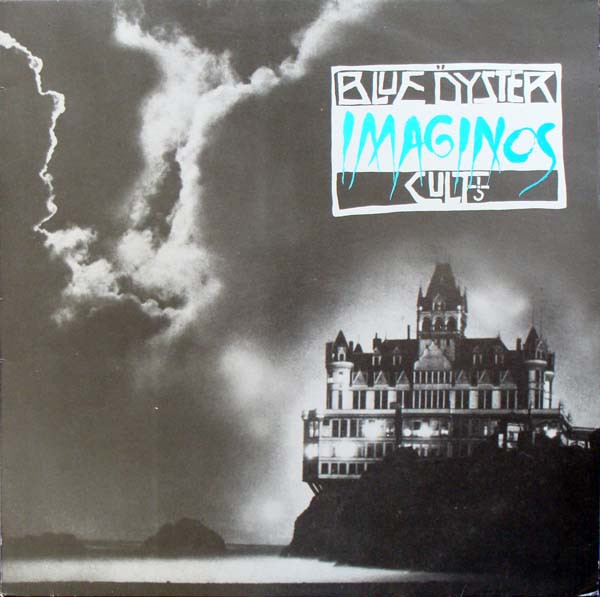
Imaginos
1988

Ghost Stories
2024

Live In America
2007

Super Hits
1998
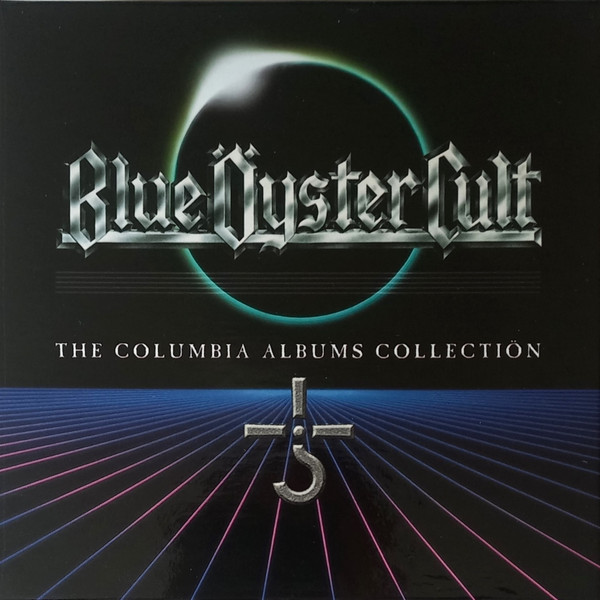
The Columbia Albums Collectiön
2012
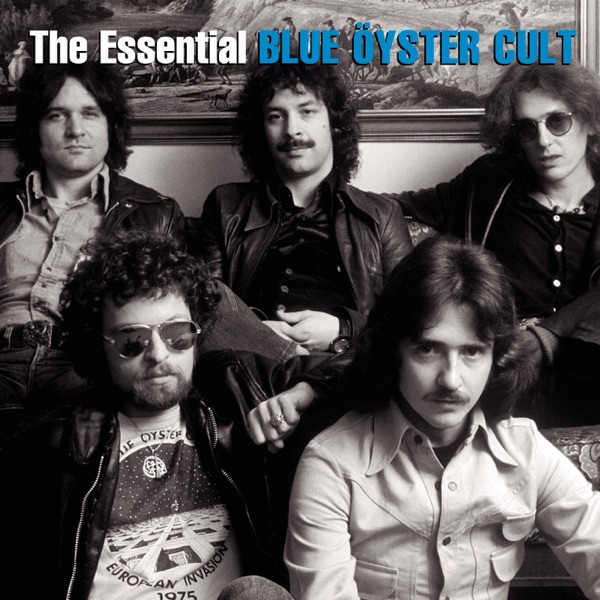
The Essential Blue Öyster Cult
2003

Tales Of The Psychic Wars
2001
Related artists
Around the web
Follow every record they touch.
Start your shelf and Gatefold tracks Blue Öyster Cult's new pressings, tour dates, and the whole discography — automatically.
Start your shelf →Free forever. Works with 10 records or 10,000.