
Artist
t.A.T.u.
Moscow, Russia · 2000 – 2011
t.A.T.u. is a music group from Moscow, Russia, active 2000–2011. Their discography on Gatefold includes 7 records.
7
Albums tracked
21
In collections
2000
Since
Biography
Ivan Shapovalov sat in a Moscow studio with a copy of the 1998 Swedish film Fucking Åmål and a marketing budget funded by a Russian businessman. He did not care about the music. He wanted a concept that would provoke, so he hired teenager Lena Katina, added Julia Volkova, and built a hyper-polished, controversial euro-pop juggernaut. Trevor Horn was brought in for the English-language crossover, applying his signature wall-of-sound production to "All the Things She Said." The track became a massive hit because the hook was undeniable, regardless of the cheap marketing tricks surrounding it. Behind the manufactured controversy lay surprisingly heavy synth-pop, driven by driving electronic beats and Volkova's aggressive vocals. The girls eventually fired Shapovalov to reclaim their own careers, but the machinery of the major label system proved difficult to escape. They traded the shock value for a more mature, industrial-tinged sound, working with Billy Steinberg and Richard Carpenter. The pop world eventually moved on, but those early records still stand as a masterclass in aggressive, turn-of-the-century electronic pop.
Bio from The Clerk
The Arc of t.A.T.u.
The pivots — what forced t.A.T.u. to reinvent.
The Shapovalov Experiment
Producer Ivan Shapovalov ran the group under strict, manipulative rules to maximize shock value and media attention. He secured a massive contract with Universal Music Russia and pushed the controversial schoolgirl imagery that defined their early career. The music on the 2001 Russian debut was surprisingly sharp, full of frantic breakbeats and distorted synthesizer leads. This era peaked with Trevor Horn's massive English-language production on the 2002 crossover album, which turned their aggressive sound into an international chart-topping formula.
The Independence Revolt
Katina and Volkova broke away from Shapovalov in 2004, abandoning the controversial image and canceling a television show production to take control of their career. They signed with Interscope and headed to Los Angeles to record with veteran pop songwriters like Billy Steinberg. The resulting 2005 album, Dangerous and Moving, traded the frantic Russian techno-pop for a polished, gothic-tinted industrial rock sound. You can hear the shift in the heavy guitar riffs of "All About Us," which featured backing instrumentation from Dave Stewart of Eurythmics.
The Independent Era
After Interscope dropped them in 2006, the duo returned to Russia to run their own independent label, T.A. Music. They recorded their final albums, Veselye Ulybki and Waste Management, with a rotation of obscure international producers. The music became much darker, colder, and more experimental, abandoning commercial pop aspirations for ambient synth pads and heavy electro-clash grooves. The project quietly dissolved in 2011 as both singers embarked on solo careers that never matched the intensity of their collaborative output.
Influences
- The Buggles — Trevor Horn produced t.A.T.u.'s major English debut, importing the exact same synth-heavy, compressed pop production style he pioneered in the late seventies. You hear this influence in the massive, layered vocal tracks and clean synthesizer sweeps of "All the Things She Said." Horn used his classic electronic production tricks to give their raw Russian tracks an international radio sheen.
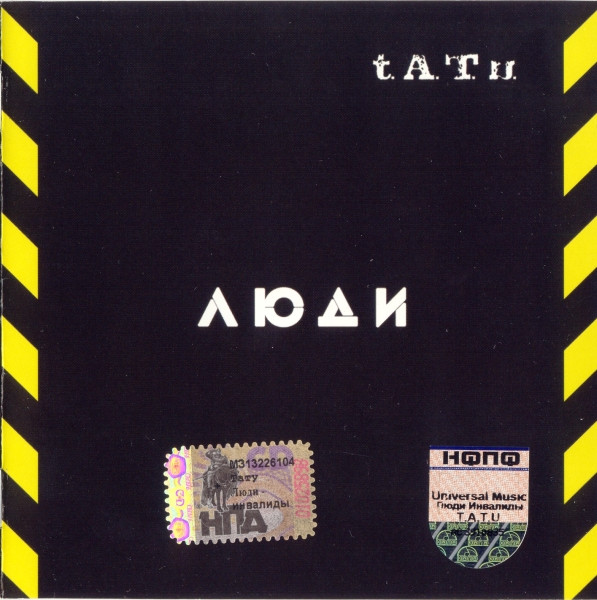
- Depeche Mode — Both Lena Katina and Julia Volkova repeatedly cited Depeche Mode as their primary musical influence during the promotion of their sophomore album. This inspiration is evident in the dark synth-pop textures, melancholic melodies, and heavy industrial beats of "People with Disabilities." The duo even recorded a direct cover of "Fly on the Windscreen" during their mid-2000s studio sessions.
- The Prodigy — Shapovalov and songwriter Alexander Voitinsky intentionally modeled the aggressive breakbeats and distorted electronic basslines of the debut Russian album on late-nineties UK big beat. You can hear this frantic, rave-influenced energy on "Nas Ne Dogonyat," which relies on a pounding breakbeat pattern rather than a standard four-on-the-floor pop rhythm. It gave their early pop material an unusually abrasive edge.
- Eurythmics — The duo's transition to a darker, guitar-and-synth hybrid pop sound on their second album was directly assisted by Eurythmics co-founder Dave Stewart, who co-wrote the track "Friend or Foe." The influence of eighties new wave is clear in the dramatic vocal delivery and cold synthesizer hooks across the entire Dangerous and Moving record. Stewart's involvement cemented their connection to classic British synth-pop royalty.
- Madonna — During the early 2000s auditions, Shapovalov explicitly sought vocalists who could mimic the high-register, dry vocal style of early Madonna records. The clean, double-tracked vocal production on tracks like "30 Minutes" mirrors the vocal arrangements on eighties pop hits like "Borderline." It was a deliberate attempt to marry classic American pop vocal styles with cold Eastern European electronic production.
Discography
Their records — most-collected first.




Related artists
Members
Around the web
Follow every record they touch.
Start your shelf and Gatefold tracks t.A.T.u.'s new pressings, tour dates, and the whole discography — automatically.
Start your shelf →Free forever. Works with 10 records or 10,000.