
Artist
Sturgill Simpson
American country singer and actor
Jackson, United States · b. 1978
Sturgill Simpson is a musician from Jackson, United States, active since 1978. Their discography on Gatefold includes 8 records.

8
Albums tracked
322
In collections
1978
Since
Biography
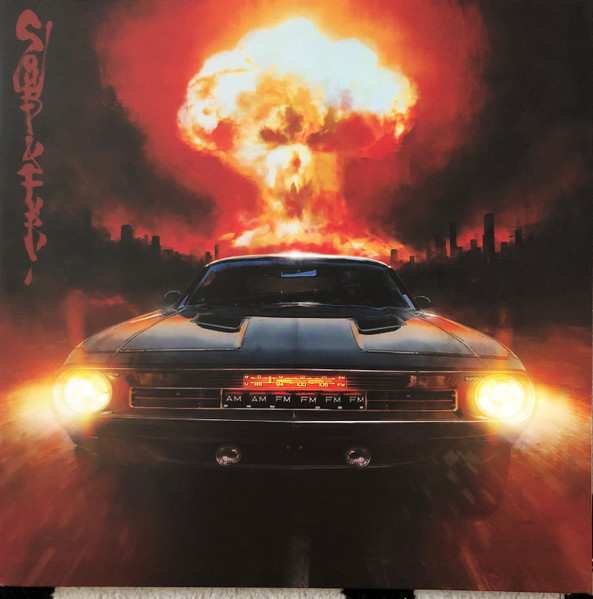
Dave Cobb was still relatively unknown when he sat behind the board at LCS Studios to track High Top Mountain with a bunch of Nashville session aces. Sturgill didn't come out of the gate as a savior; he was just a guy with a voice that sounded like Waylon’s ghost and a massive chip on his shoulder from years wasted on the railroad. He wasn't playing the game, which is why the early records have that lean, hungry snap—the sound of a guy who had absolutely nothing to lose and a deep-seated hatred for the Music Row factory. He promised his fans five albums under his own name and then basically detonated his career trajectory three times over just to see who was actually listening. By the time he was recording Sound & Fury at Sonic Ranch in Texas, he’d swapped the Telecaster twang for a stack of cranked amps and a synth-heavy, sleazy rock aesthetic that pissed off every purist in a Stetson. He’s the only guy in the business who could drop two volumes of high-speed bluegrass reworkings just to reclaim his masters and remind everyone he can still out-pick the professionals before disappearing into a new alias.
Bio from The Clerk
The Arc of Sturgill Simpson
The pivots — what forced Sturgill Simpson to reinvent.
The Cobb Breakthrough
After the Sunday Valley project fizzled, Sturgill linked up with producer Dave Cobb to strip everything back to the raw essentials of 1970s outlaw country. Metamodern Sounds in Country Music was tracked in just four days on a shoestring budget, leaning into a psychedelic lyrical bent that felt completely alien to the Nashville establishment. You can hear the room in those tracks—it’s the sound of a tight four-piece band playing live with minimal overdubs and zero corporate interference.
The Dap-Kings Pivot
A Sailor’s Guide to Earth was the moment he fired the rulebook into the sun by self-producing at The Butcher Shoppe and bringing in the Dap-Kings horns. He traded the cosmic country tropes for a heavy dose of Otis Redding soul and maritime metaphors written for his newborn son. It’s a dense, brassy record that proved he wasn't interested in being a genre revivalist, moving him from the local clubs to the Grammy stage overnight.
The Synth-Rock Detonation
Sound & Fury was a deliberate middle finger to the industry, recorded at Sonic Ranch with a focus on fuzzy, distorted riffs and squelchy electronics. He ditched the acoustic guitar entirely, creating a sleazy, high-octane record that sounded more like ZZ Top on a bender than anything out of Kentucky. It was a polarizing move that effectively cleared the room of casual listeners, leaving only the die-hards who cared about the songwriting beneath the noise.
The Johnny Blue Skies Rebirth
After fulfilling his five-album promise and suffering a vocal cord injury that almost ended it all, he resurfaced under the name Johnny Blue Skies for Passage du Desir. Recording at Abbey Road with David Ferguson, the music shifted again toward a lush, sophisticated mix of French pop influences and soft-rock balladry. It’s the most relaxed he’s ever sounded on tape, trading the aggressive defiance of his thirties for a weathered, globetrotting perspective.
Influences
- Waylon Jennings — Sturgill has frequently cited Waylon as the blueprint for his 'fuck you' attitude toward Nashville and even covered 'The Lonesome On'ry and Mean' early on. You hear it in the muscular, thumping rhythm section and the way he uses his baritone to command a room. It’s that specific brand of outlaw stubbornness that defines his entire career.
- Keith Whitley — Before the psychedelic stuff, Sturgill was obsessed with Whitley's phrasing and vocal control, a fact he’s confirmed in numerous interviews about his Kentucky roots. The bluegrass-indebted runs and the pure country ache in his voice on High Top Mountain are a direct lineage from Whitley’s brief, massive run. He’s one of the few modern singers who can actually hit those notes without sounding like a karaoke act.
- Ralph Stanley — The Cuttin' Grass records weren't a whim; Sturgill grew up on the Clinch Mountain Boys and eventually hired Stanley’s longtime collaborators to play on his bluegrass sessions. The high-lonesome vocal style and the drive of the banjo-led arrangements on those volumes are a tribute to the Stanley style. He’s mentioned that this music is his actual DNA, regardless of how many distortion pedals he buys.
- Otis Redding — The soul-inflected arrangements on A Sailor's Guide to Earth were a direct attempt to capture the energy of Redding’s Stax recordings. Sturgill has noted that he spent more time listening to R&B and soul than country while writing that album. You hear it in the vocal ad-libs and the way the brass section punches through the mix like a classic Memphis session.
- Merle Haggard — Sturgill and Merle were close enough that Haggard called him 'about the only thing' in country music worth a damn before he died. The influence is evident in the blue-collar songwriting and the sharp, Telecaster-driven melodies of his debut. It’s the sound of the working-class poet who isn't afraid to get political or weird.
Discography
Their records — most-collected first.





Related artists
Frequent collaborators
Around the web
Follow every record they touch.
Start your shelf and Gatefold tracks Sturgill Simpson's new pressings, tour dates, and the whole discography — automatically.
Start your shelf →Free forever. Works with 10 records or 10,000.