
Artist
Steven Halpern
New York City, United States · b. 1947
Steven Halpern is a musician from New York City, United States, active since 1947. Their discography on Gatefold includes 24 records.

36
Albums tracked
15
In collections
1947
Since
Biography
Steven Halpern started out running a Fender Rhodes electric piano through tape echo units, specifically stripping out the rhythmic pulse of bebop to see what happened when chords just hung in the air. Traditional record distributors in 1975 laughed him out of the room because his self-released debut, Christening for Listening, didn't fit into rock, jazz, or classical bins. He bypassed record stores entirely, hawking vinyl out of the trunks of cars and placing stock in massage clinics, health food stores, and yoga retreats. By ditching tension-and-release chord progressions for static modal drifting, he accidentally built the commercial infrastructure for an entire genre from scratch. The catalog gets undeniably bloated once you hit the late eighties and nineties, where the creative experimentation curdled into functional self-help tapes and subliminal market grabs like Music for Your PC. But before the crystal-shop commodification took over, Halpern was cutting genuinely radical ambient sessions alongside legit virtuosos like Paul Horn, Paul McCandless, and David Friesen. Strip away the pastel covers and the chakra marketing, and you're left with minimalist keyboard compositions that treated the sustain pedal as a primary instrument.
Bio from The Clerk
The Arc of Steven Halpern
The pivots — what forced Steven Halpern to reinvent.
The Sound Rx Blueprint
After cutting his teeth in late-sixties jazz clubs, Halpern realized standard timekeeping agitated listeners instead of settling them. He founded his own Halpern Sounds imprint to cut Christening for Listening and Spectrum Suite using basic Rhodes setups and tape delay. The albums rejected traditional melodic resolution, letting individual electric piano chords decay into silence over multi-minute stretches. It laid down the fundamental vocabulary for non-Western-influenced Western healing music.
The Virtuoso Collaborations
By the early eighties, Halpern moved from solo electric piano improvisations into ensemble arrangements, recruiting heavy jazz and classical players. Records like Connections brought in Oregon's reed maestro Paul McCandless and bassist David Friesen, while Halpern leaned hard into the Roland Rhodes Chroma and early digital synthesizers. The interplay gave his ambient structures sharper harmonic teeth and actual acoustic resonance. It remains the most musically sophisticated stretch of his career.
The Subliminal Utility Factory
The nineties saw the music shift from open-ended sound design to pure functional product. He began embedding subliminal voice prompts, brainwave entrainment frequencies, and targeted audio programs aimed at office workers and students across dozens of rapidly produced cassettes and CDs. Titles like Effortless Relaxation and Workstation Wellness traded artistic nuance for targeted lifestyle solutions. The catalog exploded in volume, but the spacious minimalism of his early tape loops got ironed into flat, utilitarian background wash.
Influences
- Miles Davis — Halpern was a working jazz trumpeter in New York before ditching the horn, citing Davis's spacious modal shifts on Kind of Blue as his direct wake-up call. You hear that debt in how Halpern abandoned fast chord changes to dwell inside single, unresolved scales. Miles showed him that the space between the notes carried more gravity than the notes themselves.
- Claude Debussy — Halpern routinely cited Debussy's use of the whole-tone scale and impressionistic pedal work as the classical foundation of his anti-tension style. The shimmering, non-resolving harmonic shifts on Spectrum Suite come straight out of the French Impressionist playbook. It gave Halpern a blueprint for writing music that floated instead of marching forward.
- John Coltrane — Coltrane's spiritual, modal explorations on late-era masterworks like A Love Supreme fundamentally altered how Halpern viewed the purpose of sound. You hear Coltrane's devotion to music as a metaphysical tool directly translated into Halpern's sustained drone foundations and tonal meditations. He took Coltrane's cosmic intent and stripped away the sheer acoustic violence.
- Bill Evans — Evans's delicate touch, impressionistic voicings, and reliance on the sustain pedal served as the direct mechanical model for Halpern's keyboard style. Listen to the lingering decays on Dawn or Comfort Zone and you will hear Evans's ghost stripped of rhythm section accompaniment. Halpern took Evans's introverted quietness and stretched it to its absolute logical extreme.
- Erik Satie — Satie's concept of 'furniture music' and the spare, repetitive structures of the Gymnopédies provided the historical permission for Halpern to make background-intended music. The stark, unhurried keyboard drops across Ancient Echoes mirror Satie's refusal to force dynamic climaxes. Satie invented the concept of music that didn't demand attention, and Halpern turned it into a whole lifestyle industry.
Discography
Their records — most-collected first.

Spectrum Suite
1976

Ancient Echoes
1979

Zodiac Suite
1977

Rhythms Of Vision
1985

Natural Light
1984

1984 Newsound
1983

Eastern Peace
1980

Prelude
1980

Starborn Suite
1978

Christening For Listening (A Soundtrack For Every Body)
1975

Relaxation Suite
2009

Music For Sound Healing
1999

In The Key Of Healing
1996

Trance-Zendance
1995
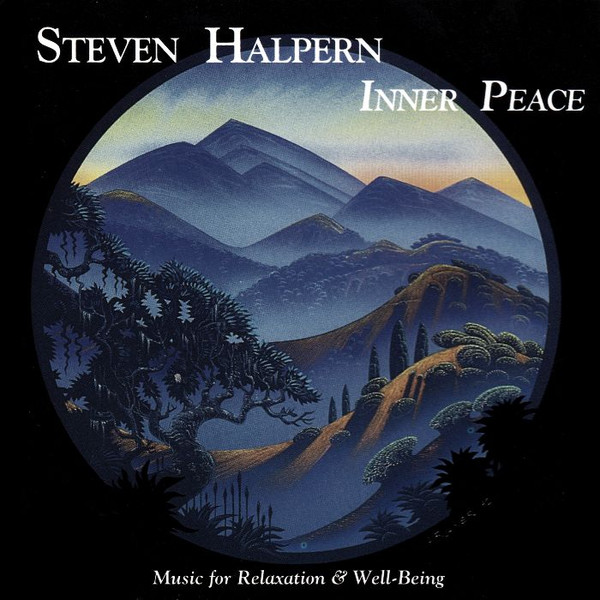
Inner Peace
1994

Enhancing Success
1994

Music For Accelerated Learning
1991

Higher Ground
1991

Enhancing Self-Esteem
1991

Jonah's Journey
1989
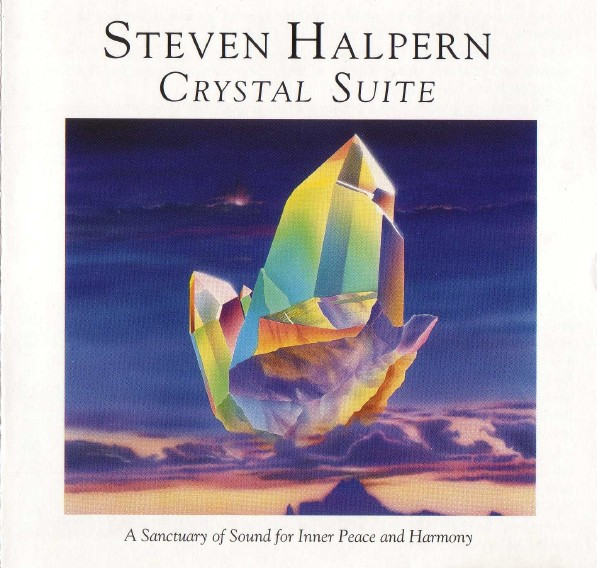
Crystal Suite
1988

Legacy
1987

Among Friends (Collection I)
1987

Shared Visions
1986
Around the web
Follow every record they touch.
Start your shelf and Gatefold tracks Steven Halpern's new pressings, tour dates, and the whole discography — automatically.
Start your shelf →Free forever. Works with 10 records or 10,000.