
Artist
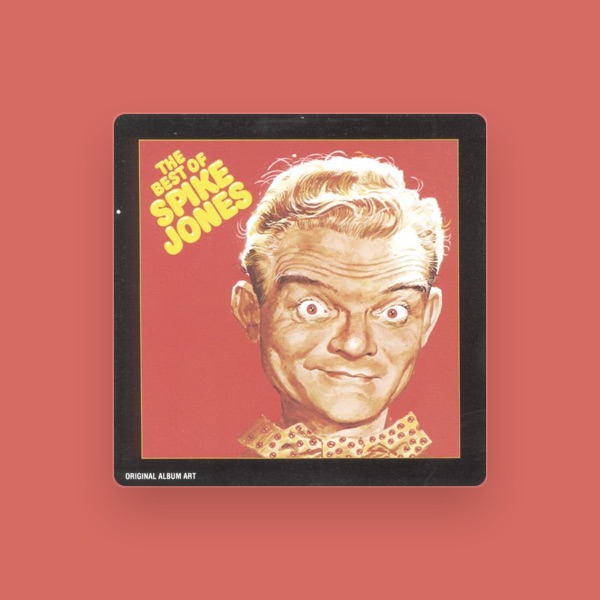
Spike Jones
Long Beach, United States · 1911 – 1965
Spike Jones is a musician from Long Beach, United States, active 1911–1965. Their discography on Gatefold includes 6 records. They also recorded with Spike Jones and His City Slickers, Spike Jones and The Band That Plays for Fun and Spike Jones New Band.
13
Albums tracked
15
In collections
1911
Since
Biography
Spike Jones didn't just play the drums; he played the kitchen sink, the Smith & Wesson .38, and a customized rack of tuned car horns. He was a session percussionist for Bing Crosby and the Victor Young Orchestra before he decided that the pristine, polite radio arrangements of the 1940s needed to be dragged through a junkyard. The City Slickers weren't just a novelty act—they were high-level session players who could hit a precise musical note with a slide whistle or a frying pan on the fourth beat of every bar. It was absolute clockwork chaos that required more rehearsal time than a symphony. By the fifties, the satire started to bite him back. The audience wanted the same cowbells and hiccups every night, while Spike was trying to pivot into more sophisticated, almost surrealist comedy. He’d burn through band members because the technical demands were insane—you try playing a glockenspiel while someone tosses a live cat near the microphone. It’s some of the tightest, most disciplined music ever pressed to wax, even if it sounds like a riot at a cartoon factory.
Bio from The Clerk
The Arc of Spike Jones
The pivots — what forced Spike Jones to reinvent.
The City Slickers and the RCA Victor Years
After years of playing it straight in the back of orchestras, Spike formed the City Slickers to dismantle the hits of the day. They signed with RCA Victor and turned 'Der Fuehrer's Face' into a massive wartime hit by utilizing a 'birdaphone' to mock the Third Reich. This era was defined by the 'musical deprecation' of sentimental ballads, where the band would play a song perfectly straight for eight bars before exploding into a calculated mess of washboards and sirens. You hear the peak of this mechanical precision on tracks like 'Cocktails for Two,' where the timing of the gunshots has to be frame-perfect to land the joke.
The Murdering the Classics Pivot
Spike eventually got bored of parading through pop hits and turned his sights on the high-brow world. He hired serious arrangers to help him dismantle Tchaikovsky and Bizet, creating a bizarre hybrid of classical structure and vaudeville violence. This culminated in the 'Musical Depreciation Revue' tours, which were massive, expensive stage shows that almost bankrupted him because of the sheer amount of props and personnel. The music became denser and more experimental, leaning into the surrealism that would eventually catch the eye of the early TV networks.
The New Band and The Sickniks
As the big band era died, Spike tried to adapt to the burgeoning counterculture and the rise of television. He dropped the City Slickers moniker for a bit and experimented with 'The Sickniks,' leaning into the darker, more cynical beatnik humor of the late fifties. The arrangements got leaner, the satire got sharper, and he started messing with the television format to see how much visual gaggery he could get away with. It was a weird, transitional time where he was trying to figure out if he was still a bandleader or if he had become a full-time variety show host.
Influences
- Hoosier Hot Shots — The Hot Shots were the blueprint for the 'zany' rural jazz sound that Spike polished into a professional machine. You hear their DNA in his use of the slide whistle and the washboard as lead instruments. They proved there was a commercial market for making a mockery of the hit parade.
- Raymond Scott — Scott’s 'Quartet' recordings featured the same frantic, mechanical precision that Spike demanded from the City Slickers. While Scott was dead serious about his 'Powerhouse' compositions, Spike took that same disciplined complexity and used it as a delivery vehicle for gags. Both men treated the recording studio like a laboratory for sonic timing.
- Ted Lewis — Lewis was the king of high-energy vaudeville jazz and the 'Is Everybody Happy?' persona. Spike took the theatricality of the Lewis stage show—the hats, the props, the exaggerated movements—and dialed it up to an eleven. It’s the same show-business-first mentality, just with more explosions.
- Victor Young — As a session drummer for Young, Spike learned exactly how a professional orchestra functioned from the inside out. He had to know the rules perfectly to break them this effectively. You can't satirize a lush orchestral arrangement unless you’ve spent a decade playing them under a conductor's thumb.
- The Marx Brothers — The anarchy of Spike’s arrangements is a direct sonic translation of the Marx Brothers' screen energy. He often cited their timing as a major influence on how he paced his records. The way a City Slickers track descends into a fight is the musical version of a room full of people shouting over each other in a cabin.
Spike Jones — solo
Their records — most-collected first.
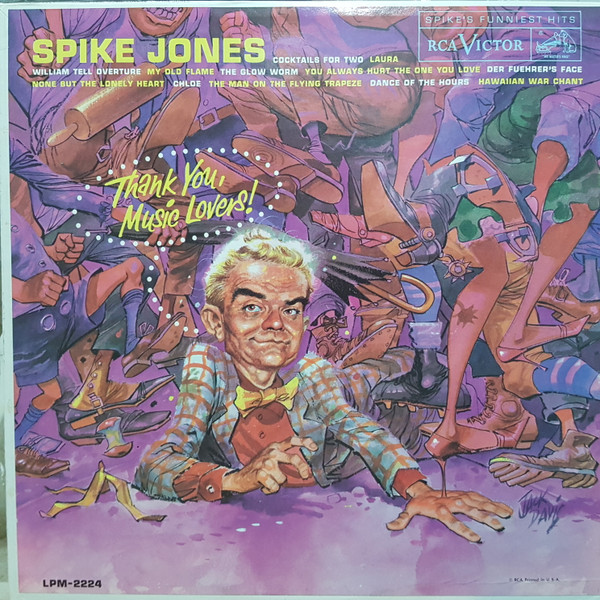




Spike Jones and His City Slickers
Spike Jones under another name — MusicBrainz marks this project eponymous.


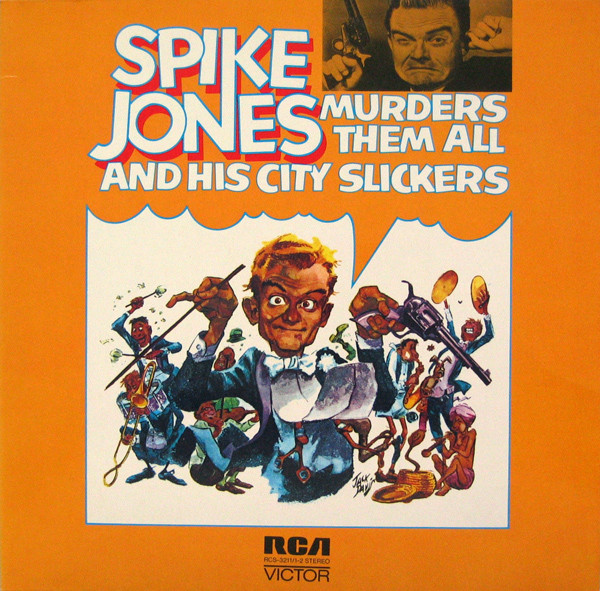
Spike Jones and The Band That Plays for Fun
Spike Jones under another name — MusicBrainz marks this project eponymous.

Spike Jones New Band
Spike Jones under another name — MusicBrainz marks this project eponymous.

Related artists
Frequent collaborators
Around the web
Follow every record they touch.
Start your shelf and Gatefold tracks Spike Jones's new pressings, tour dates, and the whole discography — automatically.
Start your shelf →Free forever. Works with 10 records or 10,000.