
Artist
Scratch Acid
Austin, United States · 1982 – 2011
Scratch Acid is a music group from Austin, United States, active 1982–2011. Their discography on Gatefold includes 5 records.

5
Albums tracked
21
In collections
1982
Since
Biography
David Yow didn't start as a singer. He was the bass player until the band realized his true calling was terrifying audiences and wrecking his body while screaming over Rey Washam’s hyper-kinetic drumming. They recorded that self-titled EP for thirty bucks an hour at a studio in Austin, and you can hear every cent of that budget in the claustrophobic, scraping guitar tone. It wasn't about being 'noise rock' yet—it was just four guys trying to sound like a panic attack in a basement. By the time they hit Berserker, the technical proficiency of David Sims and Rey Washam started to outpace the rest of the Texas scene. Washam was playing with a level of precision that made most punk drummers look like amateurs, which is why everyone from Ministry to Steve Albini eventually tried to poach him. They were too smart for the hardcore kids and too violent for the art-school crowd, leaving them in that perfect, filthy pocket where the best records usually live. When they called it quits in '87, it wasn't because they ran out of ideas, but because the internal friction was starting to melt the gear.
Bio from The Clerk
The Arc of Scratch Acid
The pivots — what forced Scratch Acid to reinvent.
The Austin Scrape
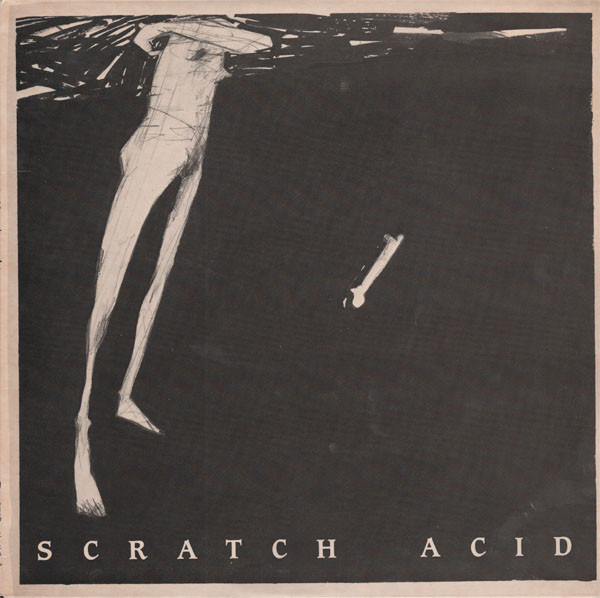
The 1985 self-titled EP was captured by Stacey Helms on a shoestring budget, forcing a raw, mid-range heavy sound that defined the early Austin noise scene. Brett Bradford’s guitar wasn't providing chords so much as it was providing texture and friction against David Sims' distorted, melodic bass lines. This era was characterized by Yow’s transition from a musician into a visceral, unpredictable frontman who used the microphone as a weapon. The result was a record that sounded like it was being pulled through a jagged hole in a sheet metal fence.
The Berserker Precision
For the final sessions leading into Just Keep Eating and the Berserker EP, the band leaned into Rey Washam’s uncanny ability to shift time signatures without losing the groove. The production got slightly cleaner, which only served to highlight how tight the rhythm section had become under the pressure of constant touring. They moved away from the straight-ahead sludge of their peers and toward a rhythmic complexity that bordered on jazz, if jazz involved screaming about cannibalism. This was the peak of their technical powers, where the chaos felt intentional rather than accidental.
Influences
- The Birthday Party — David Yow has repeatedly cited Nick Cave’s early outfit as the blueprint for his stage presence and vocal delivery. You hear it in the frantic, unhinged yelps on 'Mess' and the way the band uses negative space to build tension before a blowout. It’s the same predatory energy Cave brought to Junkyard.
- Captain Beefheart — The band’s rhythmic angularity and David Sims’ preference for unconventional bass structures stems directly from Trout Mask Replica. The jagged, non-linear progression of tracks like 'Cannibal' mirrors the polyrhythmic dissonance Beefheart forced on the Magic Band. They took the avant-garde blues and ran it through a Texas distortion pedal.
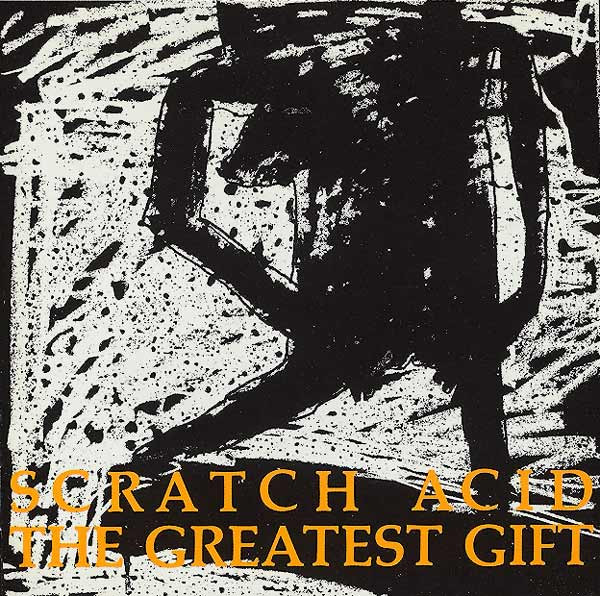
- Gang of Four — The DNA of Entertainment! is all over David Sims' approach to the bass as a lead melodic instrument rather than just a timekeeper. You can hear that dry, percussive attack in the opening of 'Greatest Gift,' where the bass carries the hook while the guitar creates atmospheric noise. It’s funk-inspired structuralism stripped of any actual warmth.
- Public Image Ltd — The influence of Metal Box is documented in the way Scratch Acid treated the studio as a place to experiment with dub-heavy low ends and abrasive high frequencies. The cold, mechanical repetition in Washam's drumming reflects the post-punk austerity Jah Wobble and Keith Levene pioneered. It’s the sound of urban decay translated to the Texas heat.
- Pere Ubu — David Yow frequently pointed to David Thomas as a primary influence for his abstract, often grotesque lyrical themes. The art-punk erraticism of The Modern Dance provided the permission for Scratch Acid to be 'weird' without losing their aggressive edge. It gave them a framework for being an 'art' band that could still punch your teeth in.
Discography
Their records — most-collected first.



Related artists
Around the web
Follow every record they touch.
Start your shelf and Gatefold tracks Scratch Acid's new pressings, tour dates, and the whole discography — automatically.
Start your shelf →Free forever. Works with 10 records or 10,000.