
Artist
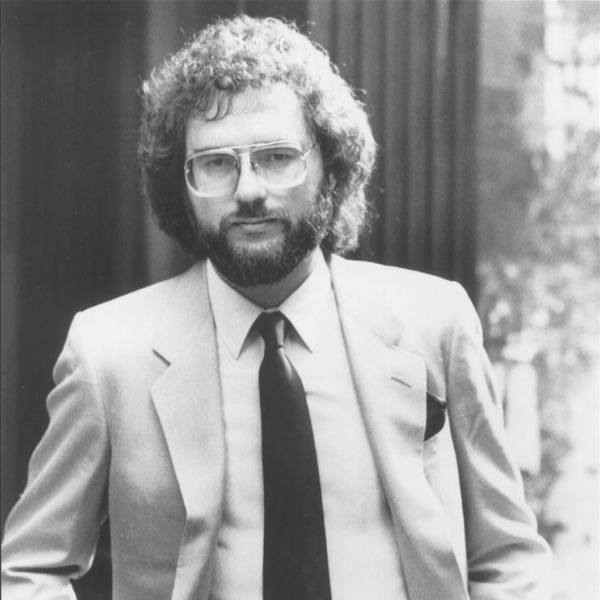
Rupert Holmes
Northwich, United Kingdom · b. 1947
Rupert Holmes is a musician from Northwich, United Kingdom, active since 1947. Their discography on Gatefold includes 11 records.
11
Albums tracked
20
In collections
1947
Since
Biography
Rupert Holmes spent the early seventies as a ghost in the machine, writing jingles and orchestration charts while the industry treated him like a high-end tool rather than an artist. Most people know him for the piña colada song, but that track is a curse that hides a guy who was basically the American answer to Ray Davies. He was obsessed with the cinematic potential of a three-minute pop song, treating every track on 'Widescreen' like a screenplay. He didn't just write hooks; he built entire narrative worlds with a level of detail that would make a novelist sweat. He’d spend days layering strings and woodwinds to get a specific dramatic tension that most pop stars couldn't even identify. It’s high-IQ pop that isn't afraid to be catchy, even when the subject matter gets dark or weirdly domestic. The label guys didn't always get it, but the session players knew he was the smartest guy in the room.
Bio from The Clerk
The Arc of Rupert Holmes
The pivots — what forced Rupert Holmes to reinvent.
The Epicurean Orchestrator
Before the radio hits, Holmes was obsessed with the 'Widescreen' concept, using his debut in '74 to treat the studio like a movie set. He leaned on lush, intricate arrangements that pushed against the stripped-back singer-songwriter trends of the era. You hear it in the way he stacks harmonies and uses orchestration to provide subtext to his lyrics. It was an expensive, ambitious gamble that established him as a guy who cared more about the narrative arc of a record than a simple four-chord progression.
The Barroom Poet Phase
By the time 'Partners in Crime' hit in '79, the production tightened up and the stories got more cynical. Moving to MCA and working with Jim Boyer meant the sound became sleeker, fitting into the burgeoning yacht rock scene while keeping his sharp-tongued wit intact. This is where he mastered the 'twist ending' song, using the studio’s polish to mask the fact that he was writing deeply ironic stories about infidelity and bored middle-class life. It turned him into a household name, but it also pigeonholed a guy who had much weirder ideas in the tank.
The Broadway Pivot
Tired of the pop machine's limitations, Holmes walked away from the Top 40 hustle to write 'The Mystery of Edwin Drood' in the mid-eighties. This wasn't a mid-life crisis; it was a return to his roots in complex arrangement and structural gamesmanship. He designed the show so the audience could vote on the ending, a level of interactive complexity that mirrored his multi-layered 70s output. It won him multiple Tonys and proved that his talent was always too big for a single 7-inch record.
Influences
- The Beatles — Holmes has explicitly cited the narrative songwriting on 'Sgt. Pepper' as his blueprint for making 'Widescreen.' You hear the Paul McCartney influence in his melodic basslines and the way he uses baroque pop elements to frame a story.
- Cole Porter — The sophisticated wordplay and internal rhyming schemes in Holmes's lyrics are a direct descendant of Porter's Great American Songbook style. He takes that high-society wit and drags it into the 1970s recording studio.
- Burt Bacharach — The precise, often difficult-to-play orchestration on his early records mirrors Bacharach's refusal to stick to standard pop time signatures or arrangements. Holmes studied the way Bacharach used horns and woodwinds to create a specific, polished atmosphere.
- The Kinks — Ray Davies’s ability to write character studies about the British middle class heavily informed how Holmes approached American suburban life. The DNA of 'The Village Green Preservation Society' is all over Holmes's more observational and ironic tracks.
- George Gershwin — Holmes frequently references Gershwin’s ability to bridge the gap between 'serious' orchestral music and popular jazz. That ambition to make pop music that felt as heavy and structured as a concerto is the foundation of his 1970s output.
Discography
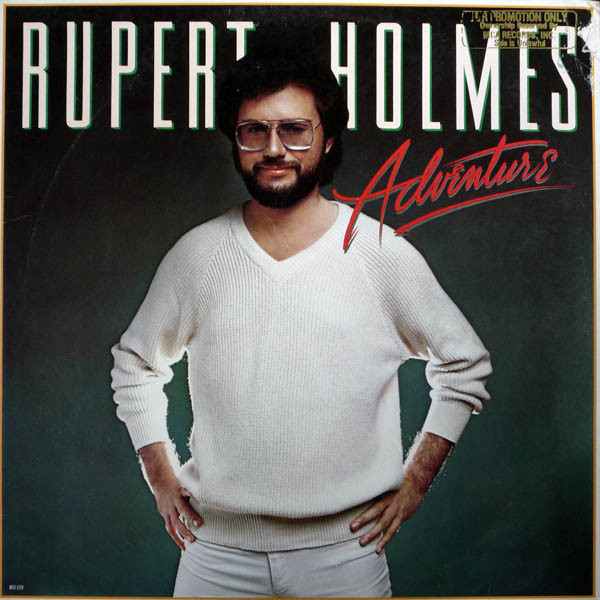
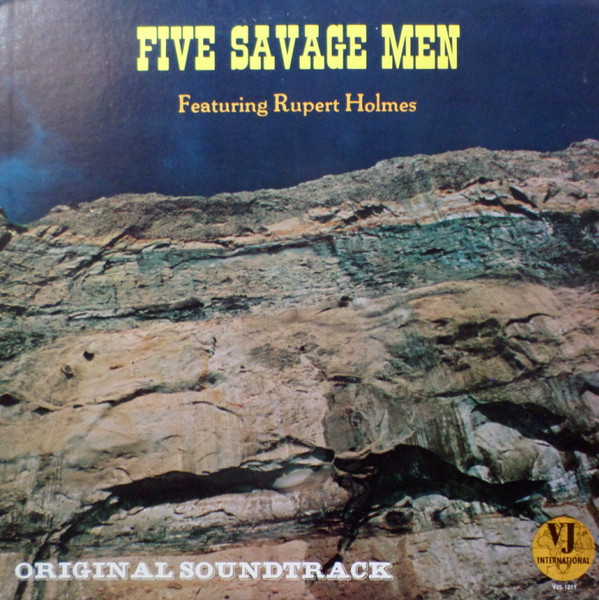
Their records — most-collected first.







Related artists
Around the web
Follow every record they touch.
Start your shelf and Gatefold tracks Rupert Holmes's new pressings, tour dates, and the whole discography — automatically.
Start your shelf →Free forever. Works with 10 records or 10,000.