
Artist
Richard Hell & the Voidoids
New York City, United States · 1976 – 1983
Richard Hell & the Voidoids is a music group from New York City, United States, active 1976–1983. Their discography on Gatefold includes 4 records.
4
Albums tracked
53
In collections
1976
Since
Biography
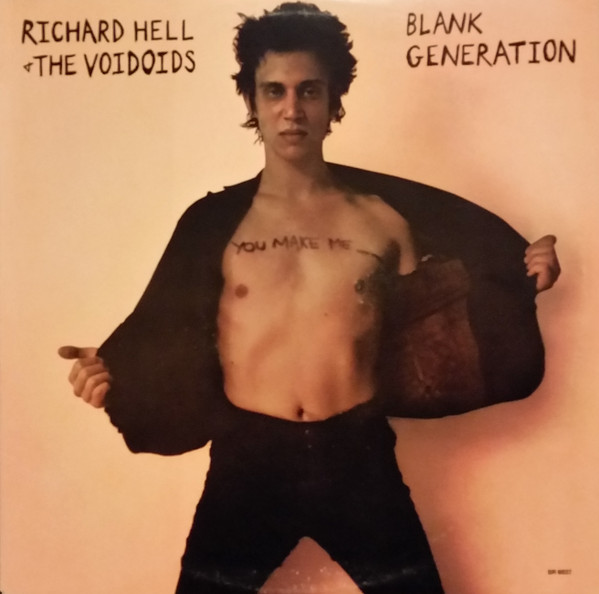
Richard Hell walked away from Television and the Heartbreakers because he wasn't interested in being a sideman to Tom Verlaine’s precision or Johnny Thunders’ chaos. He needed a vehicle for his own jagged, poetic nihilism, so he poached Robert Quine from a writing gig and Ivan Julian from an audition line. They tracked Blank Generation at Electric Lady with an approach that shouldn't have worked—Quine was playing out-of-sync jazz scales and dissonant stabs while Marky Ramone kept a rigid, breakneck beat. It’s a miracle the record sounds as cohesive as it does considering Hell was more interested in the literary weight of his lyrics than the tuning of his bass. The Voidoids weren't just another CBGB leather jacket act; they were the smartest, most dangerous guys in the room who happened to be falling apart in real time. By the time they finally got around to recording a follow-up five years later, the original chemistry was shot, the drugs had taken a heavy toll, and the production on Destiny Street felt thin compared to the debut’s punch. It’s a mess of a catalog, but that first record is a goddamn masterclass in how to weaponize anxiety.
Bio from The Clerk
The Arc of Richard Hell & the Voidoids
The pivots — what forced Richard Hell & the Voidoids to reinvent.
The Electric Lady Dissonance
When Hell entered Electric Lady in 1977 to record Blank Generation, he wasn't looking for the polish the studio was known for. Robert Quine brought a record collector’s obsession with Lou Reed and Albert Ayler into the sessions, creating a twin-guitar attack with Ivan Julian that sounded like a serrated knife. You hear this in the title track’s solo, where the guitars seem to be fighting the rhythm section rather than following it. This was the moment the aesthetic of the Lower East Side moved from a look to a high-wire musical act.
The Destiny Street Stall
Five years of lineup shifts and heavy habits led to the 1982 sessions for Destiny Street, which sounded like a band losing its grip on the thread. Robert Quine was openly miserable during the process, and the clean, almost power-pop production choices clashed with Hell’s ragged vocal delivery. It lacks the cohesive grime of the debut, though Quine’s solo on the Kinks cover 'You Gotta Move' still shreds through the haze. Hell eventually spent years trying to remix and rerecord this era because he knew the original tapes didn't capture the bite of the songs.
Influences
- The Velvet Underground — Robert Quine famously recorded dozens of the band's live shows on a handheld cassette player, obsessing over Lou Reed’s erratic lead style. You hear that exact feedback-heavy, non-linear phrasing all over the guitar breaks in 'Betrayal Takes Two.' It’s the sound of art-school nerves turned into pure electricity.
- Albert Ayler — Quine and Hell were obsessed with the free jazz movement, specifically Ayler’s willingness to let a melody disintegrate into noise. The chaotic, screeching bridge in 'Another World' is a direct nod to that improvisational freedom. It’s jazz logic applied to a three-chord punk structure.
- The Kinks — Hell covered 'You Gotta Move' on Destiny Street and frequently cited Ray Davies as a primary influence for his cynical, observational songwriting. The choppy, rhythmic guitar chug that drives 'New Pleasure' is a direct descendant of the early Kinks singles. It’s the British Invasion filtered through a needle and a notebook.
- Bob Dylan — Hell has stated in multiple interviews that his entire vocal approach was modeled after Dylan’s mid-60s phrasing—more of a rhythmic recitation than traditional singing. You hear it in the way he crams too many syllables into a line on 'Love Comes in Spurts.' It’s the sound of a poet who realizes the beat won’t wait for him to finish the thought.
- The Stooges — The raw, confrontational energy of Fun House served as the blueprint for the Voidoids' live assault. Marky Ramone’s drumming on the early Sire sessions mirrors the relentless, unswinging thud that Scott Asheton used to drive the Stooges. It provides the necessary floor for Hell’s lyrical acrobatics.
Discography
Their records — most-collected first.


Related artists
Around the web
Follow every record they touch.
Start your shelf and Gatefold tracks Richard Hell & the Voidoids's new pressings, tour dates, and the whole discography — automatically.
Start your shelf →Free forever. Works with 10 records or 10,000.