
Artist
REO Speedwagon
Champaign, United States · 1967 – 2025
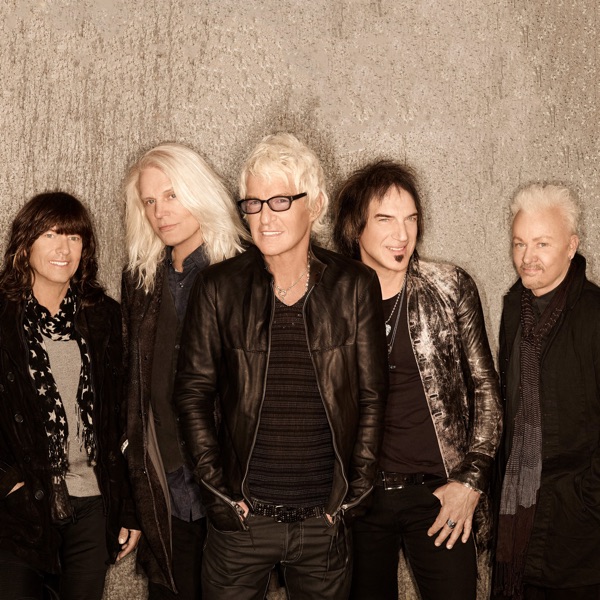
REO Speedwagon is a music group from Champaign, United States, active 1967–2025. Their discography on Gatefold includes 24 records.
37
Albums tracked
275
In collections
1967
Since
Biography
Gary Richrath used to walk into the studio with a 1959 Les Paul Sunburst and a stack of Marshalls that he refused to turn down. That cranked, Midwestern grit was the only thing keeping the band from floating away into pure AM pop fluff during the early seventies. They spent a decade grinding out of Champaign, Illinois, playing every dive bar and state fair until the tires fell off their van, burning through three different singers before Kevin Cronin finally stuck for the second time. By the time 'Hi Infidelity' hit in 1980, they had traded the bar-room sweat for a polished, multi-platinum sheen that made every radio programmer in America lose their damn minds. It was a calculated pivot into the power ballad era that made them rich but eventually bored Richrath right out of the lineup. They became the ultimate case study in a hard rock band discovering that a piano hook paid better than a fuzz pedal. If you can ignore the cheese of the later years, those early live records still prove they were a hell of a bar band before the synths took over.
Bio from The Clerk
The Arc of REO Speedwagon
The pivots — what forced REO Speedwagon to reinvent.
The Revolving Door Years
After Terry Luttrell sang on the debut, the band struggled to find a voice that matched Richrath’s heavy blues-rock tendencies. Kevin Cronin came in for 'R.E.O./T.W.O.' but clashed with the management and got booted, leading to the Mike Murphy era which leaned into a weirder, almost funky territory that didn't fit the brand. It was a mess of identity crises until Cronin returned in '76 with a more disciplined approach to songwriting. You can hear the tension on those mid-seventies records between the gritty guitar jams and the emerging pop hooks.
The Richrath-Cronin Cold War
The band finally hit their stride when they stopped trying to be a Midwestern Deep Purple and leaned into the 'You Get What You Play For' live energy. This era was defined by the push-and-pull between Richrath’s aggressive soloing and Cronin’s knack for the 'sensitive guy' lyric. By the time they hit the studio for 'Hi Infidelity,' the arena-rock production was airtight, resulting in a sound that was less about the garage and more about the stadium rafters. It worked for 15 weeks at number one, but it shifted the power dynamic away from the guitar and toward the balladry.
The Departure of the Burst
By the late eighties, the friction between the pop-focused direction and Gary Richrath’s rock-and-roll lifestyle became untenable. Richrath, the man who provided the band’s sonic backbone, left after 1987’s 'Life as We Know It,' effectively ending the classic era of the group. Without his Les Paul bite to balance out the sweetness, the band’s output moved into a purely legacy-act phase. It’s the sound of a group settling into the fair circuit, leaning on the hits while the fire that fueled their Champaign-Urbana days finally went cold.
Influences
- The Jeff Beck Group — Gary Richrath worshiped Beck’s 'Truth' and 'Beck-Ola' eras, often citing Beck as his primary reason for picking up a Les Paul. You hear it in the aggressive, singing sustain of his solos on tracks like 'Golden Country.' It’s the blues-rock blueprint applied to a Midwestern flatland.
- The Byrds — Kevin Cronin’s vocal phrasing and the band's emphasis on clean, stacked harmonies come straight from the McGuinn school of folk-rock. On 'Keep On Loving You,' the vocal layering mirrors the dense harmonic structures the Byrds mastered in the mid-sixties. It’s the jangly DNA buried under the arena distortion.
- Paul Butterfield Blues Band — Coming out of Illinois, the band cut their teeth on the Chicago blues scene that Butterfield helped bridge to the rock world. The raw, harmonica-heavy arrangements on the early REO records are a direct nod to that gritty, electric Chicago sound. They were a blues band before they were a Top 40 machine.
- Cream — The long-form improvisational jams that dominated their live sets in the early seventies were modeled after the Clapton/Bruce/Baker power trio format. Richrath’s tone was a direct attempt to capture the 'woman tone' Clapton made famous during the 'Disraeli Gears' sessions. They took the heavy blues-rock power trio vibe and stretched it out for the Midwest crowd.
- The Beatles — Cronin has repeatedly cited 'Rubber Soul' as his songwriting North Star for its balance of melody and lyrical vulnerability. You hear that influence in the structure of the band’s late-seventies bridges and modulations. It’s the pop craftsmanship that allowed them to survive when the heavy rock scene started to fade.
Discography
Their records — most-collected first.
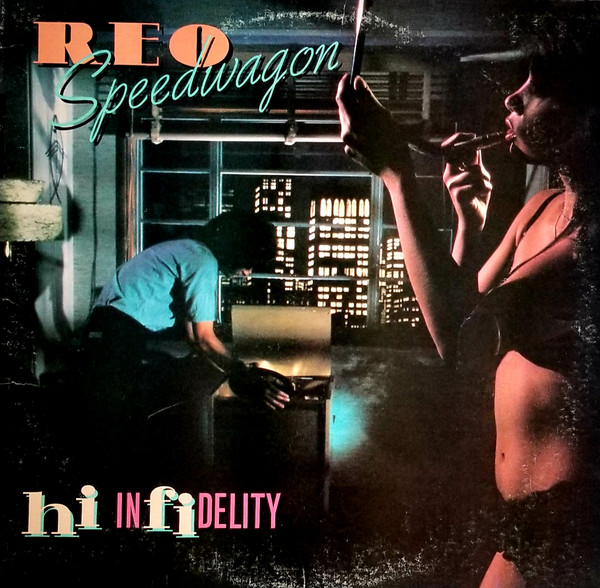
Hi Infidelity
1980

You Can Tune A Piano, But You Can't Tuna Fish
1978

Wheels Are Turnin'
1984

The Hits
1988

Good Trouble
1982
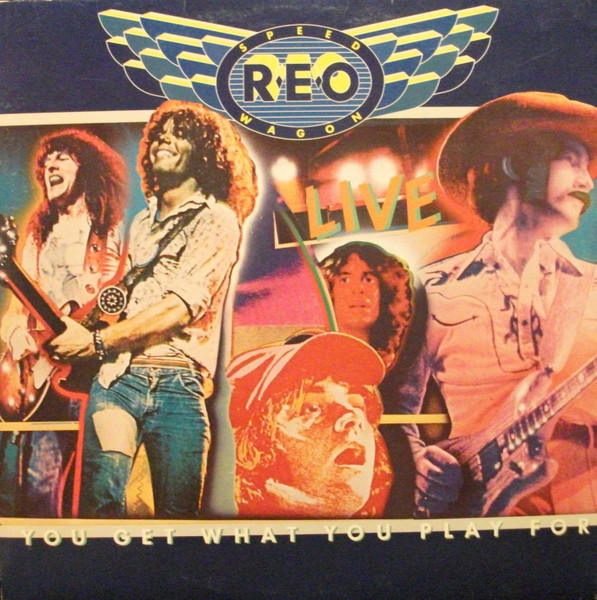
You Get What You Play For
1977

R.E.O. Speedwagon
1971

Ridin' The Storm Out
1973

Life As We Know It
1987

A Decade Of Rock And Roll 1970 To 1980
1980
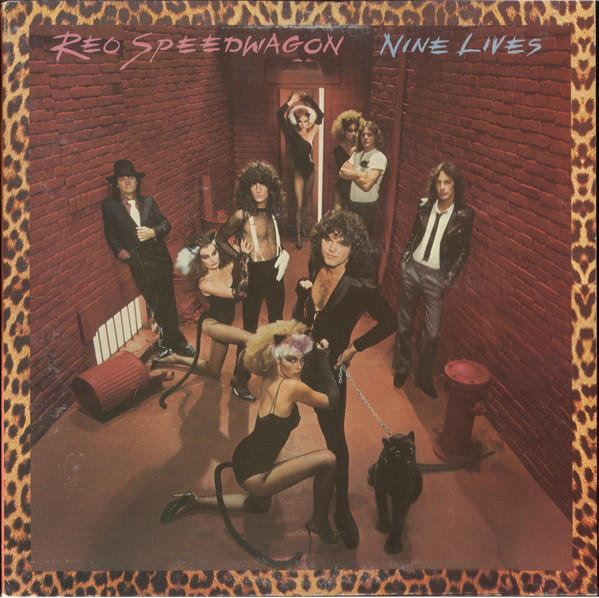
Nine Lives
1979

R.E.O./T.W.O.
1972
R.E.O.
1976

Lost In A Dream
1974

Building The Bridge
1996

This Time We Mean It
1975

Original Album Classics
2011

Not So Silent Night: Christmas With REO Speedwagon
2009

The Ballads
1999

The Earth, A Small Man, His Dog And A Chicken
1990
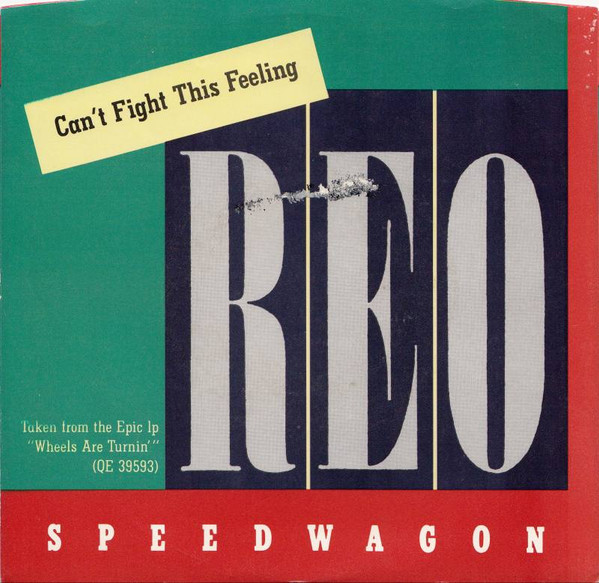
Can't Fight This Feeling
1984
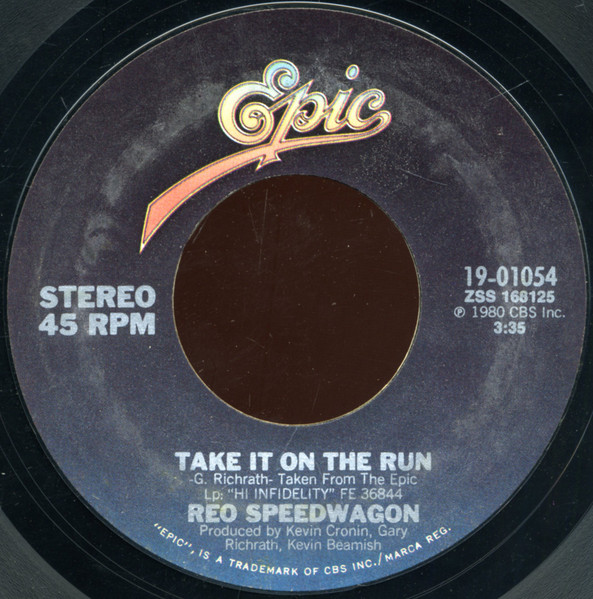
Take It On The Run
1981

Live At Moondance Jam
2013

Find Your Own Way Home
2007
Related artists
Around the web
Follow every record they touch.
Start your shelf and Gatefold tracks REO Speedwagon's new pressings, tour dates, and the whole discography — automatically.
Start your shelf →Free forever. Works with 10 records or 10,000.